
Refine by
Wwtp Process Articles & Analysis
60 articles found

All of our work here at Aquafix is guided by our mission statement: “Safer water and better lives through pioneering biosciences.” In line with this mission, we have conducted and are continuing to conduct numerous studies involving quaternary ammonium cations (QACs or quats) and their toxicity concerning wastewater microorganisms, in both aerobic and anaerobic processes. Past studies ...

Industrial Installation for the City of Toronto in Ontario Design Fluxes Average Day Flux (N-1) = 9.3 LMH/ 5.4 GFD Max Day Flux (N-1) = 18.7 LMH/ 11 GFD FPC400 Cassette (60 modules in 2 trains) installed at the Dufferin Organics Processing Facility in Toronto, Ontario Operating since February 2019 ...
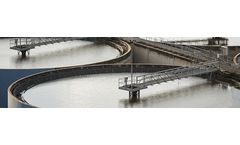
Integrating all data sources into a single environment is a fundamental step in the digital transformation of wastewater treatment plants to provide them with comprehensive control of all their processes, according to Idrica’s report “Digital transformation of WWTPs: key to a more sustainable future”. ...
ByIdrica
Busy municipal water engineers will find that the new Water and Wastewater Treatment Applications Guide from Fluid Components International (FCI) explains how to optimize flow measurement in 18 different municipal applications to enhance water and wastewater treatment process efficiency while also reducing operating costs at the same time. Whether a plant team is adding ...
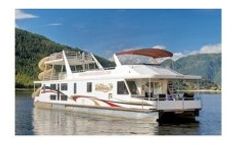
Boats unload their sewage into the collection system and this increased influent has put stress on the existing WWTP’s ability to process TSS, BOD5, and Phosphorus in an effective manner. ...
This article describes those machines, equipment and accessories recommended in a biogas production facility, from the digestion of sludge from a WWTP for its use as biofuel to meeting the energy needs (steam-electricity) of the process itself. ...
The flow chart in Figure 1 shows a typical WWTP sludge treatment facility via anaerobic digestion, using biogas to meet the energy needs of the process itself and selling surplus energy to the grid. Anaerobic digestion as a means of treatment and recovery of WWTP sludge. Anaerobic biological processes. It is a ...
Industrial Installation for the City of Toronto in Ontario Design Fluxes Average Day Flux (N-1) = 9.3 LMH/ 5.4 GFD Max Day Flux (N-1) = 18.7 LMH/ 11 GFD FPC400 Cassette (60 modules in 2 trains) installed at the Dufferin Organics Processing Facility in Toronto, Ontario Operating since February 2019 ...
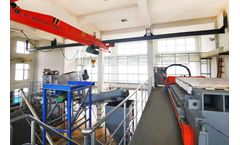
Techase has applicated “80% MC Sludge Feeding Directly” process into Lingbi WWTP, which could be connected to existing sludge dewatering machine to treat the 80% MC sludge and simplify deep sludge dewatering process and save operation and investment cost to some extent. ...

Tightening ef uent consents due to river water quality drivers require further investment for improved removal of nitrogen and phosphorus from Wastewater Treatment Plants (WwTP). As a result, tertiary treatment processes have become increasingly important. This has led to a need to gain a better understanding of the process and mechanics of ...

The total wastewater treatment capacity is over 2 billion gallons (9 million m3) per day. The WWTP, located in the United States, processes wastewater from one of the world’s largest cities, along with 128 suburban communities that operate within its boundaries. ...
ByENVEA
City Gets Consistent Compliance, Thriving Discharge Creek, and State Award by Replacing Extended Aeration WWTP with Special Activated Sludge Process. Also Gains Better Reliability, Easier Maintenance, and Exceptionally Low Sludge Yield. ...

80-100 gallons of water per day is the daily water consumption of the average person without taking into account their water footprint1. All and all, water is valuable and found everywhere in our economy. Humanity needs water for its everyday needs. Having said this, the world’s water resources are shrinking and the world’s population is growing. This forces the water industry to ...
ByKANDO
In order to improve the energy footprint of the WWTP, the application of Thermal Hydrolysis Process (THP) was preferred to the option of constructing additional anaerobic digestion tanks. ...

In Waste Water Treatment Plants (WWTP) odorous compounds is a crucial point. Amounts of installations may generate diffuse odor due to sulfur compound presence. ...

About the Project The WWTP is a conventional activated sludge process with chemical phosphorus removal, anaerobic sludge digestion and sodium hypochlorite disinfection, and has a rated design capacity of 123 million litres/day (MLD). ...
About the Project The WWTP is a conventional activated sludge process with chemical phosphorus removal, anaerobic sludge digestion and sodium hypochlorite disinfection, and has a rated design capacity of 123 million litres/day (MLD). ...

When one of Italy’s top chicken producers needed to increase production while lowering costs, it turned to Fluence for a waste-to-energy upgrade to its existing WWTP. When one of Italy’s top agro-food processors wanted to expand its operations, it faced some difficult challenges, including reducing operational costs and producing an effluent that would meet strict European Union ...

One of the most important steps and the main bottleneck of the activated sludge wastewater treatment process (WWTP) is the secondary clarification, where sludge bulking is still a widespread problem. ...
Addition of an external carbon source is usually necessary to guarantee a sufficiently high C/N ratio and enable denitrification in wastewater treatment plants (WWTPs). Alternatively, denitrification processes using autotrophic microorganisms have been proposed i.e., with the use of H2 as electron donor or with the use of cathodic denitrification in ...