
Refine by
X Ray Diffraction Articles & Analysis
454 articles found

What is Wafer Metrology? Wafer metrology refers to the precise measurement and analysis of semiconductor wafers used in the manufacturing of integrated circuits (ICs) and other electronic devices. It involves assessing various characteristics of wafers, such as dimensions, surface morphology, and material properties, using specialized techniques and instruments. Importance of Wafer Metrology ...

The STEREO (Effective point-of-use Sterilization of medical equipment using Ethylene Oxide) project was an 18-month research initiative funded by GCRF, aimed at developing an innovative on-demand production system for ethylene oxide (EO) from ethanol. The project brought together researchers from the University of Cambridge (UoC), University of Johannesburg (UJ), and Botswana Institute for ...
This study rigorously investigated the effect of charge-enhanced dry impregnation (CEDI) method on the physicochemical properties and catalytic performance of a ceria-supported nickel-based catalyst. The primary objective of the CEDI method was to augment the electrostatic adsorption of the nickel precursor onto the ceria support surface during the dry impregnation (DI) process. For a ...
Semiconductor metrology is a specialized branch of measurement science that ensures the accuracy and precision of semiconductor manufacturing processes. The evolution of semiconductor technology, from early microprocessors to today’s highly advanced integrated circuits (ICs), has been driven by the demand for smaller, faster, and more efficient electronic devices. As semiconductor ...

Changes in the G-band and D-band can be used, for instance, to identify the doping effect of carbon nanotubes from Raman spectroscopy. X-ray Diffraction (XRD): The crystal structure and lattice properties of carbon nanotubes are determined by XRD. So, for instance, the crystal plane diffraction peaks of doped carbon nanotubes can ...
Defect detection in manufacturing refers to the process of identifying imperfections or faults in products during or after production. These defects can range from surface irregularities to structural flaws and dimensional inaccuracies. Detecting these defects early is crucial to ensure that products meet required specifications and quality standards. Advanced systems such as computer vision and ...
This includes techniques such as X-ray diffraction, electron microscopy, and atomic force microscopy, which allow researchers to analyze the structure and composition of materials at the atomic and molecular level. ...

When using a laser particle size analyzer, you must have an understanding of the system particle size range, otherwise the results may be biased. Small-angle X-ray scattering method Small-angle scattering refers to the phenomenon of coherent scattering near the reciprocal lattice origin (000) node in X-ray ...

This information can be used to infer the structure and conformational changes of proteins, as well as the interactions between proteins and other molecules.Compared to classical protein structure research methods (X-ray crystal diffraction and nuclear magnetic resonance, etc.), HDX-MS cannot provide an accurate protein spatial structure. ...

There are many methods for detecting the secondary structure of proteins, commonly used ones include Nuclear Magnetic Resonance (NMR), Circular Dichroism (CD), X-ray diffraction, Ultraviolet and Fluorescence Spectroscopy, and Infrared Spectroscopy (IR). ...

Circular dichroism is sensitive to the main chain conformation of peptides and can reflect the electronic transition of the peptide backbone, thereby providing stereostructure information of the peptide.4. X-Ray CrystallographyThe structure of the peptide crystal is determined by measuring the diffraction pattern of ...

Here is a brief introduction in the following. X-Ray Crystallography 1. Principle Protein X-ray crystallography can obtain the three-dimensional structure of proteins by crystallizing proteins' X-ray diffraction. By seeding a highly concentrated protein in a solution that ...

The demand for the amount of sample is large, the purity requirements are high, and the measurement process is slow. X-ray crystal diffraction Although X-ray crystal diffraction can provide complete protein crystal structure information, it requires high-quality single-crystal samples, and the ...
What is Wafer Metrology? Wafer metrology refers to the precise measurement and analysis of semiconductor wafers used in the manufacturing of integrated circuits (ICs) and other electronic devices. It involves assessing various characteristics of wafers, such as dimensions, surface morphology, and material properties, using specialized techniques and ...

It involves various techniques such as X-ray diffraction, spectroscopy, microscopy, and thermal analysis to analyze the structure, composition, and properties of solid materials. ...

The addition of phosphate ions leads to the formation of aluminum hydroxyphosphate Al(OH)x(PO4)y, in which a percentage of the hydroxyl group is replaced by phosphate. ...

To validate the quality and efficacy of our nanocomposite, we employed an array of analytical techniques, including Fourier transform infrared spectroscopy (FTIR), scanning electron microscopy (SEM), energy dispersive X-ray spectroscopy (EDS), X-ray diffraction (XRD), and transmission electron microscopy (TEM). ...

This indicates the dominance of X-ray crystallography in structural determination. Advantages and disadvantages of X ray crystallography X-ray crystallography has some benefits, such as the fact that it is generally inexpensive and straightforward and offers a two-dimensional view that ...
The Equipment Platform Elemental and Chemical Analysis Gel Permeation Chromatography (GPC), Vapor-pressure Osmometry (VPO), Fourier transform infrared spectroscopy (FTIR), Nuclear magnetic resonance spectroscopy (NMR), Energy dispersive spectrometer (EDS), Pyrolysis gas chromatography-mass spectrometry (GC-MS), High Performance Liquid Chromatography (HPLC), ...
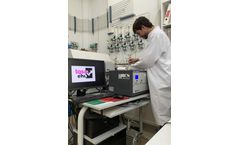
The cyclic process of CO2 adsorption and CH4 hydrogenation on dual function materials (DFMs) has shown increasing interest in recent years. This form of operation eliminates the costly CO2 purification step required for methanation with continuous CO2 and H2 feed. The DFMs present a CO2 adsorbent compound and a metal that assists its methanation. The objective of the work is to modulate the ...