
Refine by
X Ray Imaging Articles & Analysis
45 articles found

In today’s era of miniaturized, high-performance electronics, the true effectiveness of a semiconductor chip (die) depends not only on its design—but on its packaging. While the chip’s performance is crucial, it is the semiconductor packaging that enables functional integration, protects device integrity, and ensures reliable connections within microelectronic systems. As form ...

For instance, the medical field relies heavily on X-ray machines for diagnostic imaging, and tungsten tubes are at the heart of these devices. ...

These high-precision bands, often crafted from alloys like platinum-iridium, tantalum, or gold, act as visual markers during X-ray imaging. They allow surgeons to position catheters and stents accurately within blood vessels, ensuring optimal placement in critical areas. ...

Radiopaque marker bands play a pivotal role in enhancing medical imaging accuracy, especially in healthcare practices involving fluoroscopy and X-rays. ...
These small metallic rings are integrated into catheters, guidewires, and implants to enhance real-time tracking under imaging systems like X-ray, fluoroscopy, and MRI.Why Marker Bands MatterEnhanced Visibility – Radiopaque materials create clear imaging markers Precision Placement – Helps guide devices to exact treatment ...

These small yet vital parts improve the visibility of medical instruments under imaging, enabling surgeons to work with exceptional accuracy. Made from advanced materials like tantalum and platinum-iridium alloys, wholesale marker bands are critical to achieving reliable and precise medical outcomes. ...

Marker bands have become indispensable in modern medicine, playing a crucial role in medical imaging and minimally invasive procedures. They act as significant indicators during real-time imaging, helping surgeons and radiologists achieve exceptional precision. ...

These bands are designed to be radiopaque, meaning they are visible under imaging techniques such as X-rays or fluoroscopy. This capability is crucial in applications like cardiovascular and endovascular surgeries where precision is non-negotiable. ...

Table of contents: What Makes Radiopaque Marker Bands Essential in Modern Catheter Design Key Benefits of Using Platinum Iridium Marker Bands Comparing Tantalum vs Platinum Marker Bands in Medical Applications What Makes Radiopaque Marker Bands Essential in Modern Catheter Design Radiopaque marker bands play a vital role in improving catheter visibility under fluoroscopic ...

In the era of miniaturized, high-performance electronics, the semiconductor chip is only as effective as its packaging. While the spotlight often falls on the chip itself, it is the semiconductor packaging that enables integration into real-world systems. This article by View Micro Metrology breaks down the concept of semiconductor packaging to help you understand what it is, why it matters, how ...

Fan-Out Wafer Level Packaging (FOWLP) has emerged as a game-changer in semiconductor packaging. It enables chips to be packaged with more I/O (input/output) density, superior electrical performance, and reduced size, meeting the needs of industries like 5G, automotive, AI, and consumer ...
Marker bands serve a critical function in medical imaging and interventional procedures, offering Marker bands are essential for precise visualization during medical treatments. ...

Tantalum radiopaque marker bands play a vital role in this process by providing clear visibility under X-ray and fluoroscopic imaging. This enhanced visibility allows medical professionals to monitor and guide the placement and movement of devices within the body with exceptional precision. ...
Among the various types of marker bands, Radiopaque Marker Bands stand out due to their ability to enhance visibility under X-ray imaging. These bands are typically made from materials like Tantalum or Platinum-iridium alloy, which are known for their high density and radiopacity. ...
These small yet essential components are usually crafted from metals such as gold, platinum, or their alloys, providing radiopaque properties that allow them to be seen in X-ray imaging. This visibility is crucial in many minimally invasive surgical procedures, including angioplasty, where accurate positioning is essential. ...
Cerebral angiography, commonly known as CBT (Cerebral Angiography), is a diagnostic technique that provides a detailed view of the vascular architecture within the brain. This method utilizes X-ray imaging technology, enabling healthcare professionals and researchers to identify abnormalities and lesions within the brain's vascular system. ...
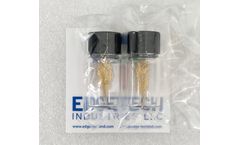
These small metallic rings, placed permanently into devices like catheters and pacemakers, provide a previously unseen level of clarity during procedures and surgeries. They allow for imaging equipment to precisely locate devices and ensure that they are in the right position. Even better, the marker bands are radiolucent, meaning that they are invisible under ...

Gold nanoparticles have a good application prospect in biological imaging, mainly in the following aspects: Magnetic resonance imaging Gold nanoparticles can provide high-contrast images, so they are an excellent contrast agent for MRI (magnetic resonance imaging). ...

Stainless Steel Pipes and the Threat of Corrosion Stainless steel pipes are a popular choice in many industrial settings due to their strength, durability, and resistance to corrosion. However, even stainless-steel pipes are not immune to rust and other related issues, such as pitting or discoloration. Therefore, it’s essential to be aware of the conditions that could lead to corrosion and ...

Radiation sensors play a crucial role in many applications, from medical imaging and environmental monitoring to nuclear power plant safety and space exploration. These sensors detect and measure the presence and intensity of various types of radiation, including gamma rays, X-rays, and alpha and beta particles. Over the years, ...