
Refine by
Xrf Analysis Articles & Analysis
105 articles found

XRF analysis changes the economics: test cathode material in 3-10 seconds, identify cobalt, nickel, iron, manganese, and phosphorus, and route accordingly. ...
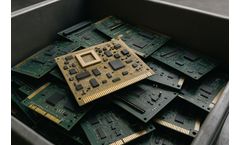
Sorting everything as mixed scrap undervalues premium material and erodes potential margins.High-value e-waste processors consistently outperform by testing before sale. XRF analysis is the practical method for high-volume precious metals grading in electronics, enabling rapid identification of gold, silver, palladium, and platinum content in 1–10 seconds ...
The scale said copper weight. But an XRF test revealed it was actually 70% copper, 30% nickel—worth 3x more than pure copper scrap. ...
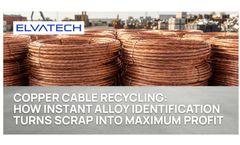
Without accurate differentiation, recyclers risk underpricing high-value material or receiving penalties for contaminated lots. Instant alloy analysis using portable X-ray fluorescence (XRF) transforms cable recycling economics. ...
That’s why scrap recyclers all over the world are switching to instrumental composition control – first of all to X-ray fluorescence analysis (XRF). Handheld XRF analyzers have become a standard tool at scrap yards: they allow you to identify the chemical composition and alloy grade in seconds, right on site, without cutting samples ...
These additions have a strong influence on the structure of the coating and its corrosion resistance, so accurate measurement of their concentrations is a necessary condition for ensuring quality. X-ray fluorescence (XRF) analysis provides a fast, non-destructive way to determine the chemical composition of coatings directly in production. This article discusses ...
In modern electronics manufacturing, precise control of solder alloy composition is critical for assembly quality and reliability. Electronic manufacturing services (EMS) and surface-mount technology (SMT) lines consume kilograms of tin-based solders every day—both lead-free alloys (e.g., Sn-Ag-Cu or Sn-Bi) and classic tin-lead (Sn-Pb) for specialized tasks. Even small deviations in ...
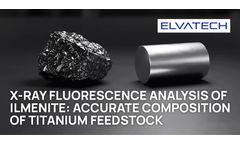
Ilmenite and Its Significance: Where It’s Used and Why Composition Matters Ilmenite is a mineral—the primary source of titanium—occurring as iron–titanium oxide (FeTiO3). It is a raw material for producing titanium dioxide (TiO2), a widely used white pigment, and for metallic titanium. About 95% of all mined titanium feedstock is processed into TiO2 pigment used in paints ...
That’s why it’s essential to know exactly what elements are in the alloy and in what concentrations. This is where XRF analysis provides a clear advantage: it determines the elemental composition of a sample in seconds—without destroying ...
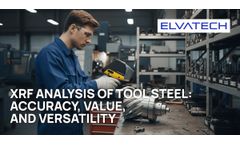
Why composition control matters Tool steel is the foundation of cutting and measuring instruments, machine parts subject to heavy wear, and dies for cold and hot forming. Even the slightest deviations in its composition can affect hardness, wear resistance, or hardenability. The result: equipment downtime, costly remelting of batches, or reduced service life of finished products. For ...

Imagine the first human settlements: people building homes, making pottery, storing water and grain. The material that made all this possible was clay. It is highly plastic, easily molded into any shape, and after firing becomes as hard as stone. Not by chance, clay tablets became the very first “pages” of human history. Even today, clay remains the foundation of entire industries: ...
That’s why fast, accurate, and non-destructive XRF analysis (X-ray fluorescence analysis) becomes an indispensable tool. ...

Wood has been part of human life for millennia - from a childhood understanding of it as the “trunk of a tree” to recognizing it as an anisotropic, fibrous material widely used in construction, paper production, furniture manufacturing, chemical industries, arts, and even as fuel. Chemically, wood is a complex structure containing a range of organic compounds and various chemical ...
Obtaining precise results in X-ray fluorescence (XRF) analysis requires thorough and proper sample preparation. For liquid samples, meticulous preparation ensures high accuracy and reproducibility of measurement outcomes. This article covers essential aspects of liquid sample preparation and handling procedures for XRF ...
Introduction To obtain reliable and reproducible results by X-ray fluorescence (XRF) analysis, it is crucial that the sample be as compositionally uniform as possible and optimally prepared in terms of structure and surface. ...
For practitioners performing X-ray fluorescence (XRF) analysis, understanding key metrological concepts is crucial to obtaining meaningful ...
Introduction Effective quality control of solder joints is critical in the electronics industry. Precise monitoring of lead (Pb) and tin (Sn) content is essential, as incorrect Sn/Pb ratios can lead to soldering defects, reduced equipment reliability, and non-compliance with international safety regulations, such as the RoHS directive, which restricts hazardous ...
Introduction Soil is the foundation of agriculture and ecosystems, yet industrial activities and pesticides often introduce toxic metals like lead, cadmium, or mercury. Rapid assessment of soil composition is essential for farmers, environmental engineers, ecologists, and regulators. X-ray fluorescence (XRF) delivers multi-element results in minutes without complex lab work, making it an ...

Elvatech is pleased to announce the release of the ElvaX Mobile, a portable XRF analyzer designed specifically for rapid and precise elemental analysis directly in the field. ...
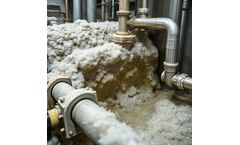
Have you noticed a decline in the performance of your water-cooled equipment For many manufacturing plant operators and engineers, one of the primary challenges is how to minimize silica scale in process water. Many sustainability professionals find that to minimize silica build-up in process equipment is a struggle, often leading to significant operational challenges. Silica, a prevalent ...