
Refine by
Zeolite Adsorbent Articles & Analysis
23 articles found
The answer depends primarily on airflow volume and VOC concentration.RCO for Medium-to-High Concentration Exhaust Regenerative Catalytic Oxidation (RCO) is suitable for:Medium airflow Medium-to-high VOC concentrations Solvent-dominated exhaust streams Advantages:Thermal recovery efficiency above 95% Lower operating cost High VOC destruction efficiency Stable long-term operation ...
CADAIR VOC Treatment Solution After detailed site investigations and process analysis, CADAIR designed the following system:Pretreatment + Zeolite Rotor Concentration + Three-Chamber RTO This technology is widely applied in:Photovoltaic Silver Powder VOC Treatment Conductive Silver Paste VOC Treatment Photovoltaic Adhesive VOC Treatment Electronic Chemical VOC Treatment Silicone ...
The optimal solution depends on airflow volume, VOC concentration, solvent composition, and operating requirements.Regenerative Thermal Oxidizer (RTO) RTO technology is widely recognized as one of the most effective solutions for printing exhaust gas treatment.The system oxidizes VOCs at temperatures typically ranging from 760°C to 980°C, converting harmful organic compounds into carbon dioxide ...
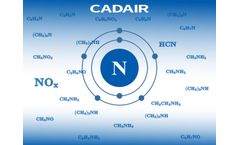
The process of "Scrubbing Tower + Adsorption + Catalytic Oxidation (CO)" is adopted, in which the scrubbing tower is used to absorb acidic gases such as hydrogen sulfide, creating good conditions for subsequent treatment (B) Adsorbent Adsorption Method The adsorption method is a treatment technology that intercepts VOCs molecules in waste gases by utilizing the surface ...
Best Solution for Large-Airflow, Low-Concentration VOC Exhaust Recommended Technology Combination For large airflow and low VOC concentration applications, the most widely adopted and cost-effective solution globally is:Adsorption Concentration + Thermal Oxidation Typical configurations include:Zeolite Rotor + RTO Zeolite Rotor + RCO Activated Carbon + Catalytic Oxidizer ...
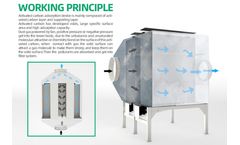
Organic waste gas adsorption treatment, which is a treatment method that physically adsorbs and collects VOC. Activated carbon, zeolite, silica, etc. are used as adsorbents. ...
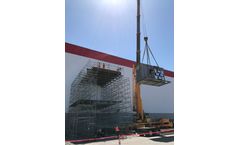
The first decision was to route all ambient process air sources to a zeolite concentrator wheel. The wheel uses a zeolite substrate to adsorb the VOCs and HAPs out of the process gases and onto the concentrator surface. ...

…can consist of a number of finely ground materials, such as pharmaceutical agents, synthetic adsorbents (MOFs, zeolites, activated carbons), filling materials by powder manufacturing or raw materials for ceramic bodies and construction materials. ...
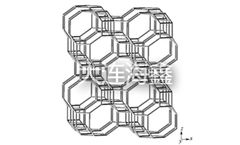
Therefore, SSZ-13 shows high selectivity to light olefins.3, Application in gas separationThere is not only zeolitic channels, but also non-zeolitic channels with larger pore size than that of molecular sieve(3.8 Å)in SSZ-13 zeolitic membrane. ...

In this study, titanium dioxide (TiO2) and high-silica zeolite (HSZ-385) composites were synthesized and applied for the treatment of crotamiton in secondary effluent. Crotamiton was rapidly adsorbed by HSZ-385, and the adsorption performance of crotamiton in the secondary effluent was quite close to that in the test using ultrapure water. ...
The adsorption efficiency of Sr2+ and Ba2+ from aqueous solutions by zeolite 4A was investigated. Adsorption studies were carried out both in single and binary component systems. ...
The potential of natural zeolite as a low-cost adsorbent was investigated for the removal of zinc from aqueous solution using a continuous fixed bed column. The zeolite tested was taken from the same source (Jabal Uniza in south Jordan) and subjected to crushing and sieving only, without any treatment. ...

There are already a few products that look to the power of the sun to improve water quality but Panasonic has developed a new technology that is looking to change the way people approach this idea. The company recently presented a new system at Tokyo’s Eco Products Fair that utilises sunlight and photocatalysts to purify polluted water that has been extracted from the ground, improving ...
Ammonium ion adsorption by laboratory-synthesized zeolite (linde type A; LTA) was investigated in batch kinetics experiments. ...
In present work, visible light sensitive TiO2/adsorbent nanocomposites (TNC) were prepared via a facile wet chemical method. Three types of adsorbents including zeolites (F-9, HSZ-690 and HSZ-930), mesoporous silica (MPS-2.7 and 4) and activated carbon, were used as the porous substrates for nanocomposites. ...

The ability of activated carbon-zeolite mixtures as an adsorbent was investigated in this research. Results of the batch experiments indicated that more than 522.2 mg/g of colour, 52.63 mg/g of iron, 232.6 mg/g of COD and 21.01 mg/g of ammoniacal nitrogen were removed by a mixture of activated carbon and zeolite. Results of the column studies ...
A carbon-zeolite composite adsorbent has been studied for COD and ammoniacal nitrogen removal in semi-aerobic landfill leachate. ...
Photocatalytic degradation of Methyl Ethyl Ketone (MEK) was carried out in gas phase using TiO2 supported on different adsorbents. Based on size and surface area, three different adsorbents, montmorillonite, β-zeolite and MCM-41 were tested. ...

The VOCs from these sources are adsorbed onto zeolite that is impregnated onto a honeycomb substrate as the air passes through the substrate. These adsorbed VOCs are then desorbed off the concentrator wheel in an airflow that is one-tenth the process flow rate—resulting in a VOC concentration approximately 10 times higher than the process ...
The main limitation of this technology is the high operating cost associated with adsorbent replacement or regeneration when high influent concentrations are treated. ...