
Refine by
Zero Liquid Discharge Articles & Analysis
124 articles found
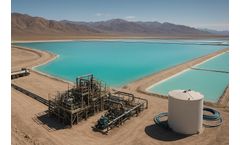
To mitigate these risks, many companies invest in water recycling and zero-liquid discharge (ZLD) systems. Fluence’s decentralized treatment and reuse capabilities enable on-site treatment and reuse of process water, reducing discharge volumes and improving water security.4. ...
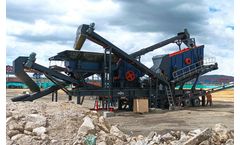
When evaluating a stone crusher(chancadoras de piedra) for purchase, operators targeting green building markets should prioritize models with superior acoustic performance.Water Management and Recycling Sustainable operations minimize freshwater consumption and eliminate contaminated discharge. Closed-loop water systems that capture and recycle process water demonstrate ...
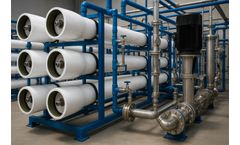
Process configurations, economics, and environmental tradeoffs vary across membrane concentrate treatment and zero liquid discharge (ZLD) systems.Containerized and decentralized architectures help manage this uncertainty. ...
Data centers consume significant water resources through evaporative cooling systems, with cooling tower blowdown representing one of the largest sources of water waste in these facilities. As water scarcity intensifies and discharge regulations tighten, recovering and reusing blowdown water has shifted from an optional sustainability initiative to an operational necessity. This article examines ...

The data center industry stands at a critical juncture. As facilities scale to meet exponential computing demands, water consumption has emerged as a defining operational challenge. Traditional approaches focused on water efficiency are no longer sufficient—leading operators are now pursuing water positive strategies that return more water to local watersheds than their facilities consume. ...
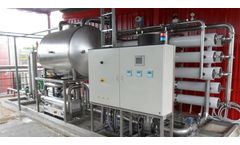
A comprehensive guide to sourcing, treating, reusing, and recovering water across industrial operations Industrial water management is under more pressure than ever. Water-stressed regions, rising production demands, and tighter regulations are forcing plants to rethink how they source, treat, and discharge water. Instead of treating water as a one-way resource that comes in, gets used, and goes ...
Many companies are now adopting sustainable wastewater management solutions like Zero Liquid Discharge (ZLD). This process ensures no wastewater is discharged into the environment, significantly reducing water pollution and promoting water reuse. ...
ByYASA ET
The exponential growth of artificial intelligence, cloud computing, and edge computing infrastructure has pushed data center cooling systems to their operational limits. As facilities scale to meet unprecedented thermal loads, the traditional approach to data center cooling water treatment faces mounting challenges. These include persistent biofouling, Legionella contamination risks, mineral ...
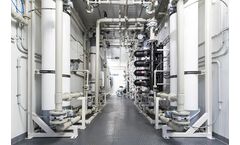
Now is the time to lay the groundwork for greater efficiency and compliance Water is the lifeblood of communities, industries, and ecosystems. As population pressures, climate uncertainty, and stricter regulatory demands mount, the water and wastewater sectors are entering a period of rapid transformation. For firms, municipalities, and regulators alike, staying ahead means embracing innovation ...

Discover how best practice KPI design can drive innovation trials and increase technology adoption in the water sector. This blog is the last of a 3-part series unpicking what makes the Trial Reservoir model – boasting a 70% success rate – so distinctive. In it, we explore the elements that matter most when designing tech trials. If you missed the beginning, jump back and read ...
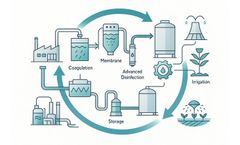
Water scarcity pressures and stricter discharge regulations are driving industrial facilities and municipal operators to implement comprehensive water reuse strategies. However, successful water reuse projects require methodical scoping that matches treatment technologies to specific water quality parameters and operational constraints. This systematic approach prevents costly oversizing, ensures ...
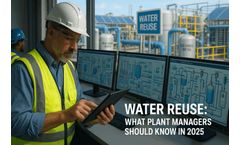
Water scarcity isn’t coming—it’s here. While your plant operates under increasingly stringent discharge regulations and rising water costs, the solution may be flowing right past your facility. Industrial water reuse has evolved from an environmental nice-to-have to an operational necessity, yet many plant water management teams still approach it with outdated assumptions and ...
Traditional treatment methods often struggle to achieve complete resource recovery and zero liquid discharge (ZLD). The SOLIDEST vacuum evaporator offers a highly efficient and energy-saving solution for treating electroplating wastewater—particularly chrome plating effluent—through its advanced low-temperature vacuum evaporation process.Learn ...
ByYASA ET
Water management is playing an increasing role in efforts to increase sustainability As the world increases the pace of its transition to renewable energy sources, the oil and gas industry is facing mounting pressure to reduce emissions, conserve resources, and optimize energy use. Governments and regulators across the globe are introducing energy reuse and efficiency standards aimed at curbing ...
Advanced water treatment technologies overcome obstacles that stand in the way of producing ultrapure water for industrial use Access to high-quality demineralized water is essential for many industries, including power generation, pharmaceuticals, semiconductors, high-tech manufacturing, electronics, and chemical processing. It can be challenging, though, to maintain a reliable supply of ...
Zero liquid discharge (ZLD) is a strategic wastewater management system that ensures that there will be no discharge of industrial wastewater into the environment or it's discharge would be in the forms of solids in the best case scenario. ...
ByYASA ET
The semiconductor industry’s pursuit of smaller, faster, and more powerful chips demands ultrapure water. Achieving this level of water purity presents water management challenges, making silica water treatment management solutions for semiconductor companies crucial. From high water usage to stringent regulations, semiconductor companies face several water treatment process complexities. ...

Many companies are turning to greenhouse farming for increased production, disease and pest prevention, year-around growing, stability of environment and increased profits. Several of these benefits are driven by advances in fertigation and ...
Mining operations generate significant amounts of wastewater that can pose serious environmental risks if left untreated. Solutions for treating wastewater from mining operations have become increasingly sophisticated and effective in recent years. As the mining industry faces stricter regulations and growing pressure to minimize its environmental impact, implementing robust wastewater treatment ...
The United States consumes an estimated 322 billion gallons of water daily. Industrial applications account for nearly half this total usage. Industrial wastewater presents tremendous challenges to companies and the communities they operate within. The amount of water consumed, plus the significant effluent produced by industrial clients poses great challenges and costs for both the industrial ...