Logo XPRT
Companies
Products
Services
Software
Training
Applications
Sign in
List your business

Advertising options
  1. Home
  2. Articles
  3. zero valent iron
Show results for
Products
Services
Applications

Companies

News
Articles
Books
Downloads
Videos

Refine by
Date

  • Older

Zero Valent Iron Articles & Analysis

87 articles found
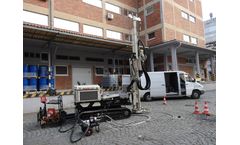
FARMAK SITE: PILOT APPLICATION INTO A DEEP AQUIFER PREDOMINANTLY POLLUTED BY TRICHLOROETHYLENE (TCE)

FARMAK SITE: PILOT APPLICATION INTO A DEEP AQUIFER PREDOMINANTLY POLLUTED BY TRICHLOROETHYLENE (TCE)

Therefore, the remediation company DEKONTA arrived at an inventive decision to combine the direct-push injected NANOFER particles with a subsequent employment of the thermally enhanced in-situ bioremediation supported by the application of organic substrate (lactate). REMEDIATION APPROACH Iron nanoparticles were applied under pressure into a very complex geological matrix in ...
ByNANO IRON s.r.o.


BOS 100 Takes on Carbon Tetrachloride at Oregon Site - Case Study

BOS 100 Takes on Carbon Tetrachloride at Oregon Site - Case Study

The subject property formerly operated as the Retail and Commercial Farm facility. The facility formerly stored and sold feed, farm equipment, and various farming chemicals (fertilizers, herbicides, and pesticides, etc.). In 2015, prior to the potential sale of the property, a Phase I Environmental Site Assessment (ESA) and subsequent Phase II ESA were undertaken. The Phase II ESA identified ...

ByRemediation Products Inc. (RPI)


Chlorinated VOC Groundwater & Soil Remediation - Case Study

Chlorinated VOC Groundwater & Soil Remediation - Case Study

Permanganate was injected via direct push borings to treat the margins of the plume and a reactive barrier consisting of granular zero-valent iron and EHC from Adventus was created via direct-push injection just upgradient of the channel. ...

ByBurns & McDonnell


Multiparameter sonde used in combined remedy approach and saves $200,000 in potential costs - Case Study

Multiparameter sonde used in combined remedy approach and saves $200,000 in potential costs - Case Study

HWA contracted Leo Lehmicke, Ph.D., to help design the cleanup, which included ‘flipping’ the aquifer chemistry to a reducing environment (by adding zero-valent iron), adding electron donor (emulsified vegetable oil), substrate (lactic acid), and chlorinated solvent-degrading bacteria. ...

ByIn-Situ Environmental


Preparation of magnetic carbon/Fe3O4 supported zero-valent iron composites and their application in Pb(II) removal from aqueous solutions

Preparation of magnetic carbon/Fe3O4 supported zero-valent iron composites and their application in Pb(II) removal from aqueous solutions

Nanoscale zero-valent iron (NZVI) was first assembled on magnetic carbon/Fe3O4 (CM) with a combination of hydrothermal and liquid phase reduction methods. ...

ByIWA Publishing


Enhancing dewaterability of waste activated sludge by combined oxidative conditioning process with zero-valent iron and peroxymonosulfate

Enhancing dewaterability of waste activated sludge by combined oxidative conditioning process with zero-valent iron and peroxymonosulfate

In this study, a novel oxidative conditioning approach was applied to enhance the dewaterability of waste activated sludge by the combination of zero-valent iron (ZVI) and peroxymonosulfate (PMS). It was found that the dewaterability of sludge was significantly improved after the addition of ZVI (0–4 g/g TSS) (TSS: total suspended solids) and PMS ...

ByIWA Publishing


Ochrobactrum anthropi used to control ammonium for nitrate removal by starch-stabilized nanoscale zero valent iron

Ochrobactrum anthropi used to control ammonium for nitrate removal by starch-stabilized nanoscale zero valent iron

In this study, the hydrogenotrophic denitrifying bacterium Ochrobactrum anthropi was added in to the process of nitrate removal by starch-stabilized nanoscale zero valent iron (nZVI) to minimize undesirable ammonium. The ammonium control performance and cooperative mechanism of this combined process were investigated, and batch experiments ...

ByIWA Publishing


Single and combined removal of Cr(VI) and Cd(II) by nanoscale zero-valent iron in the absence and presence of EDDS

Single and combined removal of Cr(VI) and Cd(II) by nanoscale zero-valent iron in the absence and presence of EDDS

This study examined the feasibility of nanoscale zero-valent iron (nZVI) for the single and combined removal of Cr(VI) and Cd(II) with or without ethylene diamine disuccinic acid (EDDS). ...

ByIWA Publishing


Scaling-up of a zero valent iron packed anaerobic reactor for textile dye wastewater treatment: a potential technology for on-site upgrading and rebuilding of traditional anaerobic wastewater treatment plant

Scaling-up of a zero valent iron packed anaerobic reactor for textile dye wastewater treatment: a potential technology for on-site upgrading and rebuilding of traditional anaerobic wastewater treatment plant

However, the need to improve process feasibility of high treatment efficiency as well as to shorten hydraulic retention time has raised interest on several intensification techniques. Zero valent iron (ZVI) packed anaerobic digesters have the potential to become an on-site upgrading wastewater treatment technology through building a ZVI bed in a ...

ByIWA Publishing


Adsorption of Hg(II) and Pb(II) ions by nanoscale zero valent iron supported on ostrich bone ash in a fixed-bed column system

Adsorption of Hg(II) and Pb(II) ions by nanoscale zero valent iron supported on ostrich bone ash in a fixed-bed column system

In this research, ostrich bone ash (OBA) was modified with nanoscale zerovalent iron (nZVI) particles and applied as a novel composite adsorbent (OBA/nZVI) for dynamic adsorption/reduction of Hg(II) and Pb(II) ions in a fixed-bed column system. Entrapment of nZVI in OBA beads barricades the particles from oxidation and aggregation. The dynamic behavior of metal ions removal by OBA/nZVI was ...

ByIWA Publishing


The decolorization and mineralization of orange II by microwave-assisted ball milling

The decolorization and mineralization of orange II by microwave-assisted ball milling

Experimental variables of initial dye concentration, iron dosage, microwave power, solution pH and initial H2O2 concentration were systematically studied. ...

ByIWA Publishing


Case study - Hydraulic slurry emplacement of potassium permanganate and zero valent iron for integrated site remediation

Case study - Hydraulic slurry emplacement of potassium permanganate and zero valent iron for integrated site remediation

Remedial Approach: We integrated ISCO using potassium permanganate in the source area, with ISCR using zero valent iron barriers in the downgradient plume area. Reagents were injected as high-solids slurries to distribute large reagent volumes effectively within specific and focused target zones in the low-permeability saprolite and a fractured ...

ByGeo-Cleanse International, Inc. (Geo-Cleanse)


Synthesis of chitosan zero-valent iron nanoparticles-supported for cadmium removal: characterization, optimization and modeling approach

Synthesis of chitosan zero-valent iron nanoparticles-supported for cadmium removal: characterization, optimization and modeling approach

Herein, chitosan (CS) impregnated with nanoparticles of zero-valent iron (NZVI) was fabricated onto a magnetic composite of CS@NZVI as an adsorbent for cadmium (Cd2+) removal from aqueous solution. ...

ByIWA Publishing


Adsorption/reduction of N-dimethylnitrosamine from aqueous solution using nano zero-valent iron nanoparticles supported on ordered mesoporous silica

Adsorption/reduction of N-dimethylnitrosamine from aqueous solution using nano zero-valent iron nanoparticles supported on ordered mesoporous silica

A reductive process has been investigated as an alternative treatment method for NDMA removal from water. In this manuscript, zero-valent iron nanoparticles (ZVINPs) were synthesized, and then supported on mesoporous silica materials with high surface area (MCM-41) to prepare a stable ZVINP/MCM-41 nanocomposite. ...

ByIWA Publishing


Elimination of nitrate in secondary effluent of wastewater treatment plants by Fe0 and Pd-Cu/diatomite

Elimination of nitrate in secondary effluent of wastewater treatment plants by Fe0 and Pd-Cu/diatomite

In this research, the novel diatomite-supported palladium-copper catalyst (Pd-Cu/diatomite) with zero-valent iron (Fe0) was tried to use for catalytic reduction of nitrate in wastewater. ...

ByIWA Publishing


Heterogeneous selenite reduction by zero valent iron steel wool

Heterogeneous selenite reduction by zero valent iron steel wool

Removal of selenite ions from aqueous solutions under anoxic condition at pH 6–8.5 by zero valent iron steel wool (ZVI-SW) was investigated in bench-scale kinetic experiments using wet chemical, microscopic and spectroscopic techniques (X-ray photoelectron spectroscopy). ...

ByIWA Publishing


Zero valent metal loaded silica nanoparticles for the removal of TNT from water

Zero valent metal loaded silica nanoparticles for the removal of TNT from water

Silica nanoparticles with a surface area of 673.60 m2/g and particle size of 8–12 nm were prepared using aerogel process (AP) followed by super critical drying. Zero valent Fe, Co, Pt, and bimetallic Fe/Pt and Fe/Co were loaded using an incipient wetness impregnation technique and subsequent reduction. Scanning electron microscopy-energy dispersive X-ray ...

ByIWA Publishing


Application of coupled zero-valent iron/biochar system for degradation of chlorobenzene-contaminated groundwater

Application of coupled zero-valent iron/biochar system for degradation of chlorobenzene-contaminated groundwater

A novel iron-carbon micro-electrolysis system, bamboo-derived biochar coupled with zero-valent iron (ZVI), was investigated for chlorobenzene (CB)-contaminated groundwater removal. ...

ByIWA Publishing


Removal of Ni(II) and Cu(II) from aqueous solutions using ‘green’ zero-valent iron nanoparticles produced by oak and mulberry leaf extracts

Removal of Ni(II) and Cu(II) from aqueous solutions using ‘green’ zero-valent iron nanoparticles produced by oak and mulberry leaf extracts

The production of zero-valent iron nanoparticles, using extracts from natural products, represents a green and environmentally friendly method. Synthesis of ‘green’ zero-valent nanoparticles (nZVI) using oak and mulberry leaf extracts (OL-nZVI and ML-nZVI) proved to be a promising approach for Ni(II) and ...

ByIWA Publishing


Improvement of As(III) removal with diatomite overlay nanoscale zero-valent iron (nZVI-D): adsorption isotherm and adsorption kinetic studies

Improvement of As(III) removal with diatomite overlay nanoscale zero-valent iron (nZVI-D): adsorption isotherm and adsorption kinetic studies

Nanoscale zero-valent iron coated on diatomite (nZVI-D) was successfully synthesized as a composite material. ...

ByIWA Publishing

  • Previous
  • Next
Need help finding the right suppliers?Try XPRT Sourcing. Let the XPRTs do the work for you
Back to top
About XPRT Media

XPRT is a global industry marketplace and information resource. Online product catalogs, news, articles, events, publications & more.


  • FAQs
  • Company sitemap
  • Category sitemap
XPRT is part of XPRT Media All Rights Reserved.
Terms
Privacy
  • XPRT RSS List
Our sites:
Environmental XPRT
Agriculture XPRT
Energy XPRT
Medical XPRT