
Refine by
Zld System Articles & Analysis
30 articles found
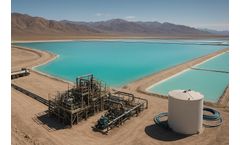
Fluence addresses this through decentralized water reuse and membrane aerated biofilm reactor (MABR) systems, enabling cooling with recycled or nonpotable water and reducing pressure on municipal supplies to support continued expansion.3. ...
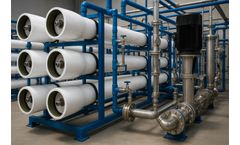
Rather than committing to a single fixed end state, facilities can adjust recovery levels, add treatment stages, or shift disposal strategies as conditions change. At the extreme, ZLD systems that include membrane processes can eliminate liquid discharges while converting residuals into manageable solids.Reducing Disposal Through Reuse and System ...
Data centers consume significant water resources through evaporative cooling systems, with cooling tower blowdown representing one of the largest sources of water waste in these facilities. As water scarcity intensifies and discharge regulations tighten, recovering and reusing blowdown water has shifted from an optional sustainability initiative to an operational necessity. This article examines ...
Water scarcity isn’t coming—it’s here. While your plant operates under increasingly stringent discharge regulations and rising water costs, the solution may be flowing right past your facility. Industrial water reuse has evolved from an environmental nice-to-have to an operational necessity, yet many plant water management teams still approach it with outdated assumptions and ...
Lack of Economies of Scale: Most ZLD systems produce only 1–5 tons of salt per day, which is too little to form stable supply chains, making downstream customers reluctant to purchase. ...
ByYASA ET
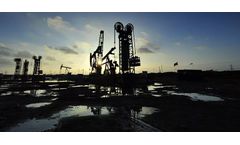
Water management is playing an increasing role in efforts to increase sustainability As the world increases the pace of its transition to renewable energy sources, the oil and gas industry is facing mounting pressure to reduce emissions, conserve resources, and optimize energy use. Governments and regulators across the globe are introducing energy reuse and efficiency standards aimed at curbing ...
Zero liquid discharge (ZLD) is a strategic wastewater management system that ensures that there will be no discharge of industrial wastewater into the environment or it's discharge would be in the forms of solids in the best case scenario. ...
ByYASA ET
In today’s world, where both economic pressures and environmental concerns are intensifying, the reuse of wastewater has become a key issue. Many activities at industrial and municipal sites generate wastewater, which, if not properly treated, can release harmful pollutants into the environment. Membracon, a global leader in sustainable solutions, is tackling this problem head-on by using ...
Zero liquid discharge (ZLD) is desirable to industry as well as the environment because it saves money, reduces liability and generates good will with customers and neighbors. ZLD facilities take strides to reduce the amount of water used in their manufacturing process, sometimes they use advanced wastewater treatment equipment to recycle a portion of their ...
In a world grappling with an ever-growing demand for freshwater, the significance of key factors impacting desalinated water quality has never been more pronounced. As our global population swells, urbanization accelerates, and the climate undergoes transformation, the need for access to freshwater has reached critical levels. By 2025, it is projected that nearly two-thirds of the world’s ...
Forward osmosis (FO) is an innovative water treatment technology that uses a semipermeable membrane and natural osmotic pressure to separate pure water from contaminants and produce a clean water supply. ...
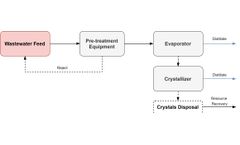
Zero liquid discharge (ZLD) is a strategic wastewater management system that ensures that there will be no discharge of industrial wastewater into the environment. ZLD is achieved by treating wastewater through water recycling and then recovery and reuse for industrial purpose. Hence it is a cycle of closed loop with no discharge. Although ...
ByYASA ET
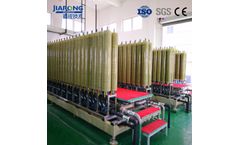
The core technology of Jiarong includes Disk-tube RO membrane system, Spiral-tube RO membrane system, Tubular UF membrane system and Micro-tube NF/RO membrane system etc. The main application fields cover leachate treatment, difficult wastewater treatment, flue gas desulfurization and coal chemical wastewater ...

The model creates significant benefits for society by eliminating pollution and allowing natural systems to recover. Although the term often is used in the context of products or goods, it can also be applied to commodities like water. ...
Adopt and embrace new processes, or be left high and dry by the centralized system — literally. Change is opportunity One option — arguably the best option — is investing in closed-loop water treatment systems that live on-site with the business and recycle as much of the used water as possible. In the past, this kind of change was ...
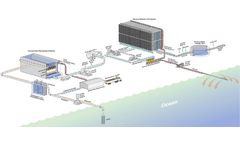
Subsurface intakes are below the seafloor so they do not don’t cause any impingement or entrainment and have the added benefit of natural filtration through sand. Such systems include four types of well intakes and two types of galleries. ...
These include water recycling and reuse, and the use of zero-liquid discharge (ZLD) systems, which use, treat, and reuse water in a closed-loop system without release or discharge. ...
Over the past decade, the Hybrid ZLD systems i.e. integrated zero liquid discharge (ZLD) systems have emerged as die most effective ZLD approach for dealing with the most difficult to treat wastewaters in many industries including power, refining, and chemicals. ...
The high recovery from the process results in a very cost-effective recycle / reuse system. Aquatech provided a HERO based system recovering 98% of the treated wastewater of the facility. The high recovery through HERO system resulted in a very small reject stream to be concentrated in a thermal unit. ...
The 310-megawatt (MW) power plant will serve as locally operated generation for the cities of Burbank, Anaheim, Glendale, Pasadena, Cerritos and Colton The Problem In order to expedite the CEC licensing process and ensure electrical generation availability by mid-2005, the Magnolia Power Project selected a “zero liquid discharge” option for the power plant’s reclaimed cooling ...