


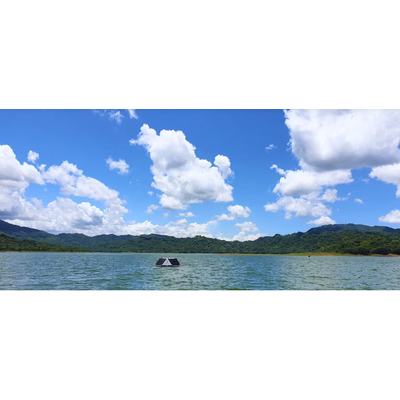
Source Water Protection for Drinking Water Utilities
Source water protection is the practice of managing reservoir and intake quality before water reaches the treatment facility. For utilities dealing with harmful algal blooms (HABs), cyanotoxins, and seasonal taste and odor events, it is often one of the most cost-effective approaches available. Prevention at the source reduces how much end-of-pipe treatment has to do.
Every liter of drinking water starts somewhere: typically a reservoir, river intake, or lake. What happens at that source shapes everything downstream: treatment plant load, chemical consumption, operational costs, and whether finished water meets regulatory standards and customer expectations.
This guide covers why source water quality directly affects treatment operations, what the main protection approaches are, the regulatory framework utilities need to manage, and how integrated monitoring and control work in practice.
How Source Water Quality Affects Treatment Plant Performance
Treatment plants are engineered around assumptions about raw water quality. When incoming water carries high algal biomass or significant cyanotoxin loads, those assumptions break down. The disruption can be gradual, or it can happen fast during a bloom event that compresses treatment decisions into hours.
The downstream effects are both operational and financial. Algae entering the intake clog filter media. This reduces filter run times and increases backwash frequency. Organic matter from algal cells raises chlorine demand during disinfection, which increases the formation of disinfection byproducts (DBPs) such as trihalomethanes (THMs) and haloacetic acids (HAAs). Both are regulated under the EPA’s Disinfectants and Disinfection Byproducts Rule. Powdered activated carbon (PAC) demand rises during bloom events. Customer complaints follow.
These costs are individually manageable. The problem is that they cluster during summer, precisely when water demand peaks, staff capacity is stretched, and the pressure to maintain service continuity is highest.
Source water protection distributes that pressure across the full operating season rather than concentrating it in a few weeks of reactive management.
Source Water Protection Approaches: What Utilities Use
No single intervention covers all source water quality challenges. Most effective programs combine several approaches. The main categories are:
1) Watershed and catchment management
Nutrient loading from agricultural runoff, urban stormwater, and failing septic systems drives eutrophication and cyanobacterial growth. Long-term watershed management programs reduce nutrient inputs through buffer zones, best management practices for agriculture, and land-use controls near reservoir catchments.
Watershed management is the most ecologically durable approach. Its limitation is the timeframe. Meaningful reductions in sediment phosphorus accumulation take years or decades. Internal nutrient loading from reservoir sediments can sustain algal growth long after external inputs are controlled. Watershed management is a necessary strategy, but for utilities managing active bloom problems today, it cannot be the only one.
2) Aeration and destratification
Mechanical aeration systems circulate water through the reservoir to disrupt thermal stratification, introduce oxygen to deep layers, and reduce the anoxic conditions that release sediment phosphorus. Destratification can reduce bloom intensity in stratified reservoirs and is a well-established tool in reservoir management.
Its effectiveness depends on reservoir geometry, depth, and stratification patterns. In large or deep reservoirs, full destratification may require significant infrastructure investment. Aeration modifies the conditions that favour blooms rather than targeting algae directly.
3) Selective withdrawal
Intake structures with multiple withdrawal levels allow operators to draw from water layers with the lowest algal biomass or the most favourable water chemistry at any point in the season. Selective withdrawal is a low-cost operational tool that can reduce algal load at the intake without additional chemical intervention.
4) Algaecide treatment
Copper sulfate and other algaecides have been used in source water reservoirs for decades. They reduce algal biomass when applied correctly. Associated costs include chemical procurement, potential effects on non-target organisms, repeated seasonal applications, and the risk of releasing intracellular cyanotoxins when cyanobacterial cells lyse.
5) Ultrasonic algae control
Ultrasonic treatment targets the buoyancy regulation of cyanobacteria directly. Specific frequency programs affect the gas vacuoles that buoyant cyanobacteria use to position themselves near the water surface, where light supports rapid growth. Without that positional advantage, cell proliferation slows substantially. The technology is chemical-free, autonomous, and solar-powered.
Unlike algaecides, ultrasonic treatment does not cause cell lysis. It therefore does not trigger a pulse of released cyanotoxins into the water column. This is a meaningful operational advantage for utilities monitoring finished water for microcystin and cylindrospermopsin compliance.
6) Combining approaches for source water protection
These approaches are not mutually exclusive. Watershed management addresses long-term nutrient reduction. Aeration improves stratification dynamics. Selective withdrawal optimises intake conditions. Ultrasonic control actively manages algal populations at the surface. Utilities with the most resilient source water programs typically layer these tools rather than relying on a single method.
Regulatory Framework: Cyanotoxins in Drinking Water
The regulatory framework for cyanotoxins in U.S. drinking water is still developing, but utilities managing HABs already operate within a clear set of reference levels.
The EPA issued 10-day drinking water Health Advisories for microcystins and cylindrospermopsin in 2015. These remain the primary federal reference points:
|
Cyanotoxin |
Children under 6 |
School-age children and adults |
|
Microcystins |
0.3 µg/L |
1.6 µg/L |
|
Cylindrospermopsin |
0.7 µg/L |
3.0 µg/L |
These are non-enforceable advisory levels rather than regulatory limits. However, they function as practical compliance triggers. Many states have adopted their own standards based on these values. Several now require public notification when cyanotoxin levels are detected in finished water.
Microcystins and cylindrospermopsin were also monitored under the EPA’s Unregulated Contaminant Monitoring Rule 4 (UCMR 4), which collected nationally representative occurrence data from thousands of public water systems between 2018 and 2020. EPA uses this data to inform future regulatory decisions under the Safe Drinking Water Act. Utilities in regions with documented cyanotoxin occurrence should treat current monitoring as baseline-building for a regulatory environment likely to tighten.
Treatment plant implications
Cyanotoxins can pass through conventional treatment when algal loads in source water are high. Granular activated carbon (GAC), advanced oxidation, and UV treatment remove dissolved cyanotoxins effectively. However, reducing the algal load in the reservoir before it reaches the plant is the first line of defence.
Taste and odor compounds, geosmin and MIB, are not regulated. However, they drive customer complaint volumes and shape public perception of water quality. Cyanobacteria and actinomycetes produce them under bloom conditions. Human taste can detect these compounds at concentrations as low as 10 nanograms per litre, well below any health threshold. The reputational cost of tap water that smells of earth or mildew should not be underestimated.
Continuous Monitoring: The Foundation of Source Water Protection
Source water protection decisions depend on data. When reservoir monitoring relies on periodic grab samples, the information available to guide treatment decisions is always lagging. A bloom that develops between weekly samples may not appear in laboratory data until concentrations are already rising steeply at the intake.
Continuous in-situ monitoring closes that lag. Tracking chlorophyll-a (total algal biomass), phycocyanin (cyanobacteria specifically), dissolved oxygen, temperature, and pH in real time allows operators to observe changing conditions as they develop. They can adjust PAC inventory, backwash scheduling, and chemical orders based on current reservoir conditions rather than last week’s sample results.
Predictive value
Continuous data also supports prediction. Chlorophyll-a trajectories, temperature profiles, and dissolved oxygen patterns are informative about where reservoir conditions are heading. When operators feed these parameters into a predictive model, it can provide advance warning of bloom development days before surface concentrations become problematic. This gives treatment staff time to prepare rather than react.