


- Home
- Companies
- Fluence Corporation
- Articles
- What Is a Sponge City?
What Is a Sponge City?
New approach to infrastructure uses nature-based planning to mitigate urban impacts on hydrology
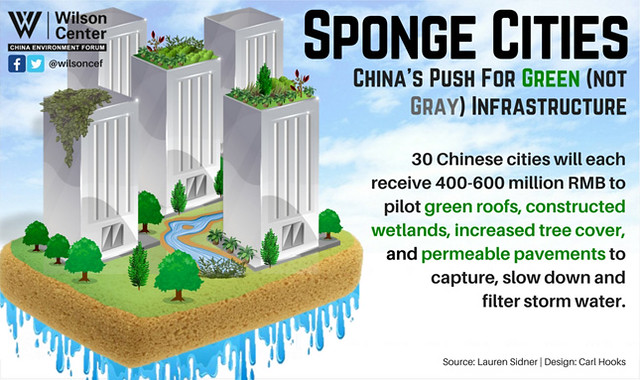
The Sponge City concept is a Chinese urban planning model that relies on natural stormwater management infrastructure, with a focus on flood control and mitigating urban development’s impacts on hydrology and ecosystems. Its goal is to increase infiltration, detention, storage, treatment, and drainage of water while improving urban livability.
The Sponge City model is similar to many familiar approaches worldwide, such as:
- Low Impact Development (LID)
- Sustainable Urban Drainage Systems (SUDS) (U.K.)
- Water Sensitive Urban Design (WSUD) (Australia)
- Active, Beautiful and Clean (ABC) (Singapore)
- Landscape Stormwater Management (Denmark)
Similar to these other approaches, the Sponge City model incorporates LID, SUDS, and WSUD. Yet, it also represents a return to Tian-rén-hé-yi, China’s ancient philosophy of harmony between people and nature.
After studying landscape architecture at Harvard, Professor Kongjian Yu, known as the “Sponge Cities Architect,” returned home to China with a mission to revive this ancient wisdom and help his nation’s cities find more harmony with nature. Kongjian said:
But, “Floods are not enemies,” he explained. “We can make friends with floods. We can make friends with water.”
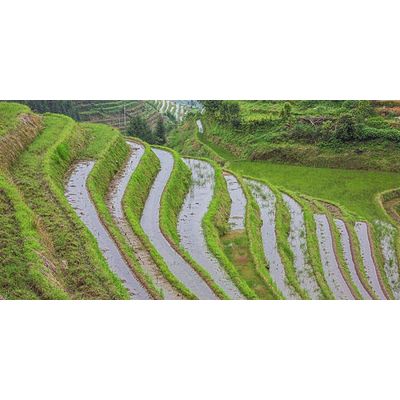
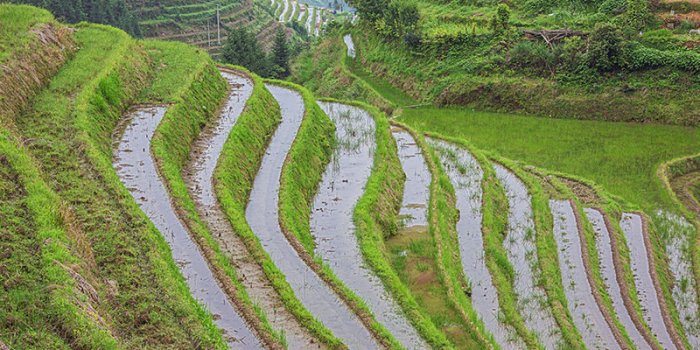
Kongjian’s Sponge Cities incorporate elements reminiscent of China’s ancient terraced rice farms, with urban terraces that residents can use as parks in the dry season. In the rainy season, the terraces retain water that might otherwise cause deadly flooding. Concrete use is minimal for such terraces, which double as wildlife habitats. The vegetation growing on the terraces also cleans the water.
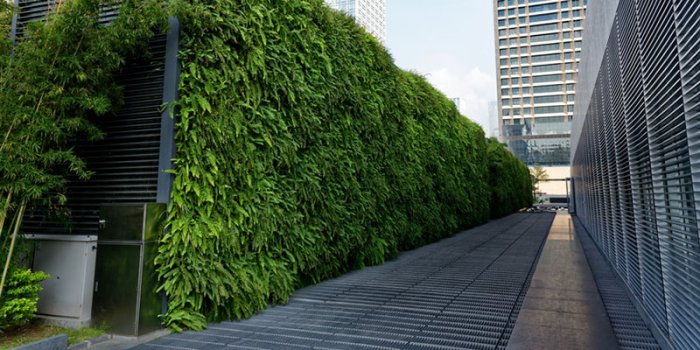
Beyond terraced wetlands and restored riverbanks, Sponge Cities also incorporate permeable pavement, as well as green walls, roofs, and buildings.
While Kongjian has faced some skepticism that his ideas could translate to functional solutions, the nature-based benefits provided by Sponge City design have generally rivaled or outperformed those of concrete infrastructure, and done it while bringing back lush urban growth, clean water, fish, and birds. Though the concept has been practiced since early 2000, it was the Beijing flood in 2012 that helped the Sponge City idea to spread to 250 Chinese cities. The concept is now branching into the United States, Russia, and Indonesia.
As part of the Sponge City concept, China also h3ly encourages the use of alternative water sources, including desalinated water, treated grey water, and harvested rainwater to bolster nonpotable water supplies.
Parallel with the Sponge City model, China has also rapidly increased wastewater reuse treatment to make limited water supplies go farther. For instance, Shenzhen, home to several Sponge City projects, reused 125.5 million m3 of water in 2020. The city has set a goal for water reuse to supply 15% of its total water supply.
Fluence has a proven catalog of alternative water source solutions, including Aspiral wastewater treatment with (MABR) technology for reuse, as well as NIROBOX reverse osmosis units for desalination.
With our Aspiral manufacturing facility in Jiangsu, China, we’re delivering modular wastewater and stormwater reuse in record time to meet tight five-year plan deadlines. Contact the experts at Fluence to discuss how to integrate alternative water sources into your nature-based infrastructure plan in China or anywhere in the world.