
Refine by
crop-yield-optimization books
9 books found
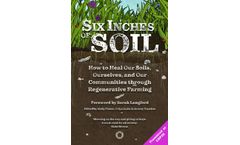
Six Inches of Soil the film and this companion book is the inspiring story of British farmers standing up to the industrial food system and transforming the way they produce food – to heal the soil, benefit our health and provide for local communities. How has it come to this point in our history that we hardly value the food we eat and the soil that it’s grown in? How is it that we ...

Management, Performance, and Applications of Micro Irrigation Systems, the fourth volume in the Research Advances in Sustainable Micro Irrigation series, emphasizes sustainable and meaningful methods of irrigation to counter rampant water scarcity. In many parts of the world, this scarcity significantly affects crop yield, crop quality, and, consequently, human quality of life. This important ...
Irrigation is one of the most important human activities sustaining civilization. On average, irrigated crop yields are double those from unirrigated land. It has been estimated that to meet the needs of the 8 billion population by 2025, the irrigated area must expand more than 20% and irrigated crop yields must improve by 40% above current yields. The issues and the newest technologies are ...
A few members of the Gossypium (cotton) genus are cultivated for the production of elongated single-celled fibers valued worldwide at about $20 billion annually at the farm gate, and which sustain one of the world’s largest industries (textiles) with an annual worldwide economic impact of about $500 billion. In a number of ways, cotton production and the textile industry are closely tied to ...
This book contains an account of the present status of knowledge and a detailed analysis of all aspects of sulphur, viz., the global S cycle; the present and future scenario of fertilizer demand and supply; management strategies of soil sulphur; uptake, assimilation and redistribution of sulphur in plants; biosynthesis and functions of various sulphur metabolites (glucosinolates, phytochelatins, ...
The United Nations’ Intergovernmental Panel on Climate Change (IPCC), already under severe criticism for violating the requirements of academic peer review and relying on secondary sources, comes under attack again in a new report co-produced by ...
Adverse environmental factors can impose stress on plants and influence the expression of the full genetic potential for growth and reproduction. The capability of plants to develop plastic response reactions, to adapt to environmental stress situations, is unique in the biological world. A goal of the research described in this volume is to increase crop productivity, particular in regions ...
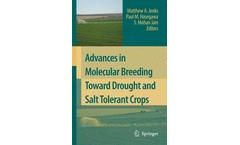
Plant stress caused by drought and salinity are among the major constraints on crop production and food security worldwide. Breeding programs to improve crop yield in dry and saline environments have progressed slowly due to our limited understanding of the underlying physiological, biochemical, developmental, and genetic mechanisms that determine plant responses to these forms of stress, as well ...