
Refine by
ionizing-radiation books
9 books found
Current radiation protection standards are based upon the application of the linear no-threshold (LNT) assumption, which considers that even very low doses of ionizing radiation can cause cancer. The radiation hormesis hypothesis, by contrast, proposes that low-dose ionizing radiation is ...

This Safety Guide provides guidance on the application of the concepts of exclusion, exemption and clearance as established in the International Basic Safety Standards for Protection against Ionizing Radiation and for the Safety of Radiation Sources. The Safety Guide includes specific values for activity concentrations for both radionuclides of ...
The fundamental safety objective — to protect people and the environment from harmful effects of ionizing radiation — applies to all circumstances that give rise to radiation risks. ...
The International Commission on Radiological Protection and the Euratom Council directive have specified that workers exposed to ionizing radiation shall be subjected to individual dose monitoring. In the past, individual doses have almost always been monitored by film badge dosimeters, but thermoluminescent dosimeters (TLDs) are now coming into widespread ...
Rather a comprehensive accompanying text is intended to impart to the scientific or professional user of Radiological Protection both data, the concepts and scientific bases of the discipline devoted to prevention of health risks to man from exposure to ionizing radiations and ...
A benchmark publication, the first edition of the Phosphor Handbook set the standard for references in this field. Completely revised and updated, this second edition explores new and emerging fields such as nanophosphors, nanomaterials, UV phosphors, quantum cutters, plasma display phosphors, sol-gel and other wet phosphor preparation techniques, preparation through combustion, bioluminescence ...
Human biomonitoring has developed from a research tool in occupational and environmental health to identify and quantify exposures to harmful substances in urine and blood. The analytical methods for detection of substances in biological media have considerably improved with smaller detection limits and more precise and specific measurements. Human biomonitoring is a valuable tool in exposure ...
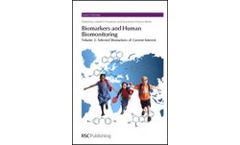
Human biomonitoring has developed from a research tool in occupational and environmental health to identify and quantify exposures to harmful substances in urine and blood. The analytical methods for detection of substances in biological media have considerably improved with smaller detection limits and more precise and specific measurements. Human biomonitoring is a valuable tool in exposure ...
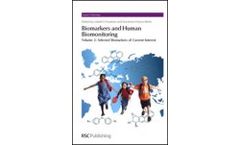
Human biomonitoring has developed from a research tool in occupational and environmental health to identify and quantify exposures to harmful substances in urine and blood. The analytical methods for detection of substances in biological media have considerably improved with smaller detection limits and more precise and specific measurements. Human biomonitoring is a valuable tool in exposure ...