


FLUTe products
Sealing a Borehole with Blank Liners
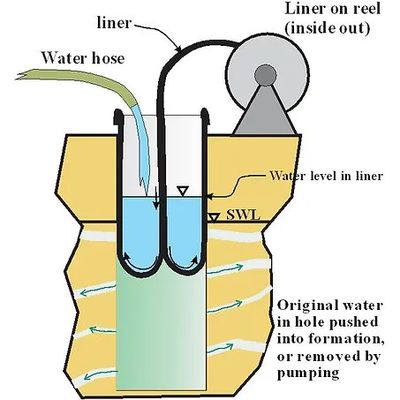
During the installation process (a process known as eversion), a small everted segment of the liner is placed within the well casing. Water is then added to the interior of the liner to create an annular pocket. The addition of water in the liner to a level above the head of the water in the formation created a driving pressure between the liner`s internal pressure and the pressure beneath the liner. The pressure differential is maintained by the addition of water in the liner and thus, the liner continues to propagate down the borehole (Figure 1). The driving pressure needed to evert the liner down the borehole mainly depends on the head of the formation. For high head or artesian conditions, differential pressure can be achieved by the addition of higher density muds to the interior of the liner. As the liner everts, the liner displaces the borehole water into the formation and seals off fractures (Animation).
NAPL FLUTe
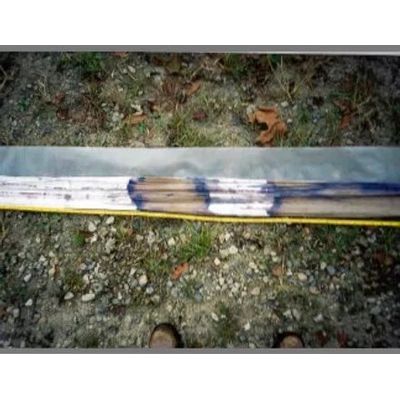
The NAPL FLUTe system is a reactive cover for the blank FLUTe liner which addresses the problem of locating NAPL free product in the formation. Eversion in Bedrock Wells: The NAPL FLUTe is everted into the borehole on the outside of a blank FLUTe liner. For a detailed PDF on the NAPL FLUTe installation description. Direct Push Installation (As seen in video above): The NAPL FLUTe is compression-wrapped and installed within Geoprobe rods once the terminal depth is reached. The NAPL FLUTe has a tube for water addition, and as water is added to the interior of the liner, the rods are removed in a stepwise fashion. A tether at the surface allows you to pull the liner out of the hole once the reaction time has finished. For a detailed PDF on the installation sequence.
Transmissivity Profiling
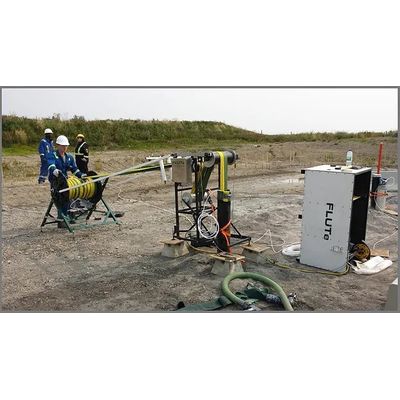
As a blank liner is installed and everts down the borehole, the water in the borehole is forced into the formation by whatever flow paths are available (e.g. fractures, permeable beds, solution channels, etc.). Figure 1 is a drawing of a simple everting liner with three additional features, (1) The FLUTe Profilier at the wellhead which measures the liner velocity and additional parameters which can influence the velocity of the liner descent, (2) the pressure transducer measures the excess head in the liner which is driving the liner down the hole, and (3) a pressure transducer measuring the head beneath the liner. From these features, all factors controlling the eversion rate of the liner are monitored.
Reverse Head Profile
The Reverse Head Profile is a technique developed by FLUTe for measuring the vertical head distribution in a borehole after completion of a FLUTe Transmissivity profile.
Water FLUTe
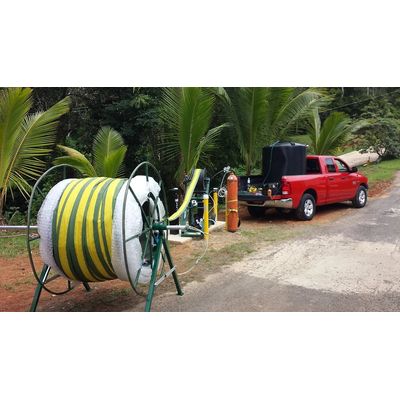
A Trusted Technology for High Quality Multilevel Groundwater Monitoring Since 1996. The Water FLUTe is a depth-discrete multilevel groundwater monitoring and head measurement system for use in overburden and bedrock groundwater assessments.