

OPGAL articles
Executive summary: A premium cooled OGI camera's higher upfront cost is offset by rapid leak detection ROI through product recovery, tax mitigation, and uptime. This article outlines the financial logic and key metrics for decision-makers in LDAR programs.
Cost and value drivers behind premium OGI cameras
The primary cost driver is a cooled MWIR detector (InSb or SLS) with a Stirling cryocooler reducing sensor temperature to about -196 C. This enables NETD under 10 mK, enabling
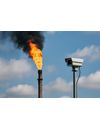
The downstream petrochemical sector treats flare stacks as both a critical safety valve and a high-stakes compliance target. Under EPA CAM mandates, refineries must provide continuous, empirical verification that their emission control systems achieve their destruction efficiency. Traditional monitoring methods such as thermocouples and inferential flow calculations are prone to mechanical failure and regulatory skepticism. This framework outlines how high-resolution thermal imaging can detec
As of 2026, NSPS OOOOa facilities operate in a regulatory landscape where legacy compliance coexists with EPA Subpart W mandates and satellite-based enforcement. The coexistence of legacy OOOOa standards with the higher-definition requirements of EPA OOOOb/c creates a regulatory risk, as third-party satellite networks and automated enforcement increasingly identify noncompliance. This analysis outlines the financial and operational risks of maintaining outdated OGI equipment at OOOOa assets a
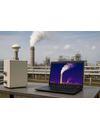
The webinar recording examines driven emission monitoring and the role of around-the-clock data collection in turning reporting into actionable outcomes on site and in the enterprise risk-management framework.
Key themes include the benefits of continuous data quality and traceability, how 24/7 surveillance supports regulatory alignment, and the workflow changes necessary to translate detection events into timely corrective actions and measurable performance metrics.
Original: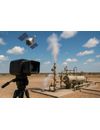
In 2026 the EPA's Super Emitter Response Program has shifted environmental enforcement toward decentralized transparency, enabling certified third parties to monitor methane emissions from space. Space-based detection carries a Resolution Gap that can yield false positives and inflated reports. Ground-based OGI systems provide forensic verification to quantify, challenge, and validate satellite claims based on empirical ground truth.
The New Landscape of Decentralized Transparency
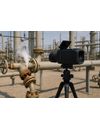
The 2026 regulatory landscape has moved beyond find and fix. With the finalization of the EPA Subpart W revisions and the Methane Waste Emissions Charge rising to $1,500 per metric ton, simply visualizing a leak is no longer sufficient to protect a facility’s bottom line. The industry is shifting toward Empirical Verification the ability to measure the exact mass flow of a leak in real time. This analysis examines the evolution of Quantitative Optical Gas Imaging QOGI, the economic case for
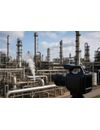
Downstream petrochemical and refining facilities face a complex leak-detection landscape beyond methane. In high-density environments, leaks involve a mixture of VOCs, aromatics, and heavy hydrocarbons. Modern infrared camera leak-detection (OGI) enables multi-spectral detection to identify a broad range of gases, supporting safety, environmental compliance, and product recovery within a single workflow.
The Downstream Complexity: More Than Just a Methane Problem
For years, LDAR
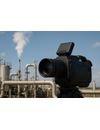
In the high-stakes methane mitigation environment, the effectiveness of LDAR hinges on skilled operators and certified procedures. As regulatory enforcement under EPA Appendix K intensifies, the industry is transitioning from point-and-shoot detection to standardized, high-precision practice. This overview emphasizes OGI certification, CH4 plume science, and camera technology as core enablers of regulatory compliance and operational excellence.
The New Era of the LDAR Professional
The global energy sector is undergoing a Regulatory Great Reset as NSPS OOOOa passes into history and EPA OOOOb/c and Subpart W redefine compliance. The shift from calculated estimations to empirical verification is enabled by EPA AI and satellite monitoring, creating a new 24/7 enforcement environment.
The Foundation and Failure of NSPS OOOOa
The EPA introduced nsps ooooa in 2016 as the first comprehensive federal effort to regulate methane and VOCs along the oil and natural
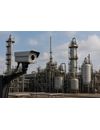
The energy sector faces escalating regulatory scrutiny and mounting operational complexity. Traditional LDAR relies on labor-intensive, periodic manual monitoring, creating gaps in fugitive methane management. This shift toward fixed Optical Gas Imaging (OGI) technology augmented by Artificial Intelligence (AI) enables autonomous, continuous vigilance, establishing an unblinking safety architecture for real-time detection with reduced false alarms and improved compliance in petrochemical and