
effluent-concentration Downloads
35 downloads found
Previously, DO could not be maintained in this lagoon due to the high organic loading. Final effluent BOD concentrations have been reduced from 20-25 mg/l to less than 10 mg/l. ...
This plant is able to separate water (permeate) from a heavily concentrated aqueous effluent (concentrate) with the following characteristics:• Permeate, about 80%, it represents the greater part of the leachate and has the same characteristics as mains water for drinkable use• Concentrate, about 20%, which contains all the ...
Fish have the ability to bio-accumulate mercury (in its methylated form) at much higher concentrations than the waters they inhabit. People and wildlife that consume fish high in mercury are at risk. ...
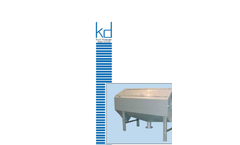
Drum Thickener Model KD 30Drum Thickener Model KD 30The drum thickener Model KD 30 is a thoroughly tested machine designed to ensure low service and maintenance costs.IntroductionDrum thickener model KD 30 is used for thickening of effluent sludge. A concentration from 0.8% dry solids to approximately 6% dry solids is normally achieved when dewatering municipal ...
ByKD Group
Simply put, you tell us your needs andwe will take care of the details… anywherearound the globe, complying with local,national and international standards.Reverse Osmosis (RO)Reverse Osmosis is a high pressure, energy-efficient means ofde-watering process streams, concentration of low molecularweight compounds or clean-up of waste effluents. ...
ByGEA
GE Power & WaterWater & Process TechnologiesABMet* for Selenium RemovalSIMPLE ONE-STEP SOLUTION WITH GUARANTEED PERFORMANCESuperior ReliabilityLow Operating CostManage RiskRefocus on Core BusinessTrusted SolutionGE in Your CornerSimple is bestABMet meets stringent effluent selenium requirements as well as most effluent BOD and suspended solids requirements in one ...
Effluent TP concentration and load and wastewater flow for May through October 2007 are shown in Figure 3. Effluent TP would not have met concentration or load limits. Effluent TP concentration was strongly influenced by wastewater flow with the lowest values occurring at the beginning and end ...
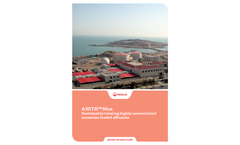
The cost-effective and sustainable response to the challenge of high-ammonia loaded effluents. At a wastewater treatment plant, dewatering sludge after treatment by anaerobic digestion produces liquids with a high ammonia-load that need to be treated. These concentrated effluents are often returned to the head of the wastewater plant and they require costly treatment. This treatment may require ...
The concentration of the effluent exiting the column will remain essentially zero until the adsorption zone reaches the bottom of the column. When the effluent reaches some pre-determined concentration, term the breakthrough, the adsorber is generally removed from service. ...
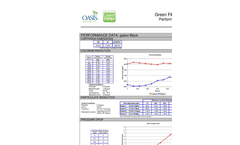
Green Filter Media Performance Data pg 1 of 2 © OASIS International 2012 PERFORMANCE DATA: galaxi Block CARTRIDGE DIMENSIONS OD ID LENGTH *40mm 17mm 186mm* WITH ONE CLOSED END CHLORINE REDUCTION Capacity (gallons)Influent Concentration (ppm)Effluent Concentration (ppm)0 2.03 0.19600 ...
Single-pass systems may meet total phosphorus regulations as low as 0.1 mg/L, depending on the influent concentration. Lower limits are achieved with two-pass systems, and reject recycle. ...
Re-circulation of treated water within the system dilutes septic tank effluent and minimizes the impact of short-term power failures on effluent quality. ...
Composite Samples Plant Side Plant Flow MGD Plant Flow Tonnes/day BOD, mg/L TSS, mg/L NH3, mg/L A Side 8.54 32327 9.36 11.77 0.32 B Side 6.64 25135 4.82 5.39 10.41 4 Data from these periods from the B-side of the plant show BOD and TSS removal improved with BioCycle. As expected, the ammonia concentration did increase during the operation of BioCycle, however, the ...
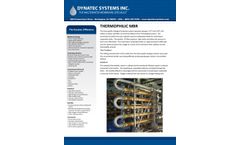
The Dynatec Difference THERMOPHILIC MBR The thermophilic biological treatment system operates between 125°F and 130°F and utilizes a tubular ultrafilter to clarify the effluent from the biological process. The conventional clarifier that was replaced could not adequately settle the mixed liquor suspended solids. ...
This reduce also the polymer consumption inthe sludge de-watering system).- Industrial effluents from the food industry in combination with chemical treatment.- Industrial low flow effluents.The tank and the construction of the MINICELL can be adapted to the application and to the effluent.The depth of the tank varies according to the type of the effluent, the ...
This reduce also the polymer consumption inthe sludge de-watering system).- Industrial effluents from the food industry in combination with chemical treatment.- Industrial low flow effluents.The tank and the construction of the MINICELL can be adapted to the application and to the effluent.The depth of the tank varies according to the type of the effluent, the ...
Discharges into the Charleston Harbor, an important recreational and commercial waterway INTELLIGENT PROCESS CONTROL FOR THE WASTEWATER INDUSTRY Operation of a BioCycle™ installation at the 36 MGD Plum Island WWTP in Charleston, SC, provided a reduction in blower demand of 49.9% while maintaining effluent quality and also decreasing total nitrogen concentrations. ...
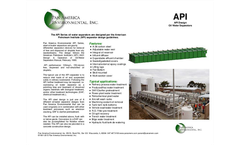
API Reference Drawing & Tables Model Oil Chamber Influent Size Effluent Size Drain Size Oil Outlet Size Empty Weight Operating Weight GPM Length Width Height Influent Effluent Oil Outlet A B C D E F Gals. ...
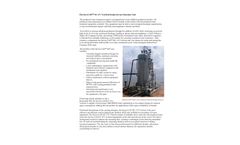
Reduced production capacity due to the inability to meet overboard produced water effluent requirements is a problem encountered by many processing facilities. It was found that the Enviro-Cell (EC-3V) Vertical with an inlet oil concentration of 60 ppm performed at a much higher level, as expected, with overboard oil-in- water content of less than 10 ppm ...
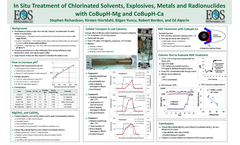
39% of alkalinity discharged in effluent ?Good transport ? Treatment B ? Alkalinity breakthrough after 2 PV ? ...