
Refine by
Algae Management Articles & Analysis
30 news found
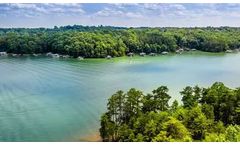
Lake Sidney Lanier serves as the primary drinking water source for the City of Gainesville, Georgia. In response to persistent taste and odor issues caused by record-high algae levels, Gainesville has deployed Ultrasound in Lake Sidney Lanier as part of a proactive water quality strategy. The Gainesville Department of Water Resources partnered with LG Sonic in December 2025 to install three ...
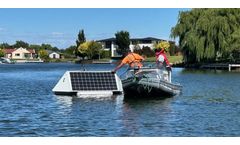
Lake Hood is an important recreational and ecological asset in New Zealand. It supports activities such as water skiing, swimming, and community events. In response to recurring cyanobacteria challenges, a scientific algal control study has been launched to evaluate different treatment approaches. This is to support long-term lake health. The study, led by Lincoln University, brings together ...
Introduction Harmful algal blooms are becoming an increasing challenge for inland waters across the United States. Nutrient runoff, warming temperatures, and changing environmental conditions are some factors. These have contributed to more frequent and intense blooms, some of which produce toxins. Hence, threatening ecosystems, public health, and recreational water use. Therefore, Maryland ...
These disruptions highlight the importance of proactive algae management strategies for safeguarding both infrastructure and energy reliability. ...

Algae blooms can turn a sparkling pond or lake into a dirty, odorous haven. Many people use traditional methods such as chemical algaecides and scrubbing. They tend to have continuous costs, damage the environment and are not very effective. There is now Ultrasonic algae control-a new, environmentally friendly alternative that promises long-term results. But is it worth the Cost? Let’s ...

A dedicated Q&A session will follow to address your questions and challenges. Part 3: Managing Algae in Industrial Water Systems Date & Time: 25 February 2025 | 8 AM PST, 11 AM EST, 5 PM CEST Discover effective strategies to maintain industrial plant health and meet regulatory compliance standards. Key Topics Covered: Best Practices for Water ...
The overgrowth of algae in ponds is a significant problem, bad for water quality, and unbalanced to the ecosystem. Traditional algae control methods often include chemical treatment or mechanical removal, which can have environmental impact or labour-intensive maintenance drawbacks. ...

Algae growth in ponds, reservoirs, and lakes is a growing concern for environmentalists, water managers, and communities. ...
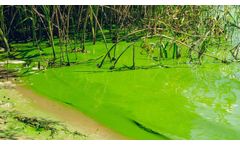
However, to be effective, algae monitoring in source waters requires real-time data, detection of multiple algae species, and differentiation between harmless and harmful algae. ...

Using Generative AI to Uncover Correlations, Associations, and Insights in Well-Structured Datasets” promises to deliver critical insights into the practical applications of AI in environmental data management. Event Details: Title: What Could Be Hiding in Your Data? Using Generative AI to Uncover Correlations, Associations, and Insights in Well-Structured Datasets Date ...

In fact, algae can create complex hydrocarbons that are toxic to humans and other living beings, and the problem is only getting worse. ...
By one estimate, anywhere from 30 million to 48 million Americans get their drinking water from lakes and reservoirs that could be periodically contaminated by algal toxins. Blue-green algae (cyanobacteria) is a common and particularly noxious contaminant that blooms during the spring and summer months across tens of thousands of lakes, reservoirs, ponds, and ...

WaterIQ Technologies, the leader in next-generation ultrasonic solutions to combat harmful algae and biofilm without the use of chemicals, today announced the availability of its disruptive and advanced Pulsar 4400 and 3400, feature-rich state-of-the-art ultrasonic devices for large and small water bodies. Designed for use by drinking water utilities, wastewater processing, agriculture, ...

It absolutely overshadowed any changes to water treatment costs or any changes to management programs.” By contrast, the biggest cost for urban water utilities is capital expenditure on water treatment plant upgrades to deal with algae and other emerging contaminants. ...

As the largest fair of environmental sanitation technology in Latin America, FITABES brings together the most influential companies in the sector to showcase the latest innovations, products, services, and equipment to a highly qualified audience. As a global leader in algae management technology, we’re excited to showcase our latest innovations at the ...
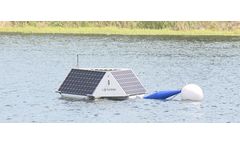
City of Tampa, Florida, has introduced a new method of algae control in the Hillsborough River by installing two innovative LG Sonic MPC-Buoys. These state-of-the-art buoys are designed to reduce blue-green algae growth by utilizing ultrasonic sound waves. The ultrasonic sound waves block algae’s access to sunlight and nutrients, ...

Recent peer reviewed studies published by both Cornell University and by Rich Abbott at the Syracuse Watershed, establish the efficacy and safety of ultrasonic algae control systems. These studies push the advocacy for the exciting possibilities of ultrasonic technology in algae control and management strategies in an environment where ...
HBS now provides the technology to quickly and accurately deliver necessary data needed in guiding water management strategies as well as provide proven and safe tools to manage algae, algae blooms, and biofouling. This unique combination will soon drive most algae bloom mitigation strategies across the globe and ...
With increasing occurrences of toxic and harmful algae blooms, resulting from man-made environmental disasters, threatening our planet’s clean water sources, water quality monitoring has become a tool of importance to collect and monitor the state of our resources. ...

This article will look at: Phytoplankton’s threat to your aquafarm What causes harmful algal blooms How to monitor phytoplankton levels at your aqua farm Keeping your fish healthy Phytoplankton’s Threat to Your Aqua Farm An overabundance of phytoplankton can cause harmful algal blooms, especially if there are cyanobacteria (blue-green algae phytoplankton) ...
ByAquasend