
Refine by
Atomic Fluorescence Articles & Analysis
29 news found
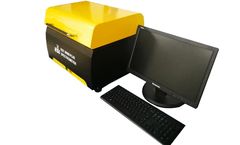
It demands no consumables, causes no pollution, has low requirements for operators, is straightforward to use, convenient to operate, and its precision can reach the same level as that of traditional chemical methods.Spectroscopy mainly refers to atomic spectroscopy. An atomic spectrum is a graph depicting the intensity of photons absorbed or emitted ...
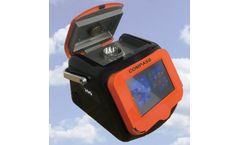
Currently recognized heavy metal analysis methods include ultraviolet - visible spectrophotometry (UV), atomic absorption spectrometry (AAS), atomic fluorescence spectrometry (AFS), inductively coupled plasma (ICP), X - ray fluorescence spectroscopy (XRF), inductively coupled plasma mass spectrometry (ICP - MS), and others. X - ...

Certain minerals fluoresce; when exposed to ultraviolet light, they fluoresce - emit visible light. On an atomic scale, visible light fluorescence is caused by the ejection of low-energy electrons from an atom's outer electron shell due to incident ultraviolet light. ...

In fact, combining ion chromatography with a number of technologies such as membrane dialysis, atomic fluorescence spectroscopy and ultraviolet detectors can provide better detection and separation results. ...

After years of precipitation, FPI has self-developed a variety of technology platforms. Such as Atomic fluorescence analysis technology, non-dispersive infrared analysis technology, UV-visible full wavelength absorption spectrum technology, enzyme substrate analysis technology, luminescent bacteria method, anodic stripping voltammetry technology, sequential ...
Many analytical techniques can be used for elemental impurities analysis, including Ion Chromatography (IC), Flame Atomic Absorption Spectroscopy (FLAA), X-ray Fluorescence (XRF), Atomic Absorption Spectrometry (AAS), Atomic Emission Spectrometry (AES), etc. ...
Instruments include inductively coupled plasma (ICP-OES) and DC Arc spectrometers as well as analyzers for the measurement of mercury via cold vapor atomic absorption or ...
Thanks to the robust design and low detection limits, both continuous mercury monitoring systems are an excellent option for a wide range of demanding applications, such as: Waste incineration Power industry Cement industry Research CMM and CMM AutoQAL Use CVAF Technology The CMM and CMM AutoQAL utilize the CVAF (Cold Vapor Atomic Fluorescence) ...
” The Gasmet CMM has successfully completed EN15267-3 testing using CVAF (Cold Vapor Atomic Fluorescence) technology for the analysis of Mercury. The CMM now provides the world’s lowest EN15267 certified range for measurements of Mercury. ...
The Gasmet CMM has successfully completed EN15267-3 testing using CVAF (Cold Vapor Atomic Fluorescence). Importantly, this instrument now provides the world’s lowest EN15267 certified range for measurements of Mercury. ...
” The Gasmet CMM has successfully completed EN15267-3 testing using CVAF (Cold Vapor Atomic Fluorescence) technology for the analysis of Mercury. The CMM now provides the world’s lowest EN15267 certified range for measurements of Mercury. ...

• Jerome® J505 State-of-the-Art Atomic Fluorescence Mercury Vapor Analyzer • Jerome® J405 Advanced Gold Film Mercury Vapor Analyzer • Jerome® 431 Time-Tested Gold Film Mercury Vapor Analyzer • Jerome® 451 Fixed Point Mercury Monitoring System Hydrogen Sulfide Analyzers Detect hydrogen sulfide gas in air at levels as ...

It is the only hand-held mercury vapor analyzer on the market that uses cold-vapor atomic fluorescence spectroscopy – technology usually reserved for advanced benchtop mercury analysis. ...
The Gasmet CMM employs Cold Vapour Atomic Fluorescence to measure very low concentrations of total Mercury reliably and accurately in samples containing high levels of dust and gases such as sulphur dioxide. ...
The patented gold film sensor and state of the art atomic fluorescence spectroscopy technology have made Jerome an industry standard. Jerome® J505 Mercury Vapor Analyzer The J505 portable fluorescence spectroscopy analyzer is our most advanced mercury vapor analyzer. ...

Aurora is excited to announce the launch of their newest atomic absorption spectrometer, the TRACE 1800 AAS at Pittcon 2014. This flexible instrument comes in a variety of configurations for analysis by flame, graphite furnace, and vapor hydride generation offering great improvements to laboratory workflows in the life and environmental sciences. The TRACE 1800 ...
Visitors to the stand will also be able to see Aurora Instruments’ analytical product line, which includes the TRACE 1300 atomic absorption spectrometer the LUMINA 3330 atomic fluorescence spectrometer and the TRANSFORM 800 for microwave digestion. ...
” The Gasmet CMM employs cold vapour atomic fluorescence (CVAF) to deliver very low detection limits at a significantly lower cost than other comparable mercury monitoring instruments. ...
Mercury is recognised as a chemical of global concern due to its long-range transport in the atmosphere, its persistence in the environment, its toxicity, its ability to bio-accumulate in ecosystems and its significant negative effect on human health. The CMM employs cold vapour atomic fluorescence (CVAF) to deliver very low detection limits at a significantly ...
About Teledyne Leeman Labs Teledyne Leeman Labs offers a complete line of analytical instrumentation for elemental analysis including Inductively Coupled Plasma (ICP) Spectrometers, Mercury Analyzers including cold vapor atomic adsorption (CVAA), cold vapor atomic fluorescence (CVAF) and Atomic Absorption with Thermal ...