
Chlorine Sensor Articles & Analysis
44 news found
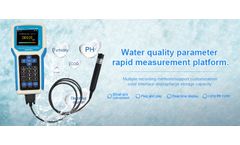
Applications include laboratory research, environmental management improvement, marine water quality evaluation, hydraulic model calibration, wastewater treatment, etc. What is a water quality sensor? Water quality sensor is a general term for a variety of sensors that measure PH, ORP, residual chlorine, turbidity, suspended ...

In addition to a particle size of ^30 mm, the water, ash and chlorine content crucially impact the calorific value. For this reason, sensors using near-infrared (NIR) technology installed immediately after the Komet continuously test the material in line. If the NIR sensors detect that the chlorine content is too high, material ...

Today batteries last longer and are more reliable, increasing sensor life expectancy, which is especially valuable for sensors in remote locations that are not easy to access or are accessed less often. ...

A failsafe valve ties into the chlorine leak detection sensor, so that in the event of an external release, the nitrogen failsafe valve will close, stopping any external leak. ...

SEIBOLD-Wasser continuously invest into research and development of measurement technologies and products. The role SEIBOLD-Wasser plays in the industry is determined because of it’s specialisation in online measurement products. Specialised companies will always push new technologies and products into their markets. While “I do everything” – companies will slow down ...

The panel mounted FCX80 Analyzer is a ready-to-use free chlorine analyzer intended for hazardous locations. It is designed to monitor free chlorine in drinking water, rinse water, cooling water or other fresh water samples from 0.05 to 20 ppm chlorine as the standard range or 0.01-5.00 ppm with the optional low range sensor. ...
The panel mounted FCX80 Analyzer is a ready-to-use free chlorine analyzer intended for hazardous locations. It is designed to monitor free chlorine in drinking water, rinse water, cooling water or other fresh water samples from 0.05 to 20 ppm chlorine as the standard range or 0.01-5.00 ppm with the optional low range sensor. ...

” To monitor the atmosphere for gas-based hazards, each G7c will be deployed with a cartridge featuring one, three or four gas sensors, including oxygen, ozone, chlorine and hydrogen sulphide. Automating regulatory compliance reporting, every gas reading, gas sensor bump test and calibration is automatically uploaded to the Blackline ...

The exhibit of a DULCOTROL DWCa at the Aquatech is aimed at drinking water with the applications Dissolved Oxygen to optimize ventilation for deferrization- demanganization The NEW optical sensor type DO3 enables more accurate measured values and significantly reduce maintenance intervals and thus operating costs Free chlorine and pH to monitor the ...
Tethys online turbidity sensor is based on nephelometric method (ISO 7027 – EN 27027). A light beam from a laser diode is sent to the sample through an optical lens. ...

The advantages of the new sensors Higher pressure resistance (max. 3 bar) Reduced maintenance effort due to longer membrane lifetime (membrane change approx. 1 x per year) Reduced sensitivity to pressure changes ...
The advantages of the new sensors Higher pressure resistance (max. 3 bar) Reduced maintenance effort due to longer membrane lifetime (membrane change approx. 1 x per year) Reduced sensitivity to pressure changes Old and new sensors at a glance Suitable accessories 205246 ZBK-FCML 412 N(Free chlorine, consists of electrolyte and ...
The system is more compact than its predecessor and offers more functionality and efficient breakdown of combined chlorine. The Dulcodes MP comes with powerful medium-pressure lamps for optimum use of energy and a manual stage switch for adaptation to the capacity requirement. It therefore ensures efficient photochemical breakdown of combined chlorine in bathing ...
Dulcodes MP therefore ensures efficient photochemical breakdown of combined chlorine in bathing water. A UVC sensor with long-term stability monitors the lamp output, dirt on the lamp protection tube and changes in water quality. ...
The system is more compact than its predecessor and offers more functionality and efficient breakdown of combined chlorine. The Dulcodes MP comes with powerful medium-pressure lamps for optimum use of energy and a manual stage switch for adaptation to the capacity requirement. It therefore ensures efficient photochemical breakdown of combined chlorine in bathing ...
The sensor type OZR 1-mA-2-ppm with a measuring range of 0.02 to 2 mg/l is ideal to continuously determine low concentrations of the ozone. ...

Each Intellisonde will feature a full suite of sensors for monitoring Free Chlorine, Mono-Chloramine, Dissolved Oxygen, pH/ORP, Conductivity, Pressure, Temperature, Turbidity and Flow. ...

PureAire Monitoring Systems provide the #1 universal toxic gas monitor in the industry. With a renewable sensor lasting 7+ years, no competitor can offer the same longevity or reliability. ...
In contrast, the Intellisonde chlorine sensor efficiently reaches equilibrium and operates over an extended lifetime compared with other equipment. Figure 1 shows Intellisonde measurements of free chlorine in potable water with very high iron/manganese concentrations, demonstrating its effectiveness over the lifetime of the ...

A business relationship between Dr. Richardson of PRDD Inc. / Know-NOx LLC and Deep Reach Oxidation LLC (DRO) makes a powerful new patented gas phase ClO2 sensor available for a variety of applications. This new gas phase ClO2 sensor was developed by DRO, in conjunction with Dr. Materer of Oklahoma State University for specialized applications. Dr. Richardson and the DRO team are applying this ...
ByKnow-NOx