
Expanded Polystyrene Eps Articles & Analysis
15 news found
Types of Recyclable Foam Can different types of foam or foam packaging be recycled? The answer is YES! With the right type of heavy duty foam baler, you can make consistently dense bales of even the most difficult recyclable foam that end users will pay good money for. There are three main types of foams that are recyclable, including polyethylene foam, polystyrene foam, and polyurethane ...

Various management systems were developed by S&SE to help mitigate the diverse impact from the EPS (expanded polystyrene) industry. The packaging sector also continued with strong growth in 2022, and S&SE assisted nearly a dozen clients in this essential industry with their growth, from project conception to completion. ...
Anyone who has encountered foam clamshells for restaurant take-out food, white or green “peanut” packing to cushion shipments, or those thick foam blocks for protecting boxed furniture is familiar with expanded polystyrene (EPS). In use since the 1930s, EPS continues to gain popularity and is used around the world in applications ...
The process of recycling Styrofoam involves feeding the collected expanded polystyrene (EPS) foam through conveyor belts into a machine that first shreds the material. ...
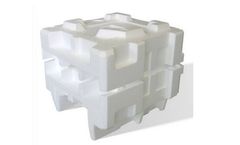
Expanded Polystyrene (EPS) is made up of 95 percent air and five percent foam; with its high volume and low weight ratio, even a small quantity can rapidly fill bins and containers. Recycling of plastic, paper and glass is common in the United States, but recycling polystyrene is not. Japan, Korea, and some European countries ...
Remarkably there are a number a materials that are extremely useful in the first instance and become something entirely different after their first use. For example EPS (Expanded Polystyrene) is a good insulator which we use every day in packaging, food consumption, construction, fisheries and more. ...

Dolco will accept clean expanded polystyrene foam ("EPS"), extruded polystyrene foam ("XPS") packaging and rigid polystyrene at its manufacturing facility area at no charge to the public. Dolco will deliver the collected EPS, XPS and rigid polystyrene to Regenyx, the advanced ...
ByAgilyx
The Metro South Transfer Station, located at 2001 Washington St, Oregon City, OR 97045, will begin accepting clean Expanded Polystyrene foam ("EPS") packaging at their recycling area as of May of 22nd. EPS, commonly used in appliance, electronics and furniture packaging will be accepted through this program. ...
ByAgilyx
Last year, Best Buy handled 3.5 million pounds of expanded polystyrene packaging, or EPS. Because it’s bad for the environment – and also extremely expensive – to dump some 1,750 tons of EPS into landfills, Best Buy began using hot‐melt densifiers to compact the foam into recyclable blocks. ...
Here I will introduce to you as followings: In this work polystyrene (PS) nanofibers are electrospun from recycled expanded polystyrene (EPS). ...

Austria 4 projects (14.5 million) LIFE+ Environment Policy and Governance (1 project – 3.6 million) LIFE-URBANLAKE (Stadt Wien – Magistratsabteilung 45 – Wiener Gewässer): This project intends to define strategies to reduce the vulnerability of the “Alte Donau” from effects of climate change and other anthropogenic pressures with the goal of securing the oxbow ...

Albemarle Corporation (NYSE: ALB), a leader in the development, manufacture and marketing of flame retardants, announced today that it has expanded its Earthwise™ platform of sustainable products by introducing a new polymeric flame retardant for use in extruded (XPS) and expanded (EPS) polystyrene applications. ...
RCPS geofoams shall be formed by the expansion of polystyrene resin beads or granules in a molding process (EPS), or by the expansion of polystyrene base resin in an extrusion process (XPS). ...
The Polymeric FR is expected to be the "next generation industry standard" flame retardant for use in both extruded polystyrene (XPS) and expanded polystyrene (EPS) foam insulation applications globally. ...
Week by week, there are many thousand of tons of waste which arise from packaging material and insulation material, which comes from expanded polystyrene, short EPS, like Styrofoam®. In the 90s the disposal of this very voluminous material was very expensive for many companies. ...