
Gasoline Testing Articles & Analysis
18 news found
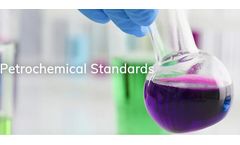
To help researchers assess the quality of these commodities, Alfa Chemistry, one of the most popular suppliers of analytical reagents, recently announced the release of a new line of petrochemical standards, which can be used to analyze and test petroleum, gasoline, fuels, hydrocarbons and many other types of petrochemical-relevant substances. ...

New Gasoline Direct Injection (GDI) petrol engines for cars emit more cancer-causing particles than modern diesel engines, a new study by independent vehicle researchers TÜV Nord revealed today. ...
EPA further alleged that CITGO failed to sample and test reformulated gasoline blendstock at its Lemont refinery, as required by the CAA. ...
With its laser spectroscopic motor exhaust gas analyzer MEXA-1400QL-NX, HORIBA provides its customers with a powerful and universally applicable technology in the field of emissions testing. The analyzer is capable of simultaneously measuring four nitrogen compounds (NO, NO2, N2O and NH3), even at low concentrations using quantum cascade laser mid-infrared spectroscopy. ...
In a conference call with reporters today, API Downstream Group Director Bob Greco discussed a new analysis of EPA’s regulations to allow higher amounts of ethanol in gasoline (E15), which showed that “an estimated half of all gasoline station equipment is not compatible with E15” and said that this could result in serious safety and ...
Grabner Instruments, a subsidiary of AMETEK, Inc. has upgraded its top-selling portable vapor pressure tester - the MINIVAP VPXpert. After extensive testing Grabner Instruments has released a new method to test Liquefied Petroleum Gas (LPG) up to 1000 kPa pressure. ...

The basic test method of determining the boiling range of a petroleum product by performing a simple batch distillation has been in use as long as the petroleum industry has existed. It is one of the oldest test methods under the jurisdiction of ASTM Committee D02, dating from the time when it was still referred to as the Engler distillation. ...
The distillation characteristics are equally important for both automotive and aviation gasolines, affecting starting, warm-up, and tendency to vapor lock at high operating temperatures or high altitude, or both. ...
Note 1—If there is any doubt as to the latest edition of Specification D4814, contact ASTM International Headquarters. 1.6 Tests applicable to gasoline are not necessarily applicable to its blends with oxygenates. Consequently, the type of fuel under consideration must first be identified in order to select applicable tests. ...
As it pertains to the API SL engine oil category, it is based on engine test results that generally have been correlated with results obtained on reference oils run in gasoline engine Sequence Tests that defined engine oil categories prior to 2000. It should be recognized that not all aspects of engine oil performance are evaluated by ...
Its application is restricted to liquids with total vapor pressures (see Test Method D5191) typically below 100 kPa and viscosities (see Test Method D445 or D7042) typically below about 15 000 mm2/s at the temperature of test. ...
This test method may be applicable for quality control in the production of gasoline. ...
As it pertains to the API SL engine oil category, it is based on engine test results that generally have been correlated with results obtained on reference oils run in gasoline engine Sequence Tests that defined engine oil categories prior to 2000. It should be recognized that not all aspects of engine oil performance are evaluated by ...
The sample fuel is tested using a standardized single cylinder, four-stroke cycle, variable compression ratio, carbureted, CFR engine run in accordance with a defined set of operating conditions. ...
The test method was developed to compare the test oil to the BL oil. ...
Empirical correlations that permit calculation of automotive antiknock performance are based on the general equation: 1. Scope 1.1 This laboratory test method covers the quantitative determination of the knock rating of liquid spark-ignition engine fuel in terms of Motor octane number except that this test method may not be ...
The spark-ignition engine fuels covered here are gasoline and its blends with oxygenates, such as alcohols and ethers, and not fuels that contain an oxygenate as the primary component, such as fuel methanol (M85). ...
The fuels shall be sampled and tested appropriately to examine their conformance to detailed requirements as to composition, volatility, fluidity, combustion, corrosion, thermal stability, contaminants, and additives. ...