
Pcb Removal Articles & Analysis
67 news found
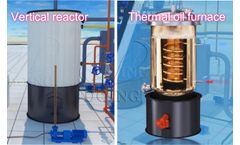
Waste mineral oils Scope: Includes waste oils from mechanical systems, hydraulic systems and industrial processes (e.g. cutting oils, quenching oils). Processing: Distillation removes impurities (e.g. water, acids, polymers) so that they can be reused in industrial applications or used as fuel components. 3. ...

Research results posted by EPA about PCBs in school buildings include: · Caulk put in place between 1950 and 1979 may contain significant amounts of PCBs and can emit them into the surrounding air. PCBs from caulk may also contaminate adjacent materials such as masonry or wood. ...

Research results posted by the EPA about PCBs in school buildings, include the following: · Caulk put in place between 1950 and 1979 may contain as much as 40% PCBs and can emit PCBs into the surrounding air. ...
The agency also states that some building materials, such as paint and masonry walls, along with indoor dust, can absorb PCB emissions and become potential secondary sources for PCBs. When the primary PCB-emitting sources are removed, the secondary sources often emit PCBs. ...

One machine will be implemented in the existing online-process to remove PCB´s (Printed Circuit Boards), heavy metals, etc. in an input of mixed non-ferrous metals. ...

With these heating levels the normal' contaminants such as mercury, hydrocarbons up to C40 chain lenghts, PCB, PAH. etc. can be easily removed from mineral soilds. In most countries environmental regulations require the removal of organics even though they are not evaporable and not leachable to the environment. This was leading to a long term ...
With these heating levels the 'normal´ contaminants such as mercury, hydrocarbons up to C40 chain lenghts, PCB, PAH, etc. can be easily removed from mineral soilds. In most countries environmental regulations require the removal of organics even though they are not evaporable and not leachable to the environment. This was leading to a long ...

Environmental Protection Agency has agreed to speed up its study of whether General Electric's massive $2 billion six-year dredging project on the Hudson River was effective in cleaning up PCB contamination. In a Dec. 18 letter to groups that met with him in Washington, D.C., this month, Mathy Stanislaus, who oversees the EPA's Superfund cleanup programs, agreed to begin the ...
Environmental Protection Agency to remove a pipe containing PCB-contaminated oil. Road closure notices will be posted at 10-Mile and 11-Mile Roads. ...

GE [NYSE: GE] today (Oct 2, 2015) announced it has completed dredging in New York’s Upper Hudson River. Since 2009, GE has removed the majority of PCBs from the Upper Hudson River in one of the largest and most successful environmental cleanup projects ever undertaken in the United States. ...
PCBs are chemicals that persist in the environment and can affect the immune, reproductive, nervous and endocrine systems and are potentially cancer-causing. PCBs had been widely used in hundreds of industrial and commercial applications until they were banned in 1979. ...
The EPA-mandated cleanup called for the removal of an estimated 2.65 million cubic yards of PCB-contaminated sediment from a 40-mile stretch of the upper Hudson River between Fort Edward and Troy, New York. To date, approximately 2.5 million cubic yards of PCB-contaminated sediment have been removed. The dredging work is expected ...
Cornell-Dubilier Electronics, Inc. manufactured electronics parts at a 26-acre facility at 333 Hamilton Boulevard in South Plainfield from 1936 to 1962. PCBs and solvents were used in the manufacturing process, and the company disposed of PCB-contaminated materials and other hazardous waste at the facility. ...
Any soil contamination in violation of TSCA discovered during the audit will be cleaned up and any remaining PCB-containing equipment will be removed. The deadline for completion of the audits is 17 months after EPA’s approval of the auditor. ...
In June 2008, the Valley Council of Governments requested assistance from EPA to remove polychlorinated biphenyl (PCB) contaminated soil from the Site. As part of this time-critical removal action, EPA removed and disposed of approximately 14,000 tons of contaminated soil and about 50 exposed and degraded 55-gallon drums. ...
To date, about 2.5 million cubic yards of sediment contaminated with polychlorinated biphenyls (PCBs) have been removed. In 2014 approximately 575,000 cubic yards of PCB-contaminated sediment were dredged from the bottom of the river, exceeding the annual goal of 350,000 cubic yards. ...
Environmental Protection Agency today announced the completion of all cleanup work required to remove Waukegan Harbor from the binational list of Great Lakes Areas of Concern. ...
EPA has completed a proposed Cleanup Plan to remove PCB contamination from the “Rest of River” portion of the Housatonic River, and the Agency is seeking public input on the proposal. ...
EPA has completed a proposed Cleanup Plan to remove PCB contamination from the “Rest of River” portion of the Housatonic River, and the Agency is seeking public input on the proposal. ...
“EPA expects the settlement to result in the removal of 84,000 pounds of PCB-contaminated waste from the environment and prevent the improper disposal of 56 million pounds of hazardous waste each year,” said Jared Blumenfeld, EPA’s Regional Administrator for the Pacific Southwest. ...