
Reductive Chlorination Articles & Analysis
12 news found

Customer Challenge A Midwest Coal Fired Power Generation Facility encountered significant challenges in managing microbial growth within the cooling water system. Their reliance on previous biocide solutions, namely sodium hypochlorite, bromine, and mono-chloramine, proved problematic due to the pH-dependent efficiency of sodium hypochlorite, which mandated the addition of sulfuric acid to ...

Project date: 01. 09. 2021 – 31. 08. 2024 Title of the challenge: Monitoring and reduction of chlorine in drinking water Drinking Water Utility needs a solution for monitoring and reducing the use of chlorine preparations in the drinking water supply. ...
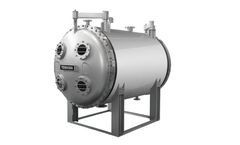
Ozone is a powerful oxidant and has many applications, including dechlorination, deodorization, inactivation of viruses and bacteria, oxidation of organic and inorganic substances and a reduction in trihalomethane*1 formation during chlorination. In addition, ozone has hardly any adverse impact on environment because it simply reverts to oxygen after use. ...

Ozone is sensitive not just to chlorine, but also to temperature and sunlight. Chlorine eats away at ozone, but only if light is present and if the atmosphere is cold enough to create polar stratospheric clouds on which chlorine chemistry can occur — a relationship that Solomon was first to characterize in 1986. ...

As a minimum, the WF range will provide 99.9% reduction of chlorine resistant microorganisms such as Cryptosporidium and Giardia. ...
As a minimum, the WF range will provide a guaranteed 99.9% reduction of chlorine resistant microorganisms such as cryptosporidium and Giardia. ...
Chloramine Destruction: By breaking down the problem chloramines – Mono-chloramines, Di-Chloramines and Tri-chloramines, the associated problems of using chlorine as a disinfection barrier are eliminated, leading to no more ‘red-eyes’, itchy, burning skin and importantly for the spectators and journalists present, the overpowering chlorine ...

Particle size: The particle size of ZVI is the primary and the most important aspects in choosing a type of ZVI. The reductive dechlorination of chlorinated compounds is a surface area mediated reaction, meaning that in theory, the greater the surface area, the more reactive a ZVI particle is. ...

The project will provide LADWP customers with an additional barrier of protection from water borne pathogens and enable a reduction in the use of ozone and chlorine to comply with the EPA Stage 2 Disinfectants and Disinfection Byproducts Rule and Long Term 2 Enhanced Surface Water Treatment Rule. ...
The integration of dried blue-green algae with zero-valent iron takes chlorinated solvent remediation to the next level by utilizing a sustainable "green" technology in which the vitamins, nutrients and organic hydrogen donors contained within a wide variety of aquatic species maybe used to accelerate the complete degradation of chlorinated solvents in the ...
In addition, the WQA (Water Quality Association) has determined through additional laboratory testing to this same Standard, that the entire line of NanoCeram-PAC filter cartridges meet or exceed the stated 99.95% Reduction of Cysts. According to company president Fred Tepper, “NanoCeram-PAC may be the highest-flowing and lowest pressure drop carbon filter on the market today, ...

The additional cost for the prescrubber is more than offset by reductions in the SO2 scrubber and the wastewater treatment. So when the sales value of the acid is included, the levelized cost of electricity is reduced. Total emissions from both air and water are reduced. These include reductions in mercury, HCl, and chlorinated compounds in ...