
Sediment Separator Articles & Analysis
24 news found
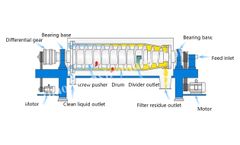
Designed for solid-liquid-liquid three-phase separation, this centrifuge is developed based on our factory’s extensive experience in separation technology, ensuring 24/7 continuous and stable operation.Key Components:Drive unit,Gear differential,Scroll conveyor,Rotating drum,Cover & base,Control system.Separation Principle✅ Solid and liquid immiscibility ✅ ...
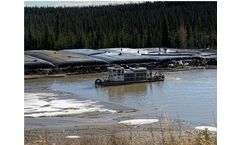
They mixed the mud with a flocculent to speed up the process of separating sediment and water. The flocculent was added to the slurry in pre-determined doses, via a flocculent dosing system. This causes the separation of the water and mud. The heavier particles settle to the bottom and the water bleeds out of the bag. Over time, the mixture ...
The new improved easy to clean homogenizers are equipped with features such as less sedimentation and easy separation which reduces the cleaning time and also improves hygiene. ...

It consists of a mixing and reaction section, an OKO-aquased 9000 for sedimentation and an agitator vessel OKO-sr 4000. The plant was tailored to the Argelith requirements. ...
Our conical tanks enable cider producers to process a key stage in their cider making and that is the separation of impurities and sediments. Available in a variety of degree cone bottoms, sediment sinks to the bottom of the tank where it can be drained away. ...
Three to five mechanical dredges remove contaminated sediment from the river bottom. The dredges are mounted on deck barges and use environmental clamshell buckets to place the dredged sediment into separate barges. ...
Waste water management is an issue across a number of industries, from manufacturing, engineering and construction and the separation of impurities from water and other liquids can be effortlessly achieved using dedicated cone bottom tanks, otherwise known as conical tanks. Manufactured using a single piece of rotationally moulded uv-stabilised polyethylene, cone bottom tanks ...
Waste water management is an issue across a number of industries, from manufacturing, engineering and construction and the separation of impurities from water and other liquids can be effortlessly achieved using dedicated cone bottom tanks, otherwise known as conical tanks. Manufactured using a single piece of rotationally moulded uv-stabilised polyethylene, cone bottom tanks ...
And beer and wine makers also use conical tanks to drain and separate sediment. The rotationally moulded single piece of UV-stabilised polyethylene means that, not only are the cone tanks robust, but they will store all liquids at optimum condition. ...
During the dredging season, mechanical dredges mounted on deck barges use environmental dredge buckets to place dredged sediment into barges. Tugboats push the loaded barges to GE’s Fort Edward dewatering and sediment-processing facility. ...
Once there, water will be removed from the sediment. The coarse material will then be separated from the fine sediment that contains most of the PCB contamination. The remaining sediment is pumped to the dewatering facility where large filter presses squeeze water from the sediment. ...
Creeks, rivers and ponds that exist on the reservation or its boundaries will be monitored for nutrients, turbidity, sediment and macroinvertibrate populations. A separate grant of $32,712 will help to provide tribal members with current guidance, information and assistance related to radon safety, awareness, assessment, mitigation and preventive methods. ...

This method directly determines the concentrations of dissolved PAH concentrations in environmental sediment pore water samples. The method is important from an environmental regulatory perspective because it can achieve the ...
This method directly determines the concentrations of dissolved PAH concentrations in environmental sediment pore water samples. The method is important from an environmental regulatory perspective because it can achieve the analytical sensitivities to meet the goals of the USEPA narcosis model for protecting benthic organisms in PAH contaminated ...
This latest dredging effort started in May 2011 and focused on the northern cove on the Acushnet side of the Harbor and off-shore from the Titleist facility on Hadley Street in New Bedford. Approximately 11 acres of sediment were dredged this year, resulting in the removal of more than 21,600 cubic yards of contaminated sediment. ...

In a real-world 19-storm event field test conducted following the TARP protocol, SorbtiveFilter captured over 77% of total phosphorus and 44% of dissolved phosphorus, in addition to over 80% sediment. "The SorbtiveFilter is truly a breakthrough treatment system that offers a performance validated tool to help the seven states within the Chesapeake Bay Watershed reduce the ...
Imbrium Systems' stormwater treatment technologies capture sediment, nutrients, metals, oil and chemicals before they reach our critical watersheds. ...
"That's why we designed a treatment train approach for Stormwater runoff that included a Stormceptor STC 900, Imbrium System's premier hydrodynamic oil and sediment separator, ahead of the Jellyfish Filter which captures fine sediment down to 2 microns along with nutrients like phosphorus, nitrogen as well as heavy metals. ...
The Jellyfish Filter offers an important tool to protect the Chesapeake Bay Watershed from the ravages of sediment and nutrients - especially phosphorus and nitrogen. Imbrium Systems is quite excited about this approval", stated Scott Perry, Imbrium Systems' Managing Director. ...

FILTECH, the world"s largest special interest event devoted entirely to filtration and separation technologies will be held 22-24 March 2011 again in Wiesbaden, Germany, only 25 minutes from Frankfurt International Airport. The Event is a MUST for all decision makers all over the world involved in designing, improving, purchasing, selling or researching filtration and ...