
Refine by
Tissue Specific Articles & Analysis
44 news found

Five years since the onset of the COVID-19 pandemic, the scientific community delved deep into the mysteries of the SARS-CoV-2 virus, to understand its impact on our health and develop antiviral therapies and vaccine. We know that SARS-CoV-2 virus enters human cells primarily through the angiotensin-converting enzyme 2 (hACE2) receptor, which is abundant in various organs such as the lungs, ...

l Oral Thin Films: Fast dissolving method to make patient’s compliance easy by giving easy to use. l Microencapsulation Systems: Guarding actives and allowing for controlled release. l Nanoparticle Development: Solubility enhancement, tissue specificity to get best result from treatment. l Vesicular Systems Engineering: Liposomal and niosomal formulations ...

This enables more accurate delivery of medications to specific tissues or organs, minimizing side effects while maximizing therapeutic efficacy. ...
By offering precise and customizable development services, the company enables pharmaceutical manufacturers to optimize their formulations, ensuring that the active ingredients are delivered efficiently to the target tissues. This strategic focus on LNPs underscores CD Formulation's commitment to advancing medical science. ...
Each tissue microarray is constructed from paraffin-embedded (FFPE) tissue blocks from a specific number of donor cases. Additionally, the microarrays come in various configurations, with a range of cases and core numbers per case, allowing researchers to tailor their experiments to their specific needs. For example, the Multiple ...
By encapsulating active pharmaceutical ingredients (APIs) within these microspheres, drugs can be delivered directly to specific tissues or organs, resulting in improved therapeutic efficacy and reduced side effects. ...
These drug delivery systems can enhance the interaction with biological materials and conjugate to specific target molecules to reach specific tissues or cells by modifying their surface properties. ...

Asialoglycoprotein receptor (ASGPR) is the ideal target for the delivery of therapeutic oligonucleotides to the liver due to its tissue specificity, high expression levels, rapid internalization, and turnover. ...
IVS’s Functional 3D tissue models recapitulate the physiological properties of human cardiac, smooth and skeletal muscle and connective tissue. ...

The software platform uses standard medical images to create a digital twin of a patient, enabling doctors to experience it as a 4D interactive hologram, interacting with the patient’s organs and tissues as if they were actual, physical objects. This technology enables real-time accurate situational awareness of catheters and implantable devices in relation to complex ...

ITM-31 is a carbonic anhydrase XII (CA XII)-specific antibody Fab fragment developed by Helmholtz Munich and coupled with ITM's medical radioisotope, non-carrier-added Lutetium-177 (n.c.a. 177Lu, EndolucinBeta®). ...

EXO-NET is an immunoaffinity magnetic bead capture technology that uses a proprietary multi-antibody matrix coated on nanobeads to capture exosomes from multiple cells and tissues based on their surface markers. By changing the antibodies in the matrix, EXO-NET can be customised to capture exosomes released from specific cells and tissues for ...

The majority of PROTACs were created with ligands that recruit E3 ligases, which are widely expressed in tumors and normal tissues, and these PROTACs can cause off-target toxicity if the target protein is not tumor-specific. The development of tumor-specific/selective PROTACs will benefit from identifying those E3 ligases that are enriched in ...

The Elucid platform is the only FDA-Cleared and CE-Marked software to objectively quantify plaque morphology validated against tissue specimens. Specifically, the exquisite algorithms developed through machine learning characterize tissue types in the artery wall known to cause heart attacks, such as lipid rich necrotic core. ...
ByElucid

It is recommended to determine 50% cytotoxicity concentration (CC50) values in quiescent and to divide cells from various relevant human cell types and tissues to ascertain the potential for cell cycle, species, or tissue-specific toxicity. ...

Co-stimulatory agents, like 4-1BB agonists, are known as accelerators of cancer immunotherapy, because they help induce potent, tumor-specific T-cells that can infiltrate and kill tumors. The combination of an arenaviral immunotherapy with a 4-1BB agonistic antibody resulted in complete tumor rejection in 30 percent of mice following treatment. ...

“MRI is an advanced imaging tool, specifically for soft tissue like the prostate gland, with potential for improvement using AI,” said Ron Soferman, CEO at RSIP Vision. ...
This first-of-its-kind software enables the entire heart surgical team to develop a precise personalized plan by interacting with specific organs and tissues as if they were actual physical objects. ...

Creative Proteomics offers targeted metabolomics services for the enrichment and accurate quantitative profiling of a specific metabolite in blood, urine or other body fluids and tissues under specific physiological or pathological conditions. ...
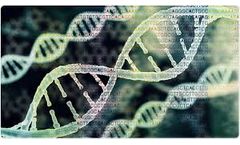
Whole transcriptome refers to the sum of all RNA (transcripts) transcribed from a specific species, tissue or cell type under a certain period or condition, including mRNA and non-coding RNA (ncRNA). ...