
Refine by
Wheat Yield Articles & Analysis
51 news found

“The fact that three British OSR growers surpassed 7.5 t/ha during one of the driest growing seasons on record is a testament to their skill in exploiting weather extremes”, said ADAS Head of Crop Physiology Dr Pete Berry, adding that a warm Autumn in 2024 had set many OSR crops off to the ideal start: “October 2024 was warmer than average for almost all of the UK. This was ...
ADAS welcomes the release of the All Party Parliamentary Group on Science and Technology in Agriculture’s “Feeding Britain Sustainably to 2050 – The 30:50:50 Mission” report and its objective to increase UK food production by 30% by 2050, whilst halving agriculture’s environmental footprint by 50% per unit of output. For that vision to become a reality, ...
This week, the Royal Agricultural Society of England (RASE) awarded Professor Roger Sylvester-Bradley, Head of Crop Performance at ADAS, with the RASE 2025 Science and Technology Award, in recognition of his outstanding contribution to agricultural science. For over four decades, Roger has been at the forefront of agricultural science, shaping the way we understand and manage crop performance. ...
The Yield Enhancement Network (YEN), founded by ADAS in 2012, has helped growers in the UK and North-West Europe benchmark their crop performance and identify yield restrictions to improve their productivity. ...

Benefits Proven in Trials: 25% Improvement in NUE: Reduces the need for high nitrogen inputs while maintaining productivity. Sustainable Yields: Barley and wheat trials demonstrate consistent output even with reduced fertilisers. ...
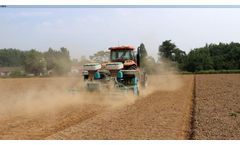
Wheat drill is a new agricultural technology that has been promoted. ...
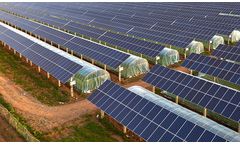
The primary purpose of the three-hectare shade house is to safeguard wheat crops, as well as alfalfa and barley, against adverse climatic conditions, specifically extreme temperature fluctuations, extended droughts, and heavy rainfall or hailstorms. ...
ByTSE

Whereas other leaf and root crops mostly consume quite a lot of water and humus, rapeseed leaves behind a quantity of up to 600 kg humus per hectare. As a general rule, wheat grown subsequently to rapeseed renders yields that are up to 10% higher compared to wheat crops cultivated after wheat crops. Also the ...

“Take-all is an extremely significant and widespread fungal disease that occurs in wheat and barley, with half the UK wheat crops estimated to be affected. ...

The crop is important to farmers as it provides a reasonable yield even on poor soils. The new knowledge about quinoa DNA is already being used by breeders who are developing quinoa varieties which grow well in saline soil and still meet the taste requirements of consumers. ...

“This will increase wheat yield and improve food security for a growing population,” Babar said. ...
Already widely used in barley and wheat crops, and showing good control of black-grass and other significant grass weeds, this comes as a welcome addition for growers of Rye and Triticale as another tool in the crop protection armoury. ...

Original story at MIT News To assess the likely impact of climate change on U.S. agriculture, researchers typically run a combination of climate and crop models that project how yields of maize, wheat, and other key crops will change over time. But the suite of models commonly used in these simulations, which account for a wide range of uncertainty, ...

As a Northumberland grower attributes his claimed world record wheat yield to fertiliser. Northumberland farmer, Rod Smith, claims to have achieved a world record wheat yield of 16.52t/ha and attributes his achievement to his usage of fertiliser. The winning technique combined 310kg/ha of nitrogen, based on a target crop ...

” Published in The Journal of Development Studies, the study found that the impact of IPRs on yields varies hugely between crops, making one-size-fits-all approaches to innovation difficult. ...

"Sea level rise is inevitable, and we are not prepared," said Swaminathan, who pioneered high-yield wheat and rice varieties for India in the 1960s. "The biggest problem in India is just the very large population. ...
To meet the expected 60% raise in demand for wheat by 2050, coordination of research and significant investments are needed to increase wheat sustainable production globally. ...
Looking at images of his Hampshire farm, the darker blue pools indicate where there needs to be more fertiliser used, whilst the yellow areas indicate where less fertiliser is required. As a result, yields on the farm are up 3-4 per cent and the farms fertiliser bill is down 5 per cent. However, although the UK has some of the world’s highest yields for ...
The worry is that there is a potential of serious consequences for crop yields, which may include a 12 per cent drop in winter wheat yields, along with impacts on other crops, including carrots and onions. ...

To further increase agricultural productivity without compromising the environment, more innovation is required to ensure a sustainable intensification of wheat production. Embracing innovation to expand the yield frontier and exploit today’s potential Bayer CropScience has set-up a long-term innovation program to enhance global wheat ...