


- Home
- Companies
- Germann Instruments
- Products
- Germann Instruments - Model ERE-Probe - ...
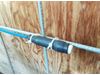
Germann Instruments - Model ERE-Probe -Half-cell Reference Electrode
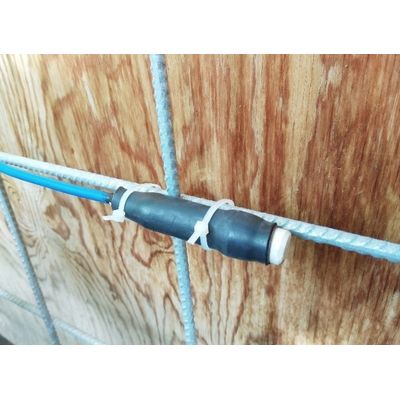
The ERE-Probe is a sophisticated half-cell reference electrode designed for embedding in concrete to monitor the corrosion activity of steel reinforcement. This robust, long-lived reference electrode uses manganese dioxide for stable performance in new or existing concrete structures. For new constructions, the ERE-Probe is attached to the reinforcement using plastic straps before concrete placement. In existing structures, it is embedded by drilling a hole to the required depth and secured with an appropriate cementitious mortar. Suitable for concrete exposed to chlorides or carbonation, the probe does not induce corrosion or alter the steel's natural potential. A high impedance voltmeter is connected to the ERE-Probe's cable to measure half-cell potential between the probe and reinforcement, providing an accurate assessment of corrosion activity.
The ERE-Probe (Embeddable Reference Electrode) is a stable, long life reference manganese dioxide electrode for monitoring the half-cell potential of reinforcement in concrete structures.
In new structures, the ERE-Probe is attached to the reinforcement by plastic straps before placement of the concrete. In existing structures, a hole is drilled to the required depth and the ERE-Probe is embedded using an appropriate cementitious mortar. The probe can be used for concrete exposed to chlorides or carbonation and will not induce corrosion or change the natural potential of the steel. A high impedance voltmeter is connected to the cable and used to measure the half-cell potential between the probe and the reinforcement.
- Monitoring of reinforcement potentials in critical areas for corrosion such as construction joints, splash zones in marine structures, bridge decks, bottoms of bridge columns exposed to ingress of chlorides, etc.
- Monitoring of efficiency of cathodic protection
- Monitoring of ingress of the depassivation front, due to chloride penetration or carbonation, in combination with installing the CorroWatch (see technical data sheet)
- Diameter ≈ 18 mm
- Length ≈ 85 mm (without protective cap)
- Typical potential = +205 ± 20 mV measured in a saturated Ca(OH)2 solution at 23ºC vs Ag/AgCl electrode*
- Internal resistance < 5,000 Ohm measured in a saturated Ca(OH)2 solution at 23ºC
- Variation: ±5 mV compared with the initial value at the same temperature and same electrolyte environment
- Operating temperature: 0 to +40ºC (false readings are expected during frost but they are recovered after thawing)
- Service life > 30 years