


- Home
- Companies
- Nihon Onkyo Engineering Co., Ltd.
- Products
- Noise Vision OTAR - Planar Microphone ...
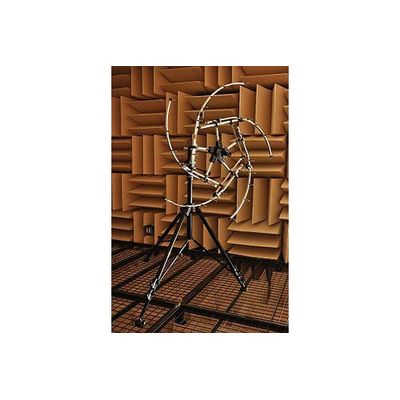
Noise Vision OTAR - Planar Microphone Array Sound Source Identification System
The planar microphone array which is designed to place microphones optimally is called Optimized Typhoon ARray (OTAR) due to its shape.
The biggest feature of this system is excellent resolution. For example, at a distance from 5 m away, OTAR can be identified two noise sources separated just several centimeters. OTAR is most effective for visualizing wind noise sources with equipment such as automobiles and motorcycles in wind tunnels and for visualizing sound sources for factories and outdoor construction machines. Two sensor sizes are available, making OTAR effective at identifying noise sources even with small products.
OTAR planar microphone array
The microphone array, called Optimized Typhoon ARray (OTAR), is very distinctive. Two types of microphone array are prepared. The OTAR CS1 is composed of linear and curved sub-arrays. This combination of two different units with differing characteristics minimizes ghosts to ensure excellent sound source resolution at high frequencies. The second OTAR model is the medium-sized OTAR-C1, which uses only 30 microphones.
Vivid and clear visualization using a high-definition camera
OTAR use a high-definition camera to handle even the most advanced visualization requests. This precise camera provides image quality suitable for sound source identification where the array position is far away from the noise source, making it a powerful tool in picture-based noise source visualization and identification.
Optimized beamforming
Taking advantage of the optimized beamforming algorithm which achieves both high sound source resolution at low frequencies and reducing ghost at high frequencies.
Powerful technique — Virtual reference analysis
The virtual reference analysis function can be used in a variety of possibilities, from discovering hidden noise sources by excluding the effect of the noise coming from the specific location, or to improve resolution by emphasizing the source location only. In addition, the position can be set freely during analysis because there is no need to install a reference sensor during experimentation.
Simple, easy to use software
Efficiently designed software allows users to perform advanced analysis as desired, from data acquisition to analysis and reporting. Results can also be utilized quickly through the user interface capable of intuitive handling of complex processes such as time domain analysis and virtual reference functions. In addition, real-time processing functions are available for visualizing sound sources in real time.
- Sensor (Planar microphone array OTAR)
- Large-sized sensor (OTAR6001) : Medium-sized sensor (OTAR3001)
- Diameter: 2.7 m : Diameter: 1.2 m
- Number of microphones: 60 : Number of microphones: 30
- Number of high-resolution cameras: 1 : Number of high-resolution cameras: 1
- Frequency: 200 Hz - 10000 Hz : Frequency: 200 Hz - 10000 Hz
- Host PC
- OS: Windows 7 / 8 / 8.1 / 10
- CPU: CPU Core i5 or faster
- RAM: 2 GB or more
- HDD: 2 GB or more available space
- Screen resolution: 1024 x 768 (XGA) pixels or more
- USB 2.0 ports: 2 or more
- LAN (Ethernet) port (100BASE-TX or better)
- Other equipment
- AD converter (for OTAR6001): Support for 64 ch input (ask for recommendation)
- AD converter (for OTAR3001): Same as omnidirectional sound source identification systems
- Cable conversion connector box
- Noise Vision Recorder
- Sound pressure recording
- Input level monitoring
- Auto ranging
- Still image capturing
- Movie capturing
- Rotation signal input (2ch)
- Trigger (Level trigger, External trigger)
- Filtering (FLAT, A, C)
- Frequency analysis
- Recorded sound monitoring
- Exporting recorded sound to file
- Exporting captured image to file
- Noise Vision Analyzer
- Sound source identification:
- Sound source identification is based on spherical beamforming and optimization
- Analyzable frequency: 200 Hz - 5000 Hz / 300 Hz - 8000 Hz
- Narrow band analysis
- 1 / 1, 1 / 3 octave band analysis
- Overall analysis
- Exporting analyzed results to file
- Copying analyzed results to clipboard
- Optional accessories
- Analyzed Level difference calculation software
- Batch processing
- Time-Resolved Animation software
- Software for exporting to PowerPoint
- Real-time analysis software
- Order tracking analysis software