
Refine by
Locations
- USA
- Alabama
- Alaska
- Arizona
- Arkansas
- California
- Colorado
- Connecticut
- Delaware
- District Of Columbia
- Florida
- Georgia (USA)
- Hawaii
- Idaho
- Illinois
- Indiana
- Iowa
- Kansas
- Kentucky
- Louisiana
- Maine
- Maryland
- Massachusetts
- Michigan
- Minnesota
- Mississippi
- Missouri
- Montana
- Nebraska
- Nevada
- New Hampshire
- New Jersey
- New Mexico
- New York
- North Carolina
- North Dakota
- Ohio
- Oklahoma
- Oregon
- Pennsylvania
- Rhode Island
- South Carolina
- South Dakota
- Tennessee
- Texas
- Utah
- Vermont
- Virginia
- Washington
- West Virginia
- Wisconsin
- Wyoming
Napls Software In USA
4 software items found
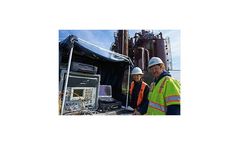
Manufactured by:Dakota Technologies, Inc. based inFargo, NORTH DAKOTA (USA)
Following a comprehensive spectroscopic study of coal tar behavior, Dakota created this method which results in a monotonic response for coal tars on a variety of soils. Lab tests of TarGOST indicate the system is ideally suited for delineating the NAPL contaminated zones or source term at former manufactured gas plants (MGPs) and wood treating facilities. ...

by:GSI Environmental Inc. based inHouston, TEXAS (USA)
The Matrix Diffusion Toolkit, developed for the Department of Defense ESTCP program, is an easy-to-use, comprehensive, free software tool that can assist site personnel to effectively and efficiently estimate what effects matrix diffusion will have at their site, and transfer the results to stakeholders. The Toolkit provides the following tools to calculate and evaluate matrix diffusion ...
by:GSI Environmental Inc. based inHouston, TEXAS (USA)
The mass balance paradigm is an important new approach to evaluating Monitored Natural Attenuation (MNA) at chlorinated solvent sites. By using the mass balance approach, site managers can demonstrate that the assimilative capacity of a particular system is either capable (or incapable) of managing the mass flux of chlorinated solvents emitted from a source zone. In addition, a detailed mass ...

by:Aestus, LLC based inLoveland, COLORADO (USA)
Historically, environmental consultants, geophysicists, and academics that have tried using conventional electrical resistivity imaging (ERI) technology and/or other geophysical methods to image contaminant plumes have been largely dissatisfied with the results. Our early experiments with standard electrical resistivity imaging and other technologies also yielded unsatisfactory results. The ...