
- Home
- Applications
- stationary source
Refine by
Stationary Source Product Applications
6 applications found

Continuous Emissions Monitoring Systems (CEMS) are used to measure flue gases from stationary sources at a wide variety of regulated industrial facilities, including power plants, petroleum refineries, petrochemical plants, waste incinerators, pulp and paper producers, and many others. The types of air pollution measured from these sources vary widely based on the industry and process, and many are regulated by government agencies around the ...
ByTeledyne API based in San Diego, CALIFORNIA (USA)
Driven by legal regulations to measure all stationary emission sources in reducing greenhouse gases, pollutants, as well as operators requiring improved feedback on thermochemical processes, for efficient plant operations. ...
ByNorsk Analyse AS based in Barkåker, NORWAY
There are two types of stationary air pollution sources: Point source pollution (boiler rooms, process, power stations, etc…). ...
ByEcomesure based in Saclay, FRANCE

Tri-Mer Corporation is a leader in air pollution control, with more than 6,000 installed APC systems worldwide. Tri-Mer is also the leader in equipment for removing PM, SO2, and NOx from large-scale stationary diesel operations. Tri-Mer’s UltraCat Catalytic Filter system is the world’s premier dry technology for PM+ SO2+ ...
ByTri-Mer Air Pollution Control Systems based in Owosso, MICHIGAN (USA)
The reference EN 13284-1 provide two different way about stack sampling, depending on emission conditions. The first option provide sampling with a standard probe with inserted perpendicularly into the duct filter holder to the emission flow. This option is recommended for emissions not involving humidity and with low temperature. It allows using non-perpendicular filter holders to sampling flow, reminding to consider also as part of the sampling all the collected parts ahead of the ...
ByAMS Analitica based in Pesaro, ITALY
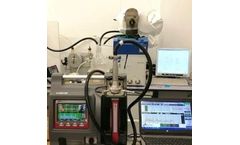
Different types of filters such as fiber filters, membrane filters and fabric filters can be used to remove particles from air flow. The removal of the particles by the filter happens via different mechanism including interception, impaction, diffusion and electrostatic attraction. Typically, the effectiveness of the filter is described with a filtration efficiency value, which is the efficiency of the filter to remove particles from the air flow in percentage (0–100 %). The amount of removed particles by ...
ByDekati Ltd. based in Kangasala, FINLAND