
Refine by
Stationary Source Articles & Analysis
103 articles found
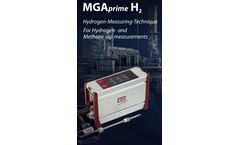
As part of the energy transition, hydrogen as an energy carrier is gaining importance, ideally produced via electrolysis using electricity from renewable sources. To continue utilizing the installed infrastructure for gas distribution and usage, hydrogen can be used as a fuel gas in addition to other applications. ...
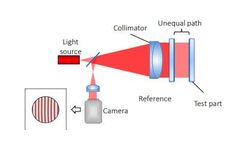
Generally, the measurement cavity is illuminated with a stationary, on-axis, point-like source of coherent light situated at the interferometer source plane. We describe how to enable a variety of useful functions to aid interferometric metrology applications by dynamically moving the source point during a phase-shifting ...
When it comes to emission monitoring from stationary sources, ensuring the accuracy and reliability of portable automated measuring systems (P-AMS) is paramount. ...

Sensor Technology Advancements In terms of both spatial and temporal resolution, stationary low-cost air quality sensors fall in the middle-ground between traditional and mobile monitoring. ...

With all said about emissions of pollutants in preceding blogs, it should also be noted that there are multiple methods available and in frequent use to reduce the emissions at their sources, both of gaseous substances and particulates. Addressing Particulates To start with the latter, there are cyclones, electrostatic filters, and fabric filters that can catch the particles ...
ByOPSIS AB
Many anthropogenic activities give rise to gaseous air pollutants, but there are also a few natural sources. Stationary and Mobile Combustion Gas-phase air pollutants are generated by combustion processes. ...
ByOPSIS AB

This case study outlines the immediate and long-term needs and the challenges posed by wildfires and air pollution in Sacramento, California. 21: Node-S air sensors 24/7: monitoring ...

It uses liquid as the mobile phase, and uses a high-pressure injection system to pump single solvents with different polarities or solvents and buffers with different mixing ratios into the column containing the stationary phase. After the components in the column are separated, they enter the detector for detection, so as to realize the analysis of the sample. ...

Industrial carbon emissions come from industrial processes and stationary emission sources, such as power stations, cement production and refineries. Industrial carbon capture and storage involves capturing CO2 at emission sources, transporting, and then storing or burying it in a deep, underground location. ...
TL;DR — Today we’re sharing the takeaways from our recent webinar on Air Quality Network Design as part of series in conjunction with the Environmental Management Bureau (EMB) of the Department of Environment and Natural Resources (DENR) in celebration of Clean Air Month in the Philippines. We discuss the important questions that should be taken into consideration when designing an ...

The South Coast Air Quality Management District, also using the acronym South Coast (AQMD), formed in 1976, is the air pollution agency responsible for regulating stationary sources of air pollution in the South Coast Air Basin, in Southern California. ...
WRPS manages one of the most challenging radioactive waste cleanup projects in US. Their focus is reducing the environmental risk posed by 56 million gallons of radioactive and chemical waste stored in 177 underground tanks near the center of the 586-square-mile Hanford ...

In the past, the primary origin of local air pollution has been emissions from stationary sources. These sites include power generating plants, oil refineries, chemical plants, steel factories, cement and glass manufacturing companies, space heating, and many other industries. ...
Optical Gas Imaging (OGI) technology has proven to be a handy tool for detecting and visualizing small gas leaks and more substantial fugitive emissions in petroleum refineries and other Oil & Gas facilities. OGI technology is currently the preferred technology for detecting leaks and emissions of hydrocarbon compounds worldwide. US state and federal regulatory frameworks are transitioning ...
ByOPGAL
These systems would still require an external light source. Taking pictures and/or videos is still possible by connecting a USB Camera and adaptor to the eyepiece of the borescope along with a high intensity LED light source. ...

During production processes, several sectors are affected by high peaks of Volatile Organic Compounds (VOC) concentrations, especially industries working in discontinuous or batch processes. Having discontinuous production, some production plants can emit variable polluted flows at different moments of the day. The pharmaceutical sector and fine chemicals industries are common examples of sectors ...
ByTECAM
The chemical sector is a sector with high environmental risk. Emissions elimination in the chemical sector has become a critical issue in the recent decades. The excess of pollutants in the atmosphere derived from production processes brings consequences and harmful effects for the environment and for people’s ...
ByTECAM

Such Air pollutants are mainly generated in the industrial areas due to various industrial processes (i.e. raw material sourcing, product manufacturing, maintenance & repair services, and distribution). ...

In this article we introduce you to the world of continuous dioxin monitoring and the Gasmet GT90 Dioxin+, which is an exceptionally robust dioxin sampling system. Did you know that it was designed to sample even the lowest dioxin and dioxin-like compound concentrations in harsh industrial environments, even in subfreezing conditions? In addition to dioxins, the system is capable of measuring ...
Dioxins and POPs are toxic, persistent, and nowadays ubiquitously present in our environment. Gasmet GT90 Dioxin+ is an exceptionally robust dioxin sampling system that was designed to sample even the lowest concentrations in harsh industrial environments and even subfreezing conditions. Dioxin is an umbrella name for polychlorinated dibenzo-para-dioxins and polychlorinated dibenzofurans. They ...