
Refine by
Activated Sludge Articles & Analysis
1,083 articles found
Stricter discharge permits are being enforced, and some jurisdictions impose surcharges for high nutrient loads on publicly owned treatment works or direct industrial discharges.Where Traditional Treatment Approaches Fall ShortMany facilities rely on conventional aerobic treatment, lagoon systems, or activated sludge. While these reduce organic load, they are ...
Treatment processes span primary settling, biological or secondary treatment, tertiary polishing, disinfection, and sludge handling, each with its own mechanisms and efficiencies. Advanced monitoring and control systems, including sensors, automation, and data analytics, allow operators to optimize performance and identify issues early. ...
With light, intermittent mixing, it stays active without excess buildup or performance loss. A Solution Built for Nitrification MABR is commonly applied alongside activated sludge systems for total nitrogen removal. ...

Aeration upgrade allows plant huge savings and unexpected revenue opportunities. Project Information Project Type: Municipal wastewater treatment Completion Date: August 2013 Treatment Objectives: Financial and Energy Savings ...
Plant upgrade allows simplified maintenance and room for future expansion while meeting compliance. Project Information Project Type: Municipal wastewater treatment Size: Services 4,400 people + Several Industries Design Flow: 1.7 MGD Treatment Objectives: Higher O2 transfer and superior mixing throughout basin for increased DO levels, Significant reduction in air demand results in 28% ...
Serving a quarter-million Portuguese, StreamLine® system upgrade improves SOTE, energy savings, and effluent quality Project Information Location: Lisbon, Portugal Company: The plant is owned by Loures SMAS and is operated and managed by SIMTEJO, which is a government owned company integrated with Aguas de Portugal (also known as Aguas do Tejo Atlantico). Plant Built: 1997 Population: ...
EPDM membranes help contribute to a plant meeting regulation for no contaminants in wastewater effluent in Morelos, ...
Plant upgrades aeration system for lower power consumption and increased operating flexibility. Project Information Project Type: Municipal Wastewater Treatment Plant Completion Date: March 2010 Treatment Objectives: Reduce Power Usage by 56% ...

Wastewater treatment is a complex topic that involves numerous processes, components and equipment that all have the singular goal to turn any liquid into water that can either be reused or returned to the water cycle. There are even a lot of wastewater treatment systems that everyone from households to industries use to meet their wastewater treatment needs. These technologies include the ...
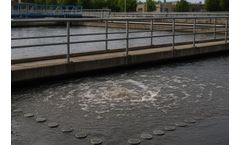
When DO levels drop, issues arise such as slower microbial activity, sludge settling problems, higher BOD and COD, and increased energy consumption, which raise costs and compliance risk. ...

Challenge This industry is a hog slaughter facility with two anaerobic lagoons followed by an activated sludge process with a large 1.8-million-gallon aeration tank with a 2-day hydraulic retention time (900,000 GPD flow). ...
All the aeration basins were completely covered and the foam even found its way into the center walls of the clarifier. 1.1 MGD activated sludge municipal treatment plant incoming BOD: 140-160 ppm incoming ammonia: 15-20 ppm. ...
System Activated Sludge Flow Rate 120,000 gallons per day Background The municipality upgraded their wastewater plant three years ago with finebubble aeration. ...

The facility was upgraded with a conventional activated sludge technology, but due to the heavy loads on this plant, it could not function properly, resulting in odor issues and improper phosphate removal. ...
Introduction The City of Monticello, Indiana operates an extended aeration activated sludge treatment system to handle 1.6 MGD of flow. Up until 2019, the city had relied upon chlorination to control foaming caused by FOG filaments, specifically Microthrix parvicella. ...
If you have read the stalked ciliate entry in our microorganism database, you know they have an inverted bell-shaped head called a zooid, come in a variety of sizes, and fall into one of two distinct groups: those with a lorica (a shell) and those without. The database even touches on how both types have the ability to contract. But why do these organisms contract? While contractions are often ...
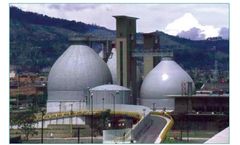
Abstract: One of the major costs associated with the operation of biological wastewater treatment is the handling and disposal of sludges generated primarily in the conversion of soluble organics as measured by BOD/COD into either carbon dioxide (aerobic) or methane (anaerobic), water and bacterial cells. Often times the sludge generated in either of these processes may be subsequently treated in ...
This Coca Cola bottling plant added a new bottling line that doubled its production that, in turn, doubled the organic loading to its activated sludge waste treatment ...
Location: Polymer Manufacturer, Texas Background: A water-soluble polymer manufacturer was having difficulty with an activated sludge treatment system that failed to meet permit limits. The treatment system was designed with an initial flocculation phase, whereby the pH was adjusted to 12 or above, followed by an anaerobic treatment phase, which discharged to a ...
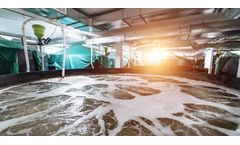
Finally, the water is disinfected and released, and the remaining sludge is de-watered and safely disposed. Traditional biological treatment often uses activated sludge (where bacteria float in tanks) or trickling filters (where water trickles over a bed of rocks with microbes). ...