
Refine by
Aerosol Characterization Articles & Analysis
13 articles found

Figure 1 Air pollution blanketing the city of Taipei at sunset photo by Max Chen, December 2018 Lo Chi and William Hetherington at the Taipei Times recently posted a feature piece about the National Central University of Taiwan (NCU) Micro Pulse Lidar NETwork (MPLNET) stations that have been collecting data continuously and contributing these observations to MPLNET since 2002. The ...
ByENVEA

OPERA-S5 (OPEn platform for the Retrieval of Aerosol and CO2 from S5) includes two main objectives: the development of Open-Source Community Full-Physics XCO2 Retrieval Algorithm for Sentinel 5, and the demonstration of the developed algorithm by investigating the uncertainty characterization of CO2 and CH4 retrievals in the context of the challenging CO2M ...

The capability of Sentinel-5p foraerosol monitoringis currently not used to its full potential. However, satellite observations in the spectral range from approximately 340 to 400 nm are known to have unique sensitivity to elevation and absorption of tropospheric aerosols. Traditionally, this sensitivity is used in many ozone monitoring instruments such as TOMS, GOME-1, SCIAMACHY, OMI and GOME-2 ...
Moreover, the accurate description of the surface reflection is crucial for different atmospheric studies including aerosol and trace gases ...
The current project intends to use the heritage of the CAWA project as well as the recent advancements realized within the GRASP-Open software package to establish and extend the concept for generating synergy MERIS+AATSR ...
AIRSENSE’s main objective is to enhance the understanding of aerosol and aerosol-cloud interactions. This activity is part of Atmosphere Science Cluster of ESA’s EO Science for Society programme, an element of the ESA FutureEO programme, which aims at boosting Europe’s excellence in EO science and its ...
The 3DREAMS project presents the concept of a 3D radiative Digital Twin Earth (DTE) and how it can be used to understand the effects of surface heterogeneities on aerosol retrieval from multi-angular observations. A series of realistic scenes will be generated and used by the Eradiate radiative transfer (RT) model for the simulation of satellite observations. The impact of various types of ...
Atmospheric aerosol is one of the main drivers of climate changes. Importance of accurate global aerosol characterization for climate studies and air pollution monitoring is a well recognized problem (e.g., see IPCC AR5 by Boucher et al.2013). In addition to the traditional spectral Aerosol Optical Depth (AOD) such ...

In the world of product safety and environmental health, assessing potential risks associated with inhalable products has always been a complex challenge. Commercial nebulizer applications, used for various purposes like disinfection and scenting, release potentially harmful aerosols into the air. Understanding the possible adverse acute inhalation effects of these aerosols is crucial for ...
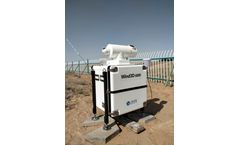
Laser wind measurement techniques have developed rapidly during the past decades and are mostly used in wind field observation [ 8], aircraft wake measurements [ 9], turbulence measurements [ 10 ], cloud and atmospheric boundary layer characterization [11 ], and atmospheric aerosol optical characterization [12]. ...
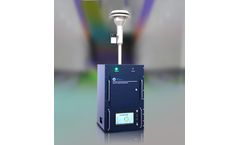
Xact 625i has been selected for the ASCENT network for characterizing aerosols in high time resolution using state-of-the-art instruments. ...

Changes in the climate are created by complex interactions between temperature, clouds, aerosols, wind, moisture and a host of other factors. To get a better understanding of the specific impact of numerous low thin clouds on climate, a study at the Cloud-Aerosol-Rain Observatory (CAROb), based on Virginia Key, Florida, was conducted with an MPL system and other ...

The present study examines variation of ambient aerosol mass and number concentrations in Chiang Mai, Thailand during winter. Aerosol particle samples were collected and measured at four different sites, representative of urban, industrial, residential and rural areas during daytime between December 2003 and January 2004. Average 10 h particulate matter (PM) mass concentrations were found to be ...