
Refine by
Aerosol Generation Articles & Analysis
23 articles found

Industrial processes like CNC machining, grinding, and turning often release harmful oil mist and fumes into the air. These not only pollute the workplace environment but also pose serious health risks to workers and damage machinery over time. That’s where Mistkiller – Powertech India’s centrifugal mist collector – comes in. Mistkiller™ is designed to efficiently ...

The 3DREAMS project presents the concept of a 3D radiative Digital Twin Earth (DTE) and how it can be used to understand the effects of surface heterogeneities on aerosol retrieval from multi-angular observations. A series of realistic scenes will be generated and used by the Eradiate radiative transfer (RT) model for the simulation of satellite observations. The ...

In the world of product safety and environmental health, assessing potential risks associated with inhalable products has always been a complex challenge. Commercial nebulizer applications, used for various purposes like disinfection and scenting, release potentially harmful aerosols into the air. Understanding the possible adverse acute inhalation effects of these aerosols is crucial for ...

Among the various air pollutants, particulate matter and aerosols are of particular concern. This blog article discusses these contributors to air pollution and highlights two instruments dedicated to continuously monitoring air quality parameters. Brief introduction to particulate matter and aerosols\r\n Particulate matter (PM) is generally ...
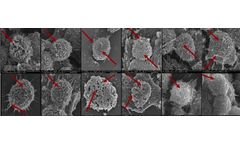
Pinkston, Penn and Noel (2023), researchers investigated the comparative in vitro toxicity of ENDS aerosols, focusing on the impact on macrophages. This study specifically examined the effects of Menthol and Crème Brûlée-flavored aerosols generated from both 3rd and 4th-generation ENDS devices. ...

When considering the critical performance differences between polarized aerosol lidar such as Micro Pulse LiDAR (MPL) and Doppler Wind LiDAR, it is clear that MPL is the only realistic remote sensing technology for mapping aerosols. ...
The Lasair III Aerosol Particle Counter is the latest generation of aerosol particle counter from Particle Measuring Systems. The Aerosol Manifold II is designed to work with the Lasair III counter under the control of Particle Measuring Systems facility monitoring software (Facility Net). ...
The new methodology is based on single particle mass spectrometry (SPMS), and it can extend historic datasets to include measurements of bioaerosol, allows for comparison to other techniques, and generally agrees with a global aerosol model. In the locations sampled, bioaerosols were at least a factor of 10 less abundant than mineral dust. ...
Whilst HAC was able to effectively discriminate between reference narrow-size distribution PSL particles, yielding a classification error of only 1.8 %, similar results were not obtained when testing on laboratory generated aerosol where the classification error was found to be between 11.5 % and 24.2 %. Furthermore, there is a large uncertainty in this approach ...

According to EPA, this action would benefit the many manufacturing facilities and others that generate and manage large quantities of hazardous waste aerosol cans. ...

At Peak Scientific 'Corona' brings two things instantly to mind; Thermo Scientific's Corona Veo Charged Aerosol Detector, and the Corona 1010 Nitrogen Generator, a dedicated gas solution from Peak designed specifically for the Thermo Scientific instrument. Corona™ Veo™ Charged Aerosol Detector and Corona 1010 Nitrogen ...

Overview: There is not currently a formal and universally recognised definition of a process-generated substance. Process-generated contaminants can be generated as emissions from combustion processes, abrasion and/or other processes that physically or chemically degrade or otherwise modify the starting material(s), e.g. degradation/composting ...
The International Organization for Standardization (ISO) recently published standard ISO/TR 19601:2017, “Nanotechnologies — Aerosol generation for air exposure studies of nano-objects and their aggregates and agglomerates ...

Exposure can happen by skin contact during parts and equipment handling or by breathing aerosols generated during grinding and machining operations. The National Institute for Occupational Safety and Health (NIOSH), states occupational exposures to metalworking fluids may cause several health conditions, including: Allergic and contact dermatitis ...

But out of all, an Ultra Low Volume (ULV) or the ULV truck mounted fogger and truck mounted ULV aerosol generator are generally considered the best choice being used in the context of pesticide application. ...

The DOP aerosol used to challenge HEPA filters to test for efficiency by this standard is known as "hot" or "thermally generated" DOP because it is derived from heated dioctylpthalate oil. ...

Abstract Aerosol generating procedures (AGPs) may expose health care workers (HCWs) to pathogens causing acute respiratory infections (ARIs), but the risk of transmission of ARIs from AGPs is not fully known. ...

If risk characterization of the building and its water systems indicate that hazard analysis and control for a facility is required, then the standardized practice for what to do is exactly specified in the following sections of the Standard. HACCP PLAN GENERAL REQUIREMENTS AND REQUIREMENTS FOR SPECIFIC BUILDING WATER SYSTEMS Section 7 – HACCP Plan ...

Healthcare workers (for example, doctors, respiratory therapists, nurses, emergency responders, or dentists) performing aerosol-generating procedures on suspected or confirmed patients (such as, sputum inductions, endotracheal intubations and extubations, bronchoscopies, some dental procedures or invasive specimen collection). Healthcare workers present during ...

Lilly has proposed the use of a NIST-traceable reference aerosol generator for relative accuracy and linearity determinations. In addition, Lilly is also proposing the use of a new sampling and analysis reference method for metals to assure the accuracy of the spiked reference aerosol. This appendix describes this new sampling and analysis ...