
Refine by
Air Modeling Software Articles & Analysis
30 articles found
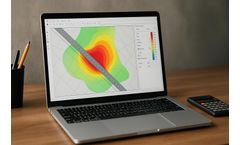
CALRoads View is an air dispersion modeling package that predicts near-roadway air quality impacts from moving and idling vehicles. It integrates three dispersion models: CALINE4, CAL3QHC, and CAL3QHCR. The original design of these models accounted for releases of PM, CO, and NO2 with no support for other inert gases.The inert gases capability is introduced by adding a custom Inert Gases ...
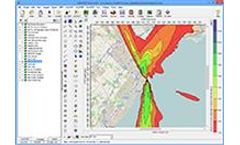
Lakes Software recently announced its acquisition of the CALPUFF modeling system from Exponent. Because Lakes’ CALPUFF View interface is well known throughout the modeling community, some modelers were not aware of the differences between this application and the stand-alone modeling system. This tip will explain the relationship between the modeling system and the CALPUFF View ...

ANSI N13.1-2011 stack sampling location qualification testing ANSI N13.1 stack sampling system design Custom air sampler design Integration of radiation detectors and air sampling systems ANSI N13.1-2011 Design Considerations ANSI N13.1-2011 requires that sampling systems satisfy the following design criteria; (1) representative particles from the stack flow must be drawn into the ...

BREEZE is the market-leading air dispersion modeling software used by environmental professionals around the world Receptors are specific locations, set up in air quality dispersion models, where ambient concentration estimates or deposition values are needed. If the model is being used to ...
In order to develop these custom real-time air dispersion modeling and forecasting systems, extensive knowledge on air dispersion modeling, meteorology, computer science, and web and database development is required. Two examples of these types of systems are: Real-Time Air Dispersion Modeling ...

Different operational air quality forecasts (ESSEM Cost Action 0602) are currently available in Europe. However, most of them are not suitable for regional application and, also, their coarse outputs do not fit well with air quality management needs. In this work, PRESAXIO regional air quality modelling system is validated and applied over Galicia (NW of Spain), including WRF and CHIMERE models. ...
The last decade, scientific studies have indicated an association between air pollution to which people are exposed and wide range of adverse health outcomes. We have developed a tool which is based on a model (MM5-CMAQ) running over Europe with 50 km spatial resolution, based on EMEP annual emissions, to produce a short-term forecast of the impact on health. In order to estimate the mortality ...
Slovenia is a country of very complex terrain and many problems with air pollution in the valleys, canyons and basins, where industrial air pollution is combined with traffic and domestic heating air pollution, giving rise to problems for the health impact and the ecosystems directly or indirectly. Among indirect effects is also effect on solar radiation budget because of photochemical smog and ...
This paper aims to show how spatial variability of crops in China could reduce the effect of ozone on crops. The spatiotemporal variations of ozone are simulated using Models-3 Community Multiscale Air Quality modelling system coupled with the Regional Emission Inventory in Asia (CMAQ/REAS). The ozone effect on crops is evaluated based on the AOT40 index (accumulated exposure over threshold of 40 ...
The aim of this study is to support decision makers and stakeholders in the management of air quality in an industrial area located in a valley in southern Italy, where neither air quality nor meteorological parameters are routinely monitored. The first phase focused on the inventory of emissions through monitored data at stacks, permissions to emit from local authorities, and life cycle ...
Zasavje is an industrial region in Slovenia located along the Sava River's steep canyon where PM10 air pollution is a major problem. In the paper a national project with the title 'Prognostic and diagnostic integrated regional air pollution modelling system' is described where it is shown that such a project can significantly contribute to the proper understanding of air pollution in smaller ...
Air quality index (AQI) is a quantitative tool through which air pollution data can be reported, providing information on how clean or polluted the air is. Several countries employ some type of air quality index to communicate the quality of their air. Some of these systems rely on relating measured (monitored) or predicted concentrations of air pollutants (results of modelling system). In this ...
The emissions of toxic air pollutants from three power plants and one oil refinery were measured for a period of six months and dispersion of pollutants were calculated by using Air Dispersion Modelling Software (ADMS–4). The plume concentration of carbon monoxide, oxides of nitrogen, sulphur dioxide and particulate matter ...
A GIS based air quality modelling system has been developed in Apulia region in the Southern Italy, to support local authorities in air quality management. Meteorological and dispersion simulations were performed for the year 2005. Predictions have been compared with concentration data from the air quality monitoring network. Results evidence a good correlation between predictions and ...
The air-quality modelling system was conducted to evaluate emissions inventory and simulate air concentration over Thailand. The coupling model of the Regional Atmospheric Modelling System (RAMS) and the models-3 Community Multi-scale Air Quality (CMAQ) was applied to simulate the concentration distributions of gaseous pollutants (i.e., NOx, SO2 and CO) over the Central and Eastern regions of ...
The Po valley is one of the most polluted area in Europe regarding ozone and PM10. To support policy-makers to implement programmes to reduce air pollution, the Veneto Region Environmental Protection Agency has set a state-of-the-art modelling system. Comparison between model results and measurements illustrates a fairly good agreement for NO2 annual mean concentration and deposition levels and ...
This paper presents a case study of an air pollution dispersion model for the atmospheric impact assessment of a new municipal wastes incinerator (MWI). The capacity of the present MWI will increase more than ten times, and a new high-efficiency flue gas treatment system is projected. The environmental impact study has been focused on the long-term aspect of the air pollution (chronic pollution) ...
Air quality models are essential tools in the understanding of pollutant dynamics in the urban atmosphere. In this contribution we present an air quality system (ANA), which is composed of a meteorological module that uses a three-dimensional approach with terrain-following coordinates and the non-hydrostatic approach, and a detailed emission model (250 x 250 m) that includes the anthropogenic ...

This year, the Air & Waste Management Association celebrates its centennial. The past 100 years have yielded remarkable technological advances, especially in the area of information technology (IT). ...

The Penn State/NCAR Mesoscale Meteorological Model 5 (MM5), Sparse Matrix Operator Kernal Emissions (SMOKE), and Community Multiscale Air Quality (CMAQ) modeling systems were employed to simulate ozone concentration distribution within the State of Arizona, in particular, Phoenix air basin, as supporting information to designate nonattainment areas of the U.S. Environmental Protection Agency's ...