
Atomic Layer Deposition Articles & Analysis
15 articles found

Nanotechnology represents a new frontier in research and development (R&D) across a broad spectrum of human endeavours, from bulk materials to advanced thin films and substrate surfaces. Though concerned with the minuscule, the scope of nanotechnology is undeniably vast. While much of the truly exciting nanoscience research remains in developmental stages, numerous nanotechnology ...

The fabrication process can be summarized in the following steps: Deposition: Thin films of conductive, insulating, or semiconducting materials are deposited on silicon wafers using physical vapor deposition (PVD), chemical vapor deposition (CVD), or atomic layer deposition ...
In materials science, precision in thin film deposition processes like Plasma Enhanced Atomic Layer Deposition (PEALD) is paramount. The ability to control film thickness and composition with high accuracy depends significantly on understanding and controlling the plasma used in the deposition process. Here, the ...
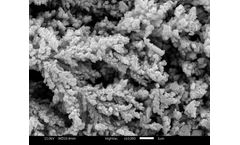
High Power Impulse Magnetron Sputtering (HiPIMS), Diamond-Like Carbon (DLC) coatings, plasma etching, Atomic Layer Deposition (ALD), and Pulsed Laser Deposition (PLD) coatings stand at the forefront of these technologies. ...
Additionally, their ozone concentration was only 3%wt, and their reaction chamber had a volume of only 1 litre. In the ALD (Atomic Layer Deposition) application industry, the individuals involved typically possess a good understanding of the subject matter. ...
Chemical vapor deposition (CVD) processes rely on process gases for the transport of volatile precursors and byproducts. Performing process gas analysis on exhaust streams in CVD applications provides insight into the chemical reactions that occur at the surface of the substrate, enabling CVD processes to be monitored and optimized. In this article, we’re looking at the fundamentals of CVD ...
Atomic layer deposition (ALD) is a coating technique that allows to coat challenging 3D substrates in a uniform and conformal way, with atomic layer thickness precision. ...

The recent development of high-performance composite materials is associated with the synthesis of highly sophisticated nanostructures in which one material (polymer) is transformed into another material (glass) continuously without interfaces in the range of only 100 nm based on model simulations. Organosilicon coatings are deposited by many types of techniques from liquid ...
Nanotechnology represents a new frontier in research and development (R&D) across a broad spectrum of human endeavours. Though concerned with the miniscule, the scope of nanotechnology is undeniably vast. However, most of the exciting nanoscience research being conducted is in a purely contemplative phase – or at least an extended period of prototypical development. The Reality of ...

Then, in May 2014, JCAP researchers at Caltech used a process called atomic layer deposition to form a thin protective coat of titanium dioxide over a number of common semiconducting materials. ...
ByEnsia

In this paper, energy and exergy analyses of atomic layer deposition (ALD) of Al2O3 nano–film has been conducted. First, based on the first law of thermodynamics, the energy flow in ALD of Al2O3 nano–film preparation system is analysed. ...
The study is to demonstrate a dual–band infrared image based on two stacked InGaAs and GaAs–capped InAs QDIP structure, with the use of nano–scale Al2O3 surface passivated layer by atomic layer deposition (ALD) system deposited to decrease the device shot noise and boost the operation temperature of the thermal ...
We describe a procedure for one-step patterning of thin films of metal oxides (TiO 2 , Al 2 O 3 , and ZnO) using reusable hard templates and atomic layer deposition (ALD). This procedure, called contact area lithography (CAL), was inspired from an idea of pattern transfer at a contact area, which realises high patterning fidelity, and ...
ZnO thin films have been successfully deposited by Atomic Layer Deposition (ALD) using Diethylzinc (DEZn) and water (H2O) as precursors. ...
This study explored saltless water softening with inorganic Nanofiltration (NF) membranes prepared by Atomic Layer Deposition (ALD) and a Tetraorthosilicate (TEOS) sol–gel process applied by the slip cast method. ...