
Canopy Level Articles & Analysis
15 articles found
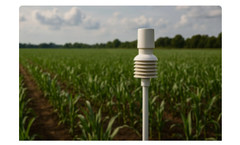
In agriculture, they are deployed at canopy height in open fields, integrated with greenhouse climate controls, or mounted on weather stations at field perimeters. ...

Vegetation can trap particulate matter, absorb gases such as SO2 and O3, and cool urban heat islands, but these benefits depend on species type, placement, climate, and city-level emission loads. In densely populated cities with high pollution levels, biological filtration alone cannot overcome emissions from vehicles, industries, and waste burning. ...

Green State Power was proud to work with this commercial client in Research Triangle Park to design, engineer and install this 1 MW solar parking canopy and solar wall for the top level of a new, 5 story parking deck as well as provide shaded spots on existing ground level ...

If you’re looking to take your cannabis cultivation skills to the next level, understanding vapour pressure is an absolute game-changer. Picture this: a lush green canopy of cannabis plants thriving under your care, with buds bursting with potency and flavour. ...
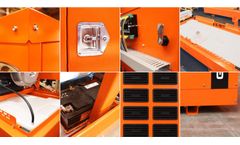
But which features distinguish Grupel’s canopies? Bolted / non-welded canopy The main advantage of the bolted canopy is that it presents very low levels of oxidation, comparing to welded versions. Also, the canopy design has an overlap system with layers, similar to a rooftop, to minimize to the maximum, ...
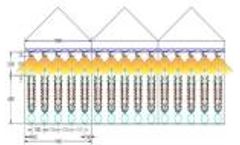
Light uniformity is an important factor when it comes to growing a consistent crop and optimizing your growing environment, however, there has been some misinformation about the way HID and LED luminaires distribute light and affect plant health. As a manufacturer of both HID and LED technology, P.L. Light Systems always strives to show the complete picture of both technologies. We think both ...

This happens as a physical reaction to high levels of transpiration that result in negative pressure, which in turn causes the plant to being pulling more water through its roots. This set of circumstances has significant consequences for plants: In drier regions or in higher canopies, where there is abundant sunlight and relatively high temperatures, plants ...
This happens as a physical reaction to high levels of transpiration that result in negative pressure, which in turn causes the plant to being pulling more water through its roots. This set of circumstances has significant consequences for plants: In drier regions or in higher canopies, where there is abundant sunlight and relatively high temperatures, plants ...
The angular densiometer has a convex mirror, a compass, a bubble level, and a fixed eyesight. It produces a clearer image and a more exact estimation of canopy cover than the convex spherical densiometer. ...

The ecosystem-level fluxes of water vapour and carbon dioxide were measured from 2003 to 2006 at a tropical rain forest in Xishuangbanna, southwest China, using the eddy covariance (EC) technique. These flux measurements allowed the canopy-level evaluation of stomatal conductance (g) response to humidity models. ...

The primary objectives of this 3-yr field study were to (i) evaluate the N responsiveness, NUE, and N stress tolerance of multiple modern maize genotypes using suboptimal, optimal, and supraoptimal plant densities (54,000, 79,000, and 104,000 plants ha–1, respectively) with three levels of side-dress N (0, 165, and 330 kg N ha–1), (ii) identify key morphophysiological responses ...

These findings mainly concern the turbulence structure, the height variation of Reynolds stress, and the implications for scaling within the upper part of the roughness sub-layer (i.e. above roof level). In order to estimate average flow and dispersion parameters closer to the surface (i.e. within the canopy) from information above roof level, ...
The temperature and vapor pressure deficit (VPD) of the air were measured at the crop canopy level and above and below the canopy. Changes in maize canopy temperature, transpiration, and leaf water potential (LWP) were determined. ...
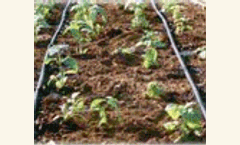
Simulations are performed on thermal time, but can be on calendar time, in daily time-steps. The model uses canopy ground cover instead of leaf area index (LAI) as the basis to calculate transpiration and to separate out soil evaporation from transpiration. ...
A multi-layer model, combining Lagrangian dispersion at the canopy level with Ohm's Law analogy at the leaf level, was used in numerical simulations to assess the leaf-to-canopy scale translation of surface resistances. The model produced unique profiles of fluxes and scalar concentrations that satisfied both the dispersion and ...