
Refine by
Cleanroom Contamination Articles & Analysis
37 articles found
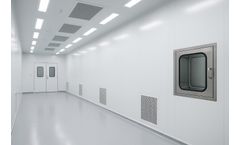
Typical applications include: Advanced nanotechnology research Quantum computing component development Specialized semiconductor processes ISO 2 Cleanrooms ISO 2 supports near-zero contamination risk, with design considerations for vibration control, material off-gassing, and micro-contamination control in addition to particle control. ...

GMP cleanroom contamination monitoring is a critical safeguard, forming the frontline defense against risks that can compromise product quality. When executed with intention and rigor, it becomes one of your most powerful tools for detecting contamination risks early and stopping issues before they escalate. Aligned with EU GMP Annex ...
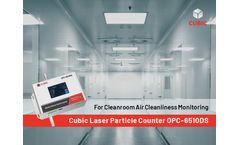
According to industry analyses released by SEMI, micro-contamination is a key factor affecting environmental stability in controlled manufacturing environments. As a result, cleanroom air cleanliness monitoring has become an essential part of facility-level contamination control and quality assurance programs. Particulate matter is one of the ...

When it comes to maintaining the integrity of cleanroom environments, human contamination remains the single greatest threat. In a recent webinar featuring Patricia Sitek, a leading biotechnologist and cleanroom consultant, and Jason Kelly, Director of Applications at Lighthouse, industry professionals gathered to discuss the critical role of ...

It provides the assurance needed when measurements push the boundaries of what can be reliably quantified, whether tracking pollutants, controlling contamination in cleanrooms, or detecting biomarkers in patient samples. ...
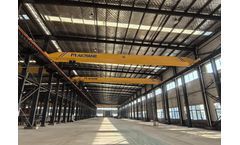
In industries that require the handling of delicate and sensitive equipment, precision lifting is crucial to ensure safety, protect the equipment from damage, and maintain overall operational efficiency. One of the most effective solutions for achieving high precision in lifting is the use of overhead cranes, particularly the 15-ton capacity models. These cranes are versatile, highly ...
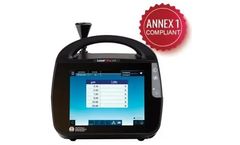
Need a fast way to check cleanroom contamination limits? Get your free quick-reference guide here. ...
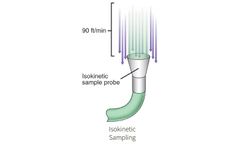
Introduction To maintain compliance with regulations and produce products with limited risk, pharmaceutical companies manufacture products in controlled environments such as cleanrooms. Cleanrooms reduce the risk of variability and particle contamination and are defined as rooms in which air filtration, air distribution, utilities, materials of ...
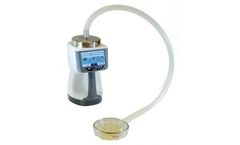
In controlled environments like cleanrooms, maintaining sterility is crucial. One of the most important processes in this context is microbial air sampling—a method used to detect airborne contaminants that could jeopardize sterile manufacturing processes. However, one significant challenge in microbial air sampling is the risk of false positives in ...

How It’s Made: Electric Vehicle Batteries Myth or truth: electric vehicle batteries are just as bad for the environment as driving a gas-powered car. Do you have your answer? Do you think it’s a myth or the truth? It’s a myth! This myth comes from the fact that electric vehicles have large batteries that can sometimes be found in landfills. Since these batteries take up ...
Ensuring that the equipment used within cleanrooms is easy to wipe down and free from particle contamination is vital. Poorly designed equipment can become a contamination source, which is ironic given that such equipment is intended to monitor contamination levels. At Lighthouse Worldwide Solutions, we designed the ApexZ ...
In a cleanroom, even the smallest particle can pose significant risks. Particle deposition occurs when airborne particles come to rest on surfaces. Particle deposition in cleanrooms can compromise sensitive processes, contaminate products, and affect the precision of experiments. ...

Provide a hatch cabinet to pass object between rooms while meeting the cleanroom environment criteria. Design and manufacture a stainless steel positive-pressure cabinet with removable shelves. ...
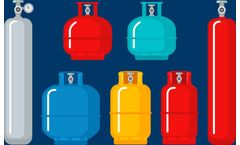
Gas Sampling in Cleanrooms In cleanrooms, especially those classified ISO 5 or cleaner, maintaining contamination control is paramount. ...
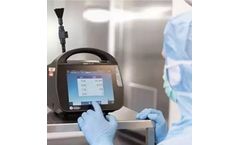
Optical particle counters (OPCs) work by preserving the air quality of a cleanroom environment. To learn more about them, this article dives into OPC counting efficiency and resolution. Alongside this, it answers the key questions that you may consider when thinking about selecting and using ...
Maintaining a contamination-free environment is a prerequisite for high-tech manufacturing and scientific research. Cleanrooms are central to this endeavour. Although a cleanroom is a critical part of maintaining a working environment, they cannot guarantee required cleanliness standards without robust monitoring systems such as particle counters ...
Cleanroom particle counting is essential for accurate functioning and meeting certification criteria in controlled environments. In this blog post, we take a look at five key principles of cleanroom particle counting, exploring the significance of each principle and how it contributes to maintaining the safety and quality of products manufactured in such ...
Product manufacturing, research and development, and other applications in fields ranging from aerospace and semiconductors to pharmaceuticals require a sterile environment for safe operations. As such, cleanrooms are very important in these industries, helping maintain product integrity and limiting the presence of airborne contaminants. Standard HVAC equipment ...
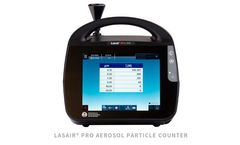
Overview Aerosol particle counters are built to rapidly count and size contaminant particles in cleanroom air and other controlled environments. ...
Welcome to our Cleanroom Classification and Qualification questions and answers blog, where Particle Measuring Systems answers commonly asked questions about the latest changes to regulation. Listen to this useful webinar to learn more about how classification limits are made for expected cleanliness levels in a cleanroom manufacturing ...