
Coagulant Polymer Articles & Analysis
25 articles found

As organics can control or significantly contribute to the charge neutralization and coagulation process, measuring UV254, in addition to turbidity, at the plant intake provides very valuable information for coagulation dose control. ...
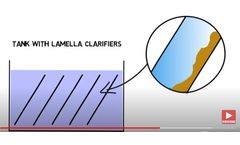
More collisions and interaction with added coagulants (inorganic or organic polymers) will form Macroflocs with an increased settling rate. ...

We recommend that facility managers and staff have at least a working knowledge of these commonly-used industrial water treatment chemicals: Chlorine (gas) Sodium hypochlorite Calcium hypochlorite Aluminum sulfate Soda ash Sodium bicarbonate Ferric chloride Sodium bisulfite Sodium hydroxide Sulfuric Acid Hydrofluoric acid Sodium hydroxide Various polymer solutions ...

In this article, we will provide a unique reference chart to compare the innovative Zeoturb bio-organic powder water treatment flocculant with convention metal salt coagulants and polymers. These metal salt coagulant consisted of Alum, Polyaluminum chloride (PAC), Ferric Chloride (FeCl3), and synthetic available polymers. ...

Less Chemicals and Equipment Needed to Treat Wastewater If oily water reaches your wastewater treatment system, it’s often much more expensive and time consuming to treat it, requiring coagulants, polymers, vacuums and absorption materials. By skimming the wastewater earlier, you minimize the accumulation of sludge in your system, and thereby, the amount ...
For this reason, you are less likely to need coagulants, polymers, vacuums and other absorption materials to remove the oil. ...
Be sure you have adequate dilution water. Check your polymer or coag injection points. These should be optimized to allow for good solids contact and reaction time. ...

Adding about 1 mg/L of cationic polymer and about 2 min of flocculation time, the removal of TSS typically increased from 40–50% without polymer to 60–70% with polymer. Using coagulation and flocculation ahead of the RBS, separation of biofilm solids was successful. ...

The treatment process consists of coagulation, flocculation, sedimentation, filtration and disinfection. Aluminium sulphate is used as coagulant together with polymer. ...
In order to protect public health during swimming, Cryptosporidium-sized microsphere removals by high-rate sand filtration with six coagulants were evaluated with a 5.5 m3 pilot-scale swimming pool. A sand filter without coagulation removed 20–63% of Cryptosporidium-sized microspheres. Cryptosporidium-sized microsphere removals exceeded 98% by sand filtration ...
Specific technologies included: GAC; biologically active GAC (BAC); a newly developed intermittently operated BAC (IOBAC) process; ion exchange (IX); coagulation with a cationic polymer; microfiltration; ultrafiltration (UF); and multi-barrier combinations thereof. ...
Results show that interactions between the alum coagulant, the polymer flocculant and the contaminants are the cause of foaming. ...
Total photosynthetic pigments (TPP) or chlorophyll-a analysis can be useful in selecting coagulant treatments that will improve phytoplankton removal and reduce treatment costs. ...
Three types of inorganic coagulant and three types of polymer coagulant were investigated for the coagulation treatment of highly concentrated AN wastewater from petrochemical plants. The effects of coagulant type, dosage, and coagulation conditions on the pretreatment efficiency of AN wastewater ...

Management scenario evaluations demonstrated that the best possible management options to reduce estrogen levels in the lagoon are either to adjust the estrogen input loading from swine barn facilities or to effectively enhancing estrogen bonding with suspended solids through the use of organic polymers or inorganic coagulants. Integr Environ Assess Manag © 2014 ...
The PolyAccu Dose LD-10D chemical feed station coupled with pH control package provides very consistent and flexible dosing of coagulant and polymer to the DAF system whenever irregular and un-predicted spikes ...
Alum (coagulant) and polymer (coagulant aid) were used to treat a water source with very low pH and high aluminium concentration at Sri-Gading water treatment plant (WTP) Malaysia. ...

After review of the reports company management concluded that the process of oxidation, coagulation, flocculation and filtration would offer the most practical and economical solution. ...
The flow from the second reaction vessel is directed to Filtronics Model GWT-1 gravity water treatment system consisting of: Long chain organic polymer addition to aid coagulation and flocculation Rapid mix, 1000 sec -¹ velocity gradient using counter current mixing with a 20-second retention time to maintain consistent mixing and thorough dispersion of ...

Since feed from a deep-water source is relatively low in the suspended solids, BOD and Oil & Grease, the pretreatment system consists of two stage contact filtration with a flocculation tank upstream to ensure proper reaction time for the coagulant and polymer. Due to high flow rate the dual media filters are provided in horizontal configuration and consist ...