
Refine by
Contamination Control Articles & Analysis
297 articles found
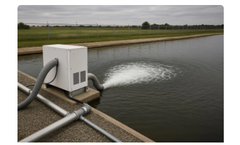
Higher ORP levels help reduce contaminants, contributing to clearer water, fewer pathogens, and reduced algae growth. ...

Polyvinyl Chloride: Contamination and Emission Challenges Polyvinyl chloride (PVC) is less favorable for direct pyrolysis due to its chlorine content. ...

Chloride contamination is one of the most persistent, and often underestimated, threats to groundwater. Unlike many contaminants that degrade over time, chloride remains in the environment, moving with groundwater and accumulating across large areas. ...
ByLiORA

Too much grease, and the bearing overheats from viscous drag. The seals rupture. Contamination enters. The bearing fails. The correct grease quantity is specified by the bearing manufacturer. ...

Introduction The performance of any fume extraction system depends not only on its design but also on how well it is maintained over time. In industrial environments, welding fume extractors are continuously exposed to particulate loading, pressure fluctuations, and operational wear. Without proper upkeep, even a well-designed system can lose efficiency, leading to poor air quality and increased ...
Introduction Effective welding fume control depends fundamentally on the ability to capture contaminants at the point of generation. ...
Introduction Welding operations across manufacturing environments generate airborne contaminants that must be effectively controlled to maintain safe working conditions. These contaminants include fine metal particulates and gases that can remain suspended in the air if not captured at the source. In fabrication shops and production facilities, ...
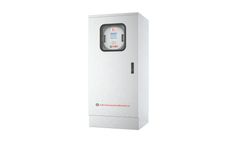
As biogas proceeds to desulfurization stage, hydrogen sulfide (H2S) becomes the most critical contaminant to control. The UV-DOAS sensor enables continuous, purge-free H2S monitoring with exceptional accuracy and long lifetime. ...
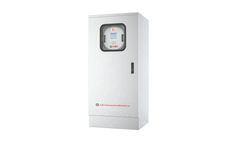
As biogas proceeds to desulfurization stage, hydrogen sulfide (H2S) becomes the most critical contaminant to control. The UV-DOAS sensor enables continuous, purge-free H2S monitoring with exceptional accuracy and long lifetime. ...

Product protection. Reduces contamination risk in sensitive processes. Process stability. Ensures consistent environmental control, including airflow and filtration. ...

ISO 2 Cleanrooms ISO 2 supports processes with near-zero contamination risk. Facility design must address vibration control, material off-gassing, and micro-contamination in addition to particle control. ...
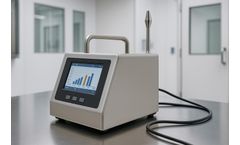
A well-calibrated, well-serviced particle counter enables manufacturers to:Differentiate intrinsic product particles from extrinsic contaminationDefend monitoring strategies during auditsEstablish reliable baselines and recovery timesAvoid false alarms that erode trust in the dataWhen instruments are neglected, even the strongest contamination control strategy ...
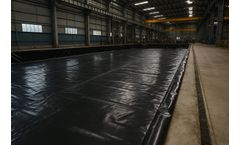
Industrial EV manufacturing in India presents design challenges for environmental safety, structural durability, and contamination control due to exposure to process chemicals, lubricants, wastewater streams, and thermal variations. ...

Open handling: every open step increases contamination risk and requires additional controls. Documentation load: temperatures, times, speeds, volumes, deviations, and operator actions must be captured and reviewed. ...
ByCytena

Where Food Waste Actually Occurs Households: ~54%Food processing and manufacturing: ~19%Food service (restaurants, catering, institutions): ~12%Retail and distribution: ~5%Primary production: ~10% This distribution shows that nearly half of Europe’s food waste arises before it reaches consumers, with waste in industrial and institutional settings often a by-product of overproduction, quality ...

For industrial and institutional operators, waste is often a by-product of overproduction, quality controls, contamination risks, and logistical constraints rather than consumer behaviour.Environmental Impact Beyond the BinFood waste is responsible for an estimated 8-10% of global greenhouse gas emissions, according to the Food and Agriculture Organization. ...
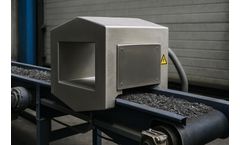
The cost of a single avoided repair often exceeds the cost of a high-specification detection system. Quality Control Standards Operators increasingly operate under certified quality management frameworks such as ISO 9001 and IATF 16949 for automotive-grade outputs, which require documented contamination controls. ...
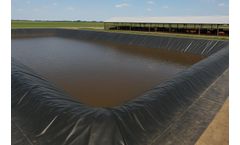
Brand: EarthShield Installation method: Welded lining system Why HDPE Geomembrane is Essential for Livestock Farms Prevent groundwater contamination Control odor and leakage Improve biogas collection efficiency Meet environmental compliance standards Long service life (20–50 years) Why 1.5mm Thickness Was Selected Large pond capacity High ...

GMP cleanroom contamination monitoring is a critical safeguard, forming the frontline defense against risks that can compromise product quality. When executed with intention and rigor, it becomes one of your most powerful tools for detecting contamination risks early and stopping issues before they escalate. Aligned with EU GMP Annex 1, these ten practical tips are designed to help you ...
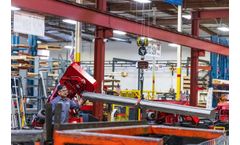
Foreign Material Exclusion (FME) is a crucial practice in industries dealing with sensitive equipment, systems, and processes, especially in the oil and gas, chemical, power, and manufacturing sectors. The concept of FME involves the strict prevention of any foreign objects, debris, or materials from entering critical systems, such as industrial piping, to avoid contamination, damage, or system ...