
Continuous Electrodeionization Articles & Analysis
16 articles found
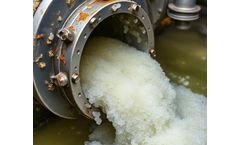
Silica fouling in industrial systems presents a major challenge, especially in reverse osmosis (RO) applications. Preventing this fouling condition requires understanding the behavior of silica in water. Operators need to understand and effectively implement sustainable strategies to mitigate this issue. Silica is the seventh most abundant element in the universe and is common in nature. ...

Sustainable solutions can reverse the trend of salt pollution’s devastating effects on freshwater ecosystems Many headwater streams in the United States are becoming increasingly saltier, contaminated by mining, wastewater discharge, agricultural runoff, and urbanization. This salinization is changing the water chemistry of these freshwater systems and is having a negative impact on the ...
When looking for ways to purify water, clients often ask us about the difference between Reverse Osmosis Water and Distilled Water. In general, these two terms refer to water purification methods that provide contaminant-free water, but through different treatment systems. For home use, the difference between reverse osmosis and distilled water is minimal, but for industrial applications ...
ByYASA ET
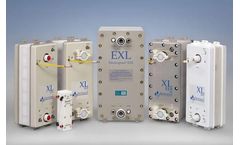
Mechanism of Silica Removal in Electrodeionization (3-Zone EDI Model) Keywords: Electrodeionization, EDl, CEDI, Water, Pure, Ultrapure, Silica, SiO2, Silicic acid, H4SiO4, Reactive; Non-reactive; Colloidal; Reverse Osmosis; lon-Exchange; Resin; Anion; Cation; Fouling; Rejection; Process design; Membrane; Zones; Electropure; SnowPure Abstract: ...
Distillation and deionization are typically only used in industrial or commercial settings, while reverse osmosis is used in commercial and residential environments. Continuous Electrodeionization (CEDI) Process Due to a deionization process, the water is completely free (or almost) of dissolved minerals such as: Sodium Calcium Iron Copper Chloride / ...
ByYASA ET
The history of water purification spans thousands of years. Water purification systems are even depicted in hieroglyphs from Ancient Egypt. Although some of these systems were primitive, such as boiling water, or filtering through sand and gravel, the goals were the same then as they are now: clean, contaminant-free water for our daily ...

Although many water purification technologies are available, ion exchange is well-suited for highly selective removal of specific contaminants Ion exchange is a water treatment process commonly used for water softening or demineralization, but it also is used to remove other substances from the water in processes such as dealkalization, deionization, denitrification, and disinfection. With many ...
It’s no secret that water treatment is essential for large manufacturing plants and other industrial businesses. However, water treatment processes can be expensive depending on the equipment you choose. That’s why technical experts prefer using electrodeionization technology for their water treatment processes to reduce overall operational spending while improving productivity and ...
Ultrapure water is essential for advanced manufacturing plants, for example: pharmaceuticals, energy production, and microelectronic industries. Many end users now seek water treatment technologies with lower pollution loads and elimination of regeneration ...

Accommodating this increased need meant a switch to gas-transfer membrane (GTM) and continuous electrodeionization (CEDI). Electrode ionization, a premium technology for UPW treatment, dictates a high level of engineering. ...

Unlike mixed bed DI, electrodeionization (EDI) is continuous. Because electrodeionization is continuous there are no spikes in quality as when mixed beds are changed for batch regeneration. ...
There can be a spike in silica whenever the MB’s are swapped. Electrodeionization (EDI) is a continuous membrane process, so does not have this problem. Today, state of the art boiler water makeup uses RO-RO-EDI or RO-GTM-EDI to achieve continuous low levels of silica feeding the boiler system. 1-5 ppb silica is achievable with the ...
PROJECT DETAILS LOCATION Ashalim, Israel CUSTOMER GE-Alstom, Israeli Government SOLUTION Cooling tower wastewater treatment system TECHNOLOGIES Containerized Systems Featuring Automatic Disc Filtration and Ultrafiltration, Brackish Water Reverse Osmosis, Gas Transfer Membranes, Continuous Electrodeionization The new Ashalim solar power plant in the Israeli ...
PROJECT DETAILS LOCATION Buenos Aires, Argentina CUSTOMER Central Puerto Power Plant SOLUTION Complete Water Demineralization Plant TECHNOLOGIES Ultrafiltration, Reverse Osmosis, Continuous Electrodeionization A power plant in Buenos Aires needed to increase its demineralized water production and save money on operating expenses, but the poor quality of ...
Electrodeionization (EDI) is the standard method of generating high purity water bypolishing reverse osmosis permeate. The technology utilizes electrical current toremove ionic impurities while continuously regenerating cation and anion exchange resins. EDI is utilized in all industries that require higher purity water than RO alone can produce including ...
Continuous Electrodeionization Process The continuous electrodeionization process (CEDI), is a system that uses ion exchange resins and electricity for the production of ultrapure deionized water without chemical processes and without production stops. SIMPEC uses modular systems for the electrodeionization ...