
Refine by
Cooling Tower Articles & Analysis
524 articles found
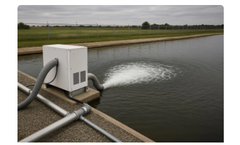
The platform family includes engineered options for varying scales and conditions.Puroxi Precision Nano Injection SystemInline treatment with controlled gas transfer in flowing systems, maintaining operational precision.Inline water treatmentProcess water systemsControlled gas transferFlow-based applicationsPuroxi Nano Bubble Column SystemExtended gas-to-liquid contact in controlled environments ...
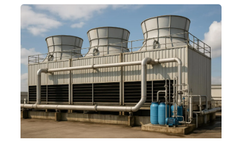
Industrial cooling towers require reliable water treatment to maintain operation and energy efficiency. ...
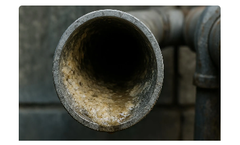
Biofilm is increasingly recognized as one of the most persistent and costly operational challenges across industrial water systems, wastewater infrastructure, agriculture, cooling towers, and food processing environments.Unlike loose contamination, biofilm forms structured microbial communities that attach directly to surfaces within pipelines, tanks, drains, ...
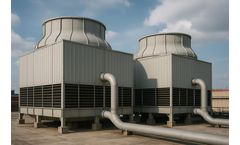
Industrial cooling towers are essential for heat rejection in many facilities but create conditions that favor Legionella proliferation. ...
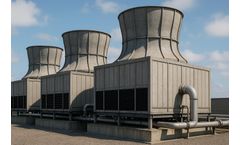
Cooling towers remove heat from water systems to keep buildings comfortable, but warm water promotes Legionella growth and the potential for legionnaires’ disease. ...

Filtration & Separation Enhancing Strainer Efficiency Targeted modifications can enhance the performance of automatic self-cleaning scraper strainers, says Robert Presser, President of Acme Engineering Products For industrial plant managers, automatic scraper strainers are among the closest solutions to a true “set-and-forget” system, effectively removing both large and fine ...

For nearly a decade, a seasoned water treatment technician had managed a 60,000-gallon open counter-flow cooling tower at a manufacturing facility near Houston, Texas. The system faced a persistent challenge: a water pH of ...
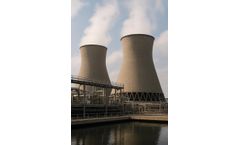
Cooling towers remain essential to process industries, but water quality challenges are intensifying. By 2026, stricter regulatory regimes and higher energy prices are driving adoption of advanced water treatment strategies for existing cooling towers to improve efficiency and sustainability.Overall efficiency has improved as ...

Problem Cooling process water at Huhtamaki's Maine pulp & paper facility whilst ensuring continuous non-clogging ...
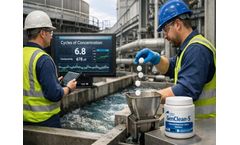
Industrial facilities operating cooling towers face a persistent challenge: balancing water conservation with system reliability. ...

Want to learn more about how radar measurements work? Curious about radar sensors’ strengths and limitations? You’re in the right place! Senix’s compact non-contact radar sensors—or CNCRs—utilize an 80 GHz radar signal to gather level measurements of bulk solids and liquids. This signal is sent through the face of the antenna in the form of a beam. It reaches the ...

Data centers consume significant water resources through evaporative cooling systems, with cooling tower blowdown representing one of the largest sources of water waste in these facilities. ...

From food safety to power-plant performance, these were the water challenges, technologies, and solutions driving the most attention in 2025 In a year defined by tightening regulations, rising water stress, and growing pressure on industries to do more with less, certain topics emerged as priorities for operators and industries navigating these pressures. The following five articles drew the ...

The data center industry stands at a critical juncture. As facilities scale to meet exponential computing demands, water consumption has emerged as a defining operational challenge. Traditional approaches focused on water efficiency are no longer sufficient—leading operators are now pursuing water positive strategies that return more water to local watersheds than their facilities consume. ...
Abstract Biofilms represent a pervasive and costly challenge across wastewater treatment facilities, food production environments, and agricultural systems. These surface-associated microbial communities form a complex extracellular polymeric substance (EPS) matrix that can retain up to 95% water, protect embedded microorganisms from oxidizing biocides, and serve as a breeding substrate for ...
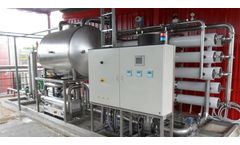
A comprehensive guide to sourcing, treating, reusing, and recovering water across industrial operations Industrial water management is under more pressure than ever. Water-stressed regions, rising production demands, and tighter regulations are forcing plants to rethink how they source, treat, and discharge water. Instead of treating water as a one-way resource that comes in, gets used, and goes ...
Introduction As facilities across agricultural, industrial, and municipal sectors prepare for seasonal shutdowns, winterization is often viewed as a simple operational pause: reduce flow, protect equipment, and wait for spring. But the science tells a different story. Cold temperatures, stagnation, and variable organic loads create ideal conditions for biofilm accumulation, setting the stage ...

The facility is a rendering plant, utilizing a limited waste water system. The basic design has a cooling tower, from which the water passes through a grease trap and then into an aeration tower. ...
Treating wastewater to a high standard for reuse provides a dependable internal resource that strengthens both environmental and economic performance In most industries, water is both an essential and a potential challenge. It cools, cleans, rinses, steams, and transports materials, yet the same processes that depend on it also generate large volumes of wastewater. For decades, the common ...

Introduction: Seeing Leaks Before They Become Failures Industrial facilities rely heavily on pressurized systems – steam lines, cooling networks, hydraulic circuits, chemical transfer units, boilers, turbines, heat exchangers, and pipelines. In these environments, even a small leak can become a massive operational, safety, or environmental issue. Traditional monitoring methods often ...
ByOPGAL