
Corn Field Articles & Analysis
47 articles found

Mobile genetic elements shatter the concept of fixed location genes on chromosomes 1974: Institute for Genetics, Justus-Liebig University, Giessen, Germany. Prof. Fritz Anders (1) passes two papers to his student: “Please read these (2, 3)…. and provide a summary of them next week in our Journal Club!” Published two decades earlier and authored by Dr. ...

This section delves into the versatility of rice husks, showcasing their potential role in charcoal production and how they stand as a testament to the sustainable utilization of agricultural byproducts. Straw and Corn Stalks: Harnessing Crop Residues The aftermath of grain harvests often manifests in vast fields of straw and corn stalks. ...

A typical minimum acreage is between 20 and 40 acres. In field crops like cotton, corn, and soybeans, the typical minimum acreage is about 100 acres. ...
ByGroGuru

Their water goes through two fishing reservoirs, and it’s also used to irrigate fields of alfalfa and corn. Since there are two sources of water, they decided to take a multifaceted approach. ...

BiOWiSH Technologies, Inc. engaged Helena Agri-Enterprises, LLC as a thirdparty Contract Research Organization (CRO) to conduct a study to determine the effects of BiOWiSH Crop Liquid coated UAN on corn production in ...
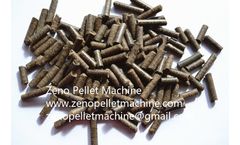
In addition to the traditional crushing of straw and returning it to the field as organic fertilizer, there are also other usage like grass pellet maker machine, straw vaporization, straw power generation, straw ethanol, straw building materials and other new ways, which have improved the utilization value and utilization rate of straw greatly, which are worthy of reference for ...

Like many farmers, the powerful straight-line winds left their mark on Seeman and his partners’ operation: damaging an auger, flipping over fuel tanks and a flattening a barn. Between their fields Seeman estimates around 725 acres of corn and 380 acres of beans were affected by the storm. “The fields vary by area, certain ...

Remember the old days of running test plots? Stopping in the field to place marker flags and make the necessary changes. Then returning in the fall to — with any luck — find the flags and weigh each load. ...

On July 8, 2019, the National Corn Growers Association (NCGA) announced the winners of the Consider Corn Challenge II, a challenge intended to highlight the range of biobased materials that can be produced with field corn feedstock. The three winners included: ExoPolymer, Inc. for a plan to create a new profile of ...
These include, for example, canola, field corn, soybeans and sugar beets. A second list includes crops that are not as commonly genetically engineered. For these commodities, such as apple, non-browning cultivars; corn, sweet; papaya; potato; and squash, summer varieties, a packaging label could state the product “may” contain BE ...

A corn combine harvester is a machine used for the corn harvest which both improves the harvest efficient and saves labor cost. ...

Maize (Zea mays L.) is a major crop on the Loess Plateau, and calculating the ratio of transpiration to evapotranspiration (T/ET) of maize is important for estimating field water balance. In this study, the sap flow method was adopted to measure transpiration (T) characteristics of maize. In order to calibrate the sap flow gauge, the sap flow rate was compared to the leaf T determined by the ...

It is really at the heart of our “meat basket.” Intensively cultivated corn and soybean fields dominate the Midwest and are the primary sources of feed for livestock, which supply America’s staggeringly unhealthy level of demand for animal products — comprising about 45 percent of the nation’s diet by weight. ...
ByEnsia

This is the first large‐scale assessment of clothianidin residues in soil and bee‐relevant matrices from corn and canola fields after multiple years of seed‐treatment use. The average soil concentration from 50 Midwest US corn fields with 2 to 11 years of planting clothianidin‐treated seeds was 7.0 ng/g, similar to predicted ...
We measured concentrations of neonicotinoid residues in the top 5 cm of soil before planting of maize (corn) in 18 commercial fields with a history of neonicotinoid seed treatment use in southwestern Ontario in 2013 and 2014 using LC‐ESI(+)‐MS/MS. A simple calculator based on first order kinetics, incorporating crop rotation, planting date and seed treatment ...
Despite the extensive use of the neonicotinoid insecticide clothianidin, and its known toxicity to beneficial insects like pollinators, little attention has been given to its fate under agricultural field conditions. The present study investigated the fate and toxicity of clothianidin applied every other year as a corn seed‐coating at two different rates, ...
A three‐year study was conducted on a corn field in Central Illinois, USA, to understand the fate and effects of an insecticidal formulation containing the active ingredients phostebupirim and cyfluthrin. ...
The average concentration of chromium, lead, copper, nickel and zinc was generally lower in paddy‐rice (PR) soil relative to corn field (CF) soil. Soil under CF production was slightly contaminated with lead (22‐100 mg/kg), copper (31‐64 mg/kg), nickel (22‐76 mg/kg) and moderately contaminated with zinc (112‐635 mg/kg). ...

” Breitkreutz notes that the wider raking width also allows the rake operator to slow down and make a better windrow – although he has had it up to 14 miles per hour to keep ahead of 3 balers in a corn field. While most of the corn stalks are custom baled as bedding, they have several customers who want to use them as feed. ...
ByVermeer

As the 2013 corn crop was being planted, futures prices were above $6.00 a bushel with an occasional bump above $7.00. ...