
Corn Field Articles & Analysis
48 news found
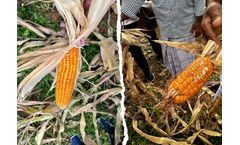
On the north-central plains of Sri Lanka, in the small rural village in Galenbindunuwewa, a community of maize farmers are reshaping their farming practices to respond to the growing challenges posed by climate change. They recently welcomed researchers from the International Water Management Institute (IWMI) and a delegation from the United States Department of Agriculture’s (USDA) Food ...

Bayer will share this content on its Twitter and Facebook channels, as well as RootwormWeek.com. “Corn Rootworm continues to be at the top of the list when it comes to creating economic damage for farmers,” said Erica Strittmatter, Corn Traits Launch and Marketing Lead at Bayer. ...
ByBayer AG

Namely, could weather predictions help farmers better manage their fields (when to take different actions or not). The company shifted focus as they developed an innovative pod that could take ultra hi-resolution images from a plane of fields with amazing detail. “There is so much potential yield in fields around the world that is being ...
ByTaranis

BioConsortia, Inc. has moved two new nematicides into its development and registration phase following excellent field trial results in corn and other important food crops. The new products control nematode pests and increase crop yields. ...
The Mosaic Companyand BioConsortia, Inc. have entered into a new agreement to develop and launch nitrogen fixing microbial products for all crops, including corn, wheat, rice, fruit and vegetables in China, India, Thailand and Vietnam. ...

PowerPollen® announced a commercial license agreement with Bayer designed to help corn seed production growers increase their yields. PowerPollen’s Pollination-on-Demand technology gives farmers greater flexibility by allowing them to optimize the timing of pollinations. By accessing the Iowa-based ag tech company’s first scalable pollination technology for ...
Armed with a Field Crops Technology degree from NC State University, the fifth generation farmer came home after college, and several months later, had an opportunity to start a vegetable farming venture with his life-long friend, Walker Shelton. ...

Seventy percent of these emissions were from corn fields. Corn fields that are used in manufacturing PLA plastics, 2.2 KG of corn is used to manufacture 1 KG of PLA, this increases the amount of global emissions for usable sources of energy. The numbers are alarming, 100 bushels of corn are ...

Seeds can be saved for next year from an open pollinated variety. Sweet corn or field corn (open pollinated variety): You don’t need a combine! You should have at least four rows wide to allow for pollination. Sweet corn can be eaten fresh or dried to save seed for next year. Field corn ...

Following the harvest of a small corn field near Quad Country Corn Processors, the ethanol plant recently seeded it once more, only not with corn but with milkweed. ...

Allowing them to be drained and destroyed for parking lots, corn fields and other uses mean more pollution, larger floods and less habitat for wildlife. ...

New pre-emergent residual registrations for Valor herbicide in fallows and prior to planting summer crops greatly broadens crop rotation flexibility and boosts efforts in combating herbicide resistance. New registrations for Valor herbicide now enable it to be used for highly effective pre - emergent (residual) control of a broad range of problem weeds in fallow and prior to planting summer ...

Application Concept: The project will advance development of a method to determine growth stage for a wide range of crops of importance to Canada (corn, soybeans, field peas, wheat, barley, canola etc.). The product will be developed by enhancing an effective growth stage estimation procedure based on technology previously developed by AUG and using space-based ...

The researchers built six 20m x 20m x 7m exclosures over sections of maize fields in the Midwestern United States, and used removable netting to exclude bats from foraging for corn earworm moths at night. ...
They are sprayed several times a year on crop fields in most European countries1. As well as killing ‘target’ unwanted plants, herbicides can drift into nearby habitats and affect non-target species. ...

Climatologists are assessing what brought on the repeated precipitation, keeping corn and soybean fields from drying out and setting the stage for big crop losses in several states just a year after record harvests. ...
San Diego now purchases more than one-quarter of its water from California's Imperial Valley, where fields produce runoff that delivers 70 percent of the lake's inflows. ...
Steven Edgar, president and CEO of ADAVSO, says his Idaho-based business will use a lightweight, fixed-wing drone to survey fields of crops. Drone technology, already used in other countries, can make farmers more efficient by helping them locate problem spots in vast fields or ranchlands. ...
The cloud of insecticide that drifted from a neighbor's corn field onto the asparagus on Andrew and Melissa Dunham's central Iowa farm cast a shadow over their organic vegetable business. ...
The study found that regardless of how much corn residue is taken off the field, the process contributes to global warming. ...