
Refine by
Direct Fired Thermal Oxidizer Articles & Analysis
38 articles found
CADAIR: Direct Fired Thermal Oxidizer (DFTO) Manufacturer for Industrial VOC Treatment Beijing, China – June 2026CADAIR Air Technology (Beijing) Co., Ltd. is a leading Direct Fired Thermal Oxidizer (DFTO) Manufacturer in China, specializing in industrial VOC ...
Beijing, China – June 2026CADAIR Air Technology (Beijing) Co., Ltd., a leading VOC Treatment Manufacturer in China, has successfully operated a Zeolite Rotor Concentrator + Catalytic Oxidizer (CO) system for a furniture manufacturer located in Shunyi District, Beijing since January 2019.The project demonstrates how a modern Furniture Spray Painting VOC Treatment System can efficiently control ...
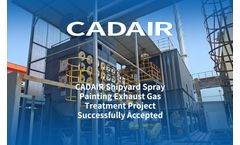
Project Key Parameters Industry:Shipyard Spray Painting VOC Treatment Exhaust Sources:Paint mixing, spray coating, drying Airflow Volume:22,000 m³/h VOC Concentration:1800 mg/m³ Treatment Technology:RTO Regenerative Thermal Oxidizer Emission Standard:DB31/934 Shipbuilding Industry Air Pollutant Emission Standard Project Status:Successfully Accepted The ...

International FAQ & Engineering Best Practices Introduction In automotive, aerospace, marine, electronics, and industrial coating operations, Volatile Organic Compounds (VOCs) generated during spraying, drying, and curing processes remain one of the most critical environmental compliance challenges worldwide.Facility owners, environmental engineers, and production managers frequently ask ...
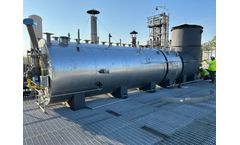
The Challenge Many industrial furnaces operate in oxygen depleted conditions, emitting high levels of ammonia, NOx, and other nitrogen-bearing compounds. This presents a significant challenge for manufacturers striving to meet air quality regulations and limit carbon output. Emission streams that contain nitrogen bearing hazardous air pollutants (HAPs) cannot be thermally treated in a ...

Client: CPL Site: Immingham Application: Syngas treatment and integrated energy recovery for UK’s largest AD digestate gasification pilot plant Syngas oxidation: CO, tars, hydrocarbons and solids Waste heat used to dry feed material to plant Gas inlet 198kg/h, 650oC ...
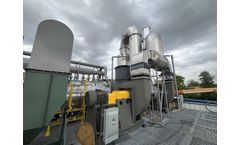
To overcome these inefficiencies, Anguil developed the Multi-Staged Direct Fired Thermal Oxidizer (MS-DFTO), an innovative system that utilizes compartmentalized, temperature-controlled stages with varying oxygen levels to achieve high HAP destruction rates and minimal NOx formation without the need for catalysts or chemical ...
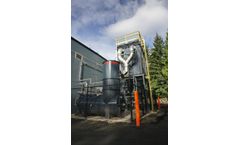
The Challenge In the ever-evolving landscape of energy storage technology, the demand for efficient and sustainable solutions has intensified, prompting a significant shift in the materials utilized for lithium-ion batteries. Anode active materials (AAM) are generally made from carbon-based materials like graphite, silicon, or a combination of the two, with graphite having been the most used ...

The Challenge The markets for lithium-ion batteries, electric vehicles, and fuel cells are increasing exponentially, meaning the demand for graphite is higher than ever before. Lithium-ion batteries consist of four components: electrolyte, separator, cathode, and anode. Every component is essential to the battery, meaning it cannot function without one. Graphite is the single largest mineral ...

Environmental sustainability is the only viable path for the future of the industry. The only possible answer is to implement technologies that combine maximum efficiency in eliminating emissions and waste with the highest efficiency in its implementation and use, in order to avoid damaging the productivity of your industrial processes. With regards to air pollution treatment, there are ...
ByTECAM
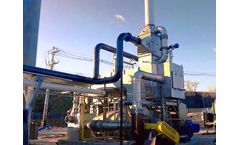
Initial Operating Issue This alternative electric power generation facility had been leasing a Direct-Fired Thermal Oxidizer from Pollution Systems for approximately two (2) years at their LFG site in the Northeast. ...
The main difference between Regenerative Thermal Oxidizers (RTO) and Thermal Oxidizers (TO) is the different methods they use for heat recovery in the system. Regenerative Oxidizers pass hot exhaust gas and cooler inlet gas through two or more heat exchanger beds containing ceramic media. Thermal Oxidizers pass hot exhaust through an air-to-air heat exchanger–typically through a shell ...
ByTECAM
The chemical sector is a sector with high environmental risk. Emissions elimination in the chemical sector has become a critical issue in the recent decades. The excess of pollutants in the atmosphere derived from production processes brings consequences and harmful effects for the environment and for people’s ...
ByTECAM

CECO said it improved its client’s production capacity while also reducing concentrations of volatile organic compounds by 99% using its innovative direct fired thermal oxidation ...

Recently, Catalytic Products International (CPI) worked with a customer who determined during a routine plant inspection that they had unexpected emissions from their process. This can happen as regulations change and as plants continue to improve operations or even change products or processes. In this case, the customer voluntarily shut down their process immediately until a solution could be ...
Midstream companies have historically used flares, vapor combustors, direct-fired thermal oxidizers (TOs) or recuperative systems for emission destruction. ...
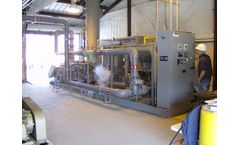
The vapor treatment portion of the project combined ceramic core flameless thermal oxidation (FTO) with acid gas scrubbing, vapor conditioning, and a carbon adsorption polishing step to control potential dioxin emissions. SOLUTION Working with several environmental engineering firms and the US Army Corp of Engineers, Global Technologies supplied a 1,000 SCFM ...
As is the case with many industrial manufacturing operations, emissions are best destroyed through the use of oxidation technologies. Thermal and catalytic oxidizers utilize temperature, time and turbulence to destroy emissions. This particular manufacturer was operating direct-fired thermal ...
ACTION Gas and oil plants have historically used direct-fired thermal oxidizers with no heat recovery for tail gas treatment. The existing thermal oxidizer at this facility was using a considerable amount of auxiliary fuel to maintain temperatures of 1,500°F, ensuring all the organics were ...
The industry has historically used dual stage, DFTOs (Direct-Fired Thermal Oxidizers) for emission control on the furnaces and RTOs (Regenerative Thermal Oxidizers) for oven exhaust treatment. ...