
Refine by
Dispersion Modeling Software Articles & Analysis
38 articles found
CALRoads View is an air dispersion modeling package that predicts near-roadway air quality impacts from moving and idling vehicles. It integrates three dispersion models: CALINE4, CAL3QHC, and CAL3QHCR. The original design of these models accounted for releases of PM, CO, and NO2 with no support for other inert gases.The inert gases capability is introduced by adding a custom Inert Gases ...
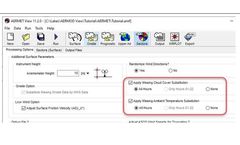
When conducting an air dispersion modeling analysis, it is very important that the meteorological data quality is as high as possible. AERMET – the meteorological pre-processor for the AERMOD dispersion modeling system – contains internal options which can boost data quality by filling short gaps of missing cloud cover and temperature data. AERMET utilizes linear interpolation for ...

The vigiODOR solution is developed for online monitoring and modeling of the site contribution of the olfactory impact of the site, which allows for site mitigation procedures to treat and prevent odors. ...
The vigiODOR solution is developed for online monitoring and modeling of the site contribution of the olfactory impact of the site, which allows for site mitigation procedures to treat and prevent odors. ...

BREEZE is the market-leading air dispersion modeling software used by environmental professionals around the world Receptors are specific locations, set up in air quality dispersion models, where ambient concentration estimates or deposition values are needed. ...
In order to develop these custom real-time air dispersion modeling and forecasting systems, extensive knowledge on air dispersion modeling, meteorology, computer science, and web and database development is required. Two examples of these types of systems are: Real-Time Air Dispersion Modeling ...

In the context of the FEDER AIRCITY project, Paris City is modelled with a 3 m resolution with the purpose of computing pollutant concentration relevant for human exposition. This project involves AIRPARIF (Ile-de-France Air Quality Monitoring Network), for emission and immission data, CEA (French Atomic and Alternative Energy Agency) for HPC availability, National Geographic ...
The paper presents estimates of the far-range atmospheric dispersion of radionuclides after the accident at Fukushima Daiichi Nuclear Power Plant (NPP), obtained using the long-range atmospheric dispersion model MATCH. Software tools were developed to run MATCH in the EU nuclear emergency response system JRODOS using freely ...
The emissions of toxic air pollutants from three power plants and one oil refinery were measured for a period of six months and dispersion of pollutants were calculated by using Air Dispersion Modelling Software (ADMS–4). ...
This study describes in brief the latest extensions of the Danish Geographic Information System (GIS)–based air pollution and human exposure modelling system (AirGIS), which has been developed in Denmark since 2001 and gives results of an evaluation with measured air pollution data. The system shows, in general, a good performance for both long–term averages (annual and monthly averages), ...
Operational airborne releases of trace quantities of the radioactive noble gas 41Ar from the HIFAR Nuclear Research Reactor located in Sydney, Australia, are valuable for evaluating emergency response models incorporating radiological dispersion. A network of meteorological stations and GR–150 environmental gamma dose detectors are placed in the complex terrain within a 5 km radius of the site. ...
Air quality modelling near airports has received attention due to the impact of emissions from aircrafts near ground level. This work is part of the model inter-comparison study undertaken for the Department of Transport in connection with air quality near Heathrow Airport. Results formed part of a submission to the UK government in July 2006. The Emissions and Dispersion Modelling System (EDMS) ...
It is presented an integrated model composed by a dispersion model and a Neural Net (NN). The NN uses the concentrations predicted by the an analytical dispersion model as input variables of the net. This methodology was validated using Indianapolis urban data set where releases from an elevated emission source were considered. An improvement of performances is shown when the neural network is ...
A Gaussian model software (Atmospheric Dispersion Model System?ADMS-Urban) is used to forecast the carbon monoxide concentrations in the Urban Boundary Layer (UBL) of the city of Rome, Italy. ...
The LOSTRAC software is devoted to real-time tracking of accidental atmospheric releases. ...
In order to test the ability of a model its results must be compared with experimental data; hence validation work is an essential part of the development of any model. This paper presents the results of a validation study of the UK Atmospheric Dispersion Modelling System (UK-ADMS) version 1.06, a short-range dispersion model, against the results of the Kincaid field experiment. Predictions of ...
The comprehensive numerical model MODIS for the simulation of pollutant dispersion from a point source is integrated in the graphical shell of Hydro-Quebec. ...
The main features that characterise the Athens Metropolitan Area (AMA) are its geographical position in the Attic Peninsula, the complicated topography and the neighbouring industrial zone, located to the west and separated from the AMA by a hilly area. The transport of air pollutants from this zone to Athens has been the subject of a number of theoretical and experimental studies. In this paper, ...
Regulatory authorities have traditionally used Gaussian dispersion models, notably R-91 in the UK and ISC in the USA. These use dispersion coefficients derived from the Pasquill stability category calculated for the prevailing meteorological conditions. Recently, ADMS (Atmospheric Dispersion Modelling System) has been developed; this is one of a new generation of dispersion models in which the ...
The new version of the Atmospheric Dispersion Modelling System for urban environments, ADMS-Urban, is based on the same up-to-date physics as the ADMS model, outlined briefly here in Section 2. The basic model has been the subject of extensive validation studies: as part of this series of European Harmonisation Workshops; sponsored by HMIP (Her Majesty's Inspectorate of Pollution, now part of the ...