
Refine by
Dispersion Modeling Software Articles & Analysis
11 news found

The Model Evaluation Toolkit is a free tool for evaluating local and regional atmospheric dispersion models. A major new version has been released, marking its first significant public update since 2016. Version 5.4 introduces a wide range of enhancements that improve flexibility, data compatibility and analytical power. 17 Jun 2026 Model Evaluation Toolkit v5.4 released The update significantly ...
20 May 2026 — CERC has published a comprehensive study, commissioned by the Atmospheric Dispersion Modelling Liaison Committee (ADMLC), examining the performance evaluation methods used for atmospheric dispersion models. The study surveys 70 evaluation metrics across nine case studies and more than 30 models, and proposes threshold criteria for non-dimensional metrics. The work compares proposed ...
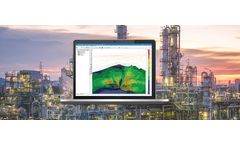
The CALPUFF air dispersion modeling system is extremely powerful and contains many refined features for users to conduct air modeling. A consequence of the model’s refined nature means some calculations can take a very long time to complete, however. Some situations may call for a modeler to conduct multiple model runs thus compounding the ...
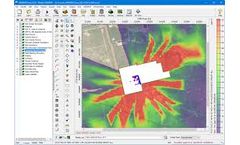
AERSURFACE is a non-regulatory component of the AERMOD air dispersion modeling system. The tool reads digital land cover data and objectively calculates surface characteristics for input to the AERMET meteorological preprocessor. Input to AERSURFACE comes from the USGS National Land Cover Database (NLCD) distributed through the Multi-Resolution Land Cover Consortium (MRLC). Near the end of 2024, ...
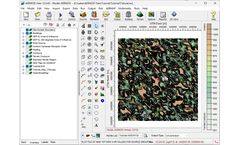
AERMAP is the terrain preprocessor program for incorporating terrain elements into air dispersion modeling analyses conducted using the AERMOD dispersion modeling system. Natively, AERMAP reads two types of terrain data: United States Geological Survey (USGS) National Elevation Dataset (NED) files in GeoTIFF image format ...

Earlier this month, the U.S. EPA hosted the 13th Conference on Air Quality Modeling at their offices in Research Triangle Park, North Carolina. This month’s Modeling Tip takes a closer look at why this Conference is held and what gets accomplished. The Clean Air Act (CAA) is the comprehensive federal law that regulates air emissions from stationary and mobile sources. Section 320 of the ...
CERC are undertaking a project commissioned by Defra in partnership with the Met Office, the UK Centre for Ecology and Hydrology (UKCEH), the Environmental Research Group at Imperial College London and Ricardo in relation to an intercomparison study between models that have the potential to be used for Defra's compliance reporting commitments. Models involved in the intercomparison exercise ...

CERC have enhanced ADMS-Roads to address the air pollution from elevated roads within the Highways England Strategic Roads Network (SRN). ADMS-Roads is the most widely used air dispersion modelling tool for predicting concentrations of nitrogen dioxide (NO2) and other pollutants near roads on the SRN. This project will have far-reaching influence as ADMS-Roads becomes the first commonly-used ...

The threat posed by so-called dirty bombs on society is increasing. A dirty bomb or radiological dispersal device (RDD) is a speculative radiological weapon that combines radioactive material with conventional explosives. ...

Two brand new and modern air quality monitoring stations have joined the network already established in the South Durban Basin. The South Durban Basin, located on the eastern seaboard of South Africa, has a mix of heavy industrial activity and residential settlements in close proximity. Two brand new and modern air quality monitoring stations based on Environnement S.A pollution monitoring ...
ByENVEA

Recently, the solution allows for the integration of meteorological data from weather stations and enables the dispersion modelling software to display odor and chemical plume to evaluate the odor and chemical impact of the site in the neighborhood. ...