
Refine by
Dissolved Organic Carbon Articles & Analysis
243 articles found
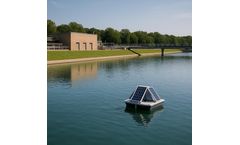
The system includes in-situ probes that log pH, temperature, turbidity, dissolved oxygen, chlorophyll-a, and phycocyanin at 15-minute intervals and feed a real-time dashboard. The utility also monitored dissolved organic carbon and UV254, and fluorescence spectroscopy at the University of Alabama characterized ...
Jenfitch, Inc based in Walnut Creek, CA has developed a new oxidant that is effective at lowering TOC, reducing THM’s and HAA5’s, eliminating T & O (taste and odors), effective at controlling HAB’s (harmful algal blooms), improve coagulation & flocculation, eliminate biofilm formation in the distribution systems, and improve the effectiveness of your primary ...
Cyanobacteria, or blue-green algae, is the organism that primarily produces microcystin in a Harmful Algal Bloom (HABs). The reason cyanobacteria produce toxins is still being studied, but nevertheless, is a problem that requires careful consideration to manage and ...
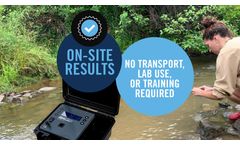
This highlights the importance of organics monitoring even further as organic contents of the waters can vary greatly across different sampling locations both in terms of quantity and quality. The concentration and composition of organics in surface waters are key to understanding both the impacts of natural events like storms and human generated ...
Overview Tempe Town Lake is an artificial lake located near the urban core of Tempe, AZ, derived from the damming of the Salt River. It was constructed in 1999 primarily for the use of recreation such as fishing and boating. This lake is Arizona’s second most visited tourist attraction that generated a cumulative economic impact of over $1.5 billion dollars since its creation, so it is ...

Sludge is a by-product of the wastewater treatment process, consisting of organic and inorganic solids suspended in water. Sludge treatment entails various processes and techniques depending on the sludge’s source and existing contamination levels. Common treatments include aerobic digestion, chemical precipitation, and filtration. The fundamental challenge of treating sludge is its ...
Control of dissolved organics has been one of the highest priority concerns for most water treatment plants for over 20 years. ...

How can our Carbon Dioxide Sensors be used for Total Organic Carbon Analysis Total Organic Carbon (TOC) Analysis is another important measure of water quality. TOC is the amount of carbon that is found in an organic compound, and its’ presence has become an important ...

Hydrogen sulfide (H2S) is the natural anaerobic digestion of organic compounds that produces a strong and vomitous smell. So the common odors around the treatment plants smell like ammonia, garlic, and rotten eggs, sometimes described as organic or earthy. ...

EVALUATION OF READY BIODEGRADABILITY: DISSOLVED ORGANIC CARBON DIE-AWAY FOLLOWING THE OECD 301 A GUIDELINE Test report n° 20FER6-1175 – 2020/12/09 ...

One of the most widely used measures for assessing whether water is safe for consumption or not is the analysis of the organic carbon (TOC) content. Dissolved organic carbon content is a measure of how much carbon is found in the water as part of organic compounds, as opposed to ...
Utility companies in England and Wales invested £2.1 billion between 2013 and 2014 into infrastructure and assorted costs to ensure safe drinking water.1 One of the most widely used measures for water quality checking in order to assess whether water is safe for consumption or not is the analysis of the organic carbon (TOC) content. ...

Within the water quality sciences, fluorescence spectroscopy has been investigated in natural, waste and polluted waters (Hudson et al. 2007) and has been utilised to characterise polluted river waters (Baker et al. 2003), to detect tissuemill effluent in rivers (Baker 2002), determine organic matter removal efficiency within water treatment systems (Bieroza et al. 2010) and as a ...

Organic removal contaminants reclamation has increased over the past years as it has many advantages over other treatments. ...

Then activated sludge is added to the mixture, which is aerated to facilitate mixing and to provide oxygen that microorganisms need to decompose dissolved or suspended organic materials into water, carbon dioxide, and other compounds. ...
The combined processes of powdered activated carbon/biological powdered activated carbon- ultrafiltration (PAC/BPAC-UF) were used to treat secondary effluent. In this study, the effect of PAC and BPAC on membrane flux, membrane resistance and the removal of different molecular weight organic compounds were investigated. In addition, the ...
The WTPs in this survey had unusually high concentrations of sodium, bromide and dissolved organic carbon in the source water and all used ammonium in the treatment train. ...
In addition, the study investigates the effects of phosphorus supplementation on the dissolved oxygen, organic carbon and nitrogen removal along with biofilm coverage of the filter media and biomass viability of the attached biofilm. The uptake of total phosphorus in the P enhanced filter did not correspond to the consumption of readily ...
The treated water is used safely as service water for toilet flushing. Monitoring of the organic matter degradation was pursued to describe the degradation processes in each stage and optimize the system. Results showed that organic matter reduction was achieved for the most part in the first three reactors, whereas the highest reduction rate was observed in the ...
To simulate treatment that FGD wastewater undergoes during transport through soils in subsurface treatment systems, a column study (140-d duration) was conducted with native Kansas soil and saline FGD wastewater, containing high Se and B concentrations (170 μg/L Se and 5.3 mg/L B) and negligible arsenic (As) concentration (∼1.2 μg/L As). Se, B, and As, and dissolved ...