
Refine by
Flame Ionization Articles & Analysis
102 articles found
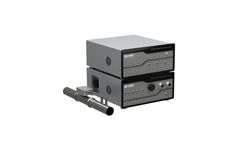
The integrated modular systems are developed based on Cubic's mature technology platforms including high-precision non-dispersive infrared (NDIR), non-dispersive ultraviolet (NDUV), electrochemical detection (ECD), hydrogen flame ionization detection (HFID), condensation particle counting (CPC), and diffusion charging counting (DC) principles, enable precise ...
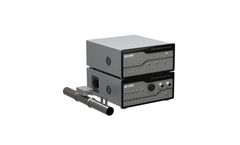
The integrated modular systems are developed based on Cubic's mature technology platforms including high-precision non-dispersive infrared (NDIR), non-dispersive ultraviolet (NDUV), electrochemical detection (ECD), hydrogen flame ionization detection (HFID), condensation particle counting (CPC), and diffusion charging counting (DC) principles, enable precise ...
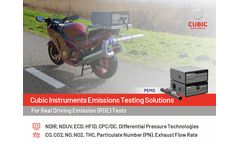
The integrated modular systems are developed based on Cubic's mature technology platforms including high-precision non-dispersive infrared (NDIR), non-dispersive ultraviolet (NDUV), electrochemical detection (ECD), hydrogen flame ionization detection (HFID), condensation particle counting (CPC), and diffusion charging counting (DC) principles, enable precise ...
The latter is widely used off- and on-line with Flame Ionization Detectors (FID) or Mass Spectrometers (MS). Given the large number of molecules detected per chromatogram, the data generated by these monitoring techniques are usually checked and reprocessed manually. ...
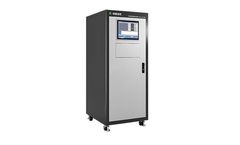
At its core, Gasboard-9801 leverages high-precision hydrogen flame ionization detection (HFID) technology for superior THC&CH4 measurements accuracy and advanced ultraviolet differential absorption spectroscopy (UV-DOAS) technology for direct NOx concentration measurement without the need for NOx converters. ...
Accurate calibration in gas chromatography transforms good measurements into precise, actionable data. When handling high-stakes tasks in environmental science or pharmaceuticals, ensuring calibration at parts per billion (ppb) becomes non-negotiable. This article will show you how ppb-level calibration standards sharpen gas chromatography’s capabilities and why they matter in your ...
Understanding the Impact of Filters on Portable FIDs Filters are a key component in the efficient operation of portable FIDs (Flame Ionization Detectors). Their lifespan depends on usage hours and the environment, with water exposure being a critical factor. ...

For anyone deeply involved in gas chromatography (GC), understanding the quality, consistency, and safety of the oxidant gas source is as crucial as grasping the concepts of boiling point, retention time, and stationary phase. This brings us to the significant role played by zero air generators in GC applications. Let’s delve into the reasons behind the preference for zero air generators ...

Are you ready for a deep dive into Hydrogen Chloride Analyzers? These devices measure Hydrogen Chloride in the air. You’ll learn all about them here! With this knowledge, you can keep your workplace safe and sound. Let’s jump ...
One such advancement that’s driving accuracy and efficiency in leak detection is the portable Flame Ionization Detector (FID). But using a portable FID requires precise location descriptions to ensure the accuracy of results. ...

Customer: Key manufacturer of domestic biomass fireplaces Installation: In the stove’s test room Function: continuous emissions control according to EN16510-1:2019 ...
ByENVEA
Delve into the world of Emission Gas Analyzers, high-tech devices ensuring environmental safety. The goal here is unearthing their features, types, and applications. Also, a guide will be provided to select the most fitting Analyzer for specific ...
In the petrochemical realm, petrochemical gas analysis holds prime importance. Accuracy, a key factor, helps ensure product quality, safety, and compliance. With evolving techniques, your operations can harness utmost benefits. The goal? To learn, adapt, and ...

Leak Detection and Repair (LDAR) programs are utilized in refineries and other industrial environments where volatile organic compounds (VOCs) are abundantly present. In principle, LDAR elements are designed to eliminate fugitive emissions by optimizing equipment monitoring, reporting, and maintenance. However, there are many more benefits of a properly implemented LDAR program worth knowing as ...
Welcome to the world of gas analyzers! Navigate through this guide for a deep dive into types, applications, and leading gas analyzer manufacturers. Uncover insights to optimize your device’s accuracy and ...
Method 21 and the phx42 Leak detection is an essential part of environmental compliance in many industries, and complying with regulations can be challenging. Method 21 is a commonly used EPA method for leak detection, and there are instruments available to help comply with the method, such as the phx42. In this blog post, we will compare the requirements of Method 21 to the capabilities of the ...

Energy executives must understand the application of LDAR in monitoring fugitive emissions to ensure a safe and sustainable refinery. In truth, there are actually multiple ways that LDAR equipment and methods help reduce gas leaks in facilities. Read on to learn the different LDAR techniques for monitoring unwanted emissions. ...
In the quest to ensure comprehensive fire safety and prevention, one of the most important steps is to invest in quality gas analyzers. In this blog post, we’ll discuss why gas analyzers are necessary for commercial businesses, as well as provide a guide on selecting the right type of analyzer for different applications. Gas analyzers play a critical role in keeping business owners ...
Ethylene oxide (EtO) is a colorless, flammable gas widely used as a sterilizing agent in various industries, including the medical, pharmaceutical, chemical, and agricultural sectors. Due to its potential health risks, the Environmental Protection Agency (EPA) has established strict regulations to limit EtO emissions and maintain air quality. In this blog, we will discuss the key users of EtO, ...
Thus it is possible to thoroughly characterize mixed samples using a detector, such as a flame ionization detector (FID) or a mass spectrometer (MS). However, the accuracy of any gas chromatograph is utterly dependent on the system’s reliability, which can only be verified by gas calibration. ...