
Refine by
Fluorescence Spectroscopy Articles & Analysis
105 articles found

The utility also monitored dissolved organic carbon and UV254, and fluorescence spectroscopy at the University of Alabama characterized organic matter.Key findingsThe clearest result was visual: the perimeter algae mat appeared essentially absent after about a year of operation. ...

l Fluorometric assays: Offer higher sensitivity using fluorescent derivatives. l Near-Infrared (NIR) spectroscopy: Allows rapid, non-destructive estimation of proline levels in intact tissues. ...
Different pigments are separated based on their chemical properties and detected using UV-visible or fluorescence detectors. HPLC is particularly effective for complex pigment profiles but requires sophisticated equipment and expertise. 3. Fluorescence Spectroscopy Fluorescence spectroscopy exploits the ...

Spontaneous fluorescence spectroscopy refers to the phenomenon where proteins spontaneously emit fluorescence without an external excitation light source, and the properties and structure of the substance are studied by measuring the intensity and wavelength distribution of the fluorescence. Through fluorescence ...

Nuclear Magnetic Resonance (NMR) Spectroscopy(1) Principle: NMR can provide detailed information about the atoms inside proteins, including the environment of disulfide bonds.(2) Application: It's used to study the three-dimensional structure of proteins and the accurate location of disulfide bonds.3. Spectroscopy(1) Ultraviolet Spectroscopy: ...

Spontaneous fluorescence spectroscopy refers to the spontaneous emission of fluorescence by proteins without an external excitation light source. The properties and structure of substances are studied by measuring the intensity and wavelength distribution of fluorescence. Through spontaneous fluorescence ...

Photodetector Devices: Solution-processed quantum dots can be readily integrated with an almost infinite variety of substrates, therefore they have potential applications in surveillance, machine vision, industrial inspection, spectroscopy, and fluorescent biomedical imaging. Quantum Dot Displays: Quantum dots are valued for displays, because they emit light in ...

There are many methods for detecting the secondary structure of proteins, commonly used ones include Nuclear Magnetic Resonance (NMR), Circular Dichroism (CD), X-ray diffraction, Ultraviolet and Fluorescence Spectroscopy, and Infrared Spectroscopy (IR). These methods all have certain limitations: NMR is suitable for the structure of proteins with ...

Surface Plasmon Resonance (SPR)(1) Principle: It monitors the change in affinity of the antibody binding to a specific antigen to evaluate the effect of temperature on its functionality.(2) Application: It analyzes the functional stability of the antibody under different temperature conditions.4. Fluorescence Spectroscopy(1) Principle: It monitors the changes in ...

This method is most suitable when samples are clear solutions with proteins and peptides in a narrow concentration range. Fluorescence spectroscopy Ultraviolet and fluorescence spectroscopy is limited to the determination of a few proteins containing chromophores such as aromatic, heterocyclic or conjugated ring systems. ...
Applications of Raman Spectroscopy When studying chemical and intramolecular interactions and identifying compounds, chemists utilize Raman spectroscopy. ...

Introduction This white paper reports diesel engine oil analysis data demonstrating use of filtergram particle quantifier x-ray fluorescence (FPQ spectroscopy) to quantify severity of wear and contamination. ...
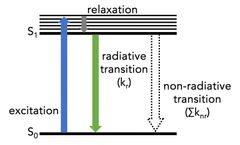
R. Lakowicz, Principles of Fluorescence Spectroscopy. 3rd edition, Springer US, 2006. DOI: 10.1007/978-0-387-46312-4.B. ...

For those starting out in their careers and interested in the field of fluorescence spectroscopy, we have compiled a handy fluorescence spectroscopy book list of recommended reading for further knowledge expansion.Principles of Fluorescence Spectroscopy - Joseph R. LakowiczThe book features new ...
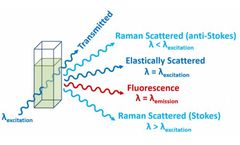
In this post we discuss how to identify the presence of Raman scattering during fluorescence measurements and how to prevent this scattering from distorting fluorescence emission spectra.This is the first in a series of blog posts where we will discuss the most common errors made, and experimental artefacts that appear when measuring fluorescence ...
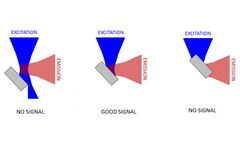
Acquiring and interpreting steady state fluorescence spectra is not always straightforward. Below we offer some advice on commonly encountered problems to help you optimise the operation of your Edinburgh Instruments spectrometer.What to do if your Fluorescence Spectra are Distorted, Show Unexpected Peaks or StepsIf you are experiencing problems with your ...

The inner filter effect is a common problem in fluorescence spectroscopy, affecting spectral measurements in particular. In highly concentrated solutions the excitation beam is attenuated by the sample so that only the surface facing the excitation beam fluoresces strongly. The centre of the cuvette, which is imaged by the emission monochromator ...
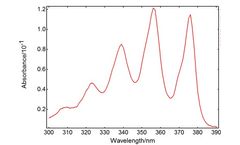
Fluorescence spectroscopy is a widespread analytical technique, often used for the analysis of a sample by defining the concentration of a chemical substance in a sample. ...
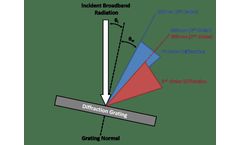
In this post we discuss the phenomena of second order diffraction through a monochromator and the problems it can cause in fluorescence spectroscopy. This is the second in a series of blog posts (read first blog post) where we discuss the most common errors made, and experimental artefacts that appear when measuring fluorescence spectra. ...

Edinburgh Instruments has compiled a glossary of all the key terms related to Fluorescence Spectroscopy. Please browse the glossary bellow to find the definition for the term you are interested in.AbsorbanceMeasure of the amplitude of absorbed energy in a spectrum related to the concentration of an analyte. ...