
Fly Ash Processing Articles & Analysis
13 articles found

In the United States, the IBA residue of most Energy-from-Waste facilities is a mix between the bottom ash, boiler ash, and fly ash. Processing this combined ash is more challenging than in any other region we operate. The addition of fly ash in particular causes ...
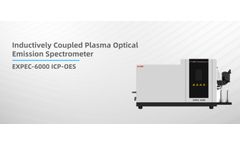
However, power plants or waste incineration treatment plants inevitably produce solid waste toxic elements in the production process - fly ash, fly ash particles are acceptable (1 to 100μm), can adsorb most of the heavy metals and pollutants in the flue gas, causing environmental pollution and potential human ...
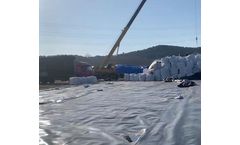
With the rapid increase in the amount of domestic waste incineration, the amount of waste incineration fly ash is also increasing. At present, after all, domestic waste in Shijiazhuang City is burned, about 400 tons of fly ash will be produced every day. ...

Customer: Cement plant Material: Fly ash Installation: After hopper and screw feeder Function: Online information about the quality of flow condition APPLICATION Fly ash does have the tendency to create blockages in the cone of the hopper and screw feeder. Our customer was looking for a solution to provide information about the quantity of material flow behind the hopper to control the flow ...
ByENVEA
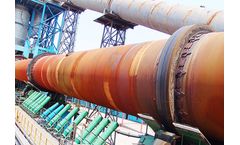
Wet Rotary Kiln Delivery Wet Rotary Kiln Performance Characteristics Because raw material is made into the mud, it has strong adaptability to heterogeneous raw material, uniform raw material composition, stable process, high quality of clinker, high clinker strength, less dust in grinding process and less fly ash in kiln tail. ...

Processing Fly Ash for Use as a Lightweight Aggregate Fly ash collected at coal-burning facilities must go through a series of steps before it is ready to be included in the concrete production process as a lightweight aggregate. ...

The effect of fly ash on biodegradability and methane production from secondary paper and pulp sludge, including its modeling, was evaluated. Three tests with fly ash concentrations of 0, 10 and 20 mg/L were evaluated at 32 °C. ...
A number of studies have used cement by itself and in combination with additives such as lime, iron, silicates, or fly ash in the S/S process. Although there is a lack of systematic investigations and differing procedures for testing the effectiveness of the treatment methods, it was agreed that incorporating additives could increase the ...

In return it receives water from a refinery and the municipality, and gas from the refinery. It also sends its fly ash for processing by the cement industry and its gypsum to be made into building materials. ...
ByEnsia

To reduce the chemical cost for the CEPT process, fly ash was firstly utilised to develop an efficient compound coagulant. The lab-scale experimental results showed that with low Fly Ash Coagulant (FAC) dosage the removals of COD, Total Phosphorus (TP) and Suspended soild (SS) could achieve more than 62%, 91% and ...

There is uncertainty as to the rates of coal fly ash needed for optimum physiological processes and growth. In the current study we tested the hypothesis that photosynthetic pigments concentrations and CO2 assimilation (A) are more sensitive than dry weights in plants grown on media amended with coal fly ash. ...

Both bench- and pilot-scale tests were conducted to liberate Hg using a thermal desorption process. The results indicated that up to 90% of the Hg could beliberated from the fly ash or fly-ash-and-activated-carbon mixture using a pilot-scale apparatus (air slide) at 538 °C with a very short retention time ...
Presently, all UK incinerators have to meet very strict emission levels. The municipal solid waste (MSW) fly ash generated has to be managed very carefully as it is enriched with toxic organic micro pollutants and heavy metals. The aim of the present work is to describe briefly a novel thermal technology, known as the ash detoxification ...